
Mycosphaerella brassicicola
Mycosphaerella brassicicola
Mycosphaerella brassicicola is a fungal pathogen belonging to the Ascomycota phylum. It is the primary causal agent of the ringspot disease in various brassica crops, including cabbage, broccoli, and cauliflower.
What the section contains
Mycosphaerella brassicicola
The fungus survives as dormant structures (pseudothecia) on crop debris left in the field. When weather conditions become favorable in the spring, it releases ascospores that initiate primary infection.
Spore dispersal occurs primarily through wind and rain splash, which transport the inoculum from residues to healthy leaves. High humidity and cool temperatures are critical for successful germination and infection.
The fungal mycelium colonizes leaf tissues, eventually producing pycnidia or pseudothecia within the necrotic lesions, which serve as sources for secondary infection cycles throughout the season.
Understanding the life cycle is essential, as the presence of plant residues is the most common factor contributing to the perpetuation of this pathogen in agricultural systems.
The disease affects a wide range of host plants within the Brassicaceae family, being particularly destructive in cabbage and Brussels sprouts production areas worldwide.
The primary impact of ringspot is the reduction of marketable quality. The aesthetic damage caused by necrotic spots makes heads or leaves unacceptable for fresh market sales.
Severe infestations lead to premature leaf senescence and abscission. This significantly reduces the photosynthetic capacity of the plant, resulting in smaller, less dense heads.
Secondary infections, such as soft rot, are common following the primary ringspot lesions. These secondary invaders can completely destroy the produce during post-harvest storage.
Yield losses vary depending on climate conditions, but in highly conducive environments, significant portions of the crop can become unmarketable if left untreated.
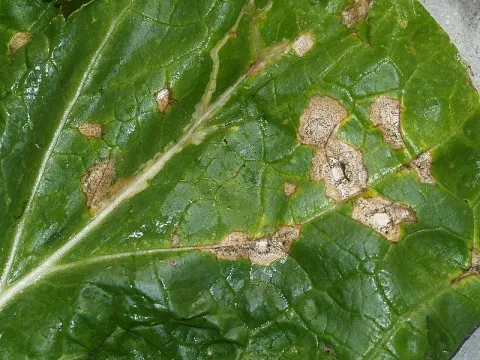
The initial symptoms are small, circular, chlorotic spots that appear on the older, lower leaves of the host plant. These spots gradually expand in size.
A distinctive feature of this disease is the development of concentric rings of dark fungal fruiting bodies within the lesions, which gives the disease its common name, ringspot.
The dark dots visible in the center of the spots are the pycnidia, where the fungus produces its spores. In humid conditions, these spots may coalesce into larger patches of dead tissue.
In advanced stages of the disease, the entire leaf surface may become covered with lesions, leading to yellowing, drying, and eventual death of the foliage.
- Small chlorotic lesions on lower leaves.
- Visible concentric zones inside the spots.
- Black pycnidia present in the center of necrotic areas.
- Yellowing and premature death of older foliage.
- Significant reduction in product aesthetic quality.
Crop rotation is the most effective cultural practice. Avoid planting brassica crops in the same field for at least 3 to 4 years to reduce inoculum buildup.
Sanitation practices such as the deep incorporation of crop residues into the soil after harvest significantly reduce the primary source of infection for the next season.
Using certified, disease-free seed and maintaining proper plant spacing ensures air circulation, which prevents the moisture levels needed for fungal development.
Fungicide applications are recommended in regions with high disease pressure. Applying products during the early stages of infection helps to minimize the spread of spores.
Monitoring for weeds in the mustard family is also vital, as they can serve as alternative hosts and reservoirs for the fungus throughout the year.