
Mycoleptodiscus terrestris
Mycoleptodiscus terrestris
Mycoleptodiscus terrestris is a soil-borne fungus belonging to the Deuteromycetes class. It is recognized as a significant phytopathogen responsible for severe root rot diseases in a variety of legume crops, with a particular impact on alfalfa and soybeans.
What the section contains
Mycoleptodiscus terrestris
The fungus is characterized by the formation of small, submerged structures known as acervuli within the host tissue. These structures produce conidia, which are the primary spores responsible for spreading the infection through soil water and physical contact.
It acts as a facultative parasite, meaning it can survive for extended periods as saprophytes on dead plant debris in the soil. This saprophytic phase allows the fungus to persist in agricultural environments even in the absence of a susceptible host crop.
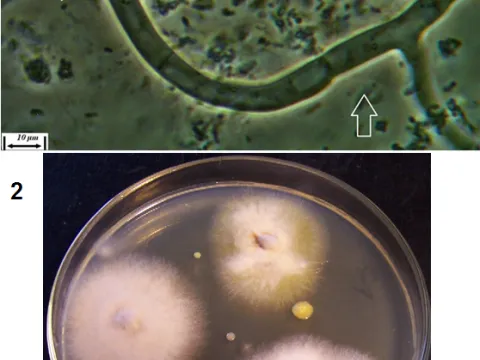
Laboratory identification typically involves isolation on specialized media, such as potato dextrose agar, where it forms distinct, pigmented colonies. Microscopic examination of the conidia is crucial for confirming the species identity against other soil-borne pathogens.
The ecological niche of this fungus is primarily moist or poorly drained soils. Because it thrives in high moisture conditions, environmental monitoring of soil moisture levels is often used as a proxy to assess the risk of disease outbreaks in fields.
In alfalfa, Mycoleptodiscus terrestris primarily targets the crown and root system. This damage results in a thinning of the stand, as plants become weakened and eventually die, significantly reducing the forage yield over consecutive growing seasons.
Soybeans are also highly susceptible, with the pathogen causing stunted growth, chlorosis, and root decay. The infection hinders the plant's ability to take up nutrients and water, which is particularly devastating during critical stages of pod development.
The pathogen disrupts the vascular tissues of the roots, leading to necrosis and decay. This damage restricts the transport of water from the roots to the shoots, eventually causing the plant to wilt and collapse under stress conditions.
Increased susceptibility to secondary infections is a hallmark of the damage caused by this pathogen. Once the root system is compromised, other soil bacteria and fungi readily colonize the damaged tissues, accelerating the death of the host plant.
Field-level damage is often uneven, occurring in patches where soil moisture or compaction creates optimal conditions for fungal growth. This patchy distribution is a characteristic sign of a soil-borne infection rather than an airborne disease.
The initial signs of infection often involve the yellowing and wilting of the foliage, starting from the lower leaves. This chlorosis is a systemic response to the root system being unable to sustain the plant's metabolic needs.
Underground symptoms include the presence of dark brown to black lesions on the taproot and secondary roots. The outer cortex of the root may soften and slough off, revealing a decayed, discolored inner tissue that is typical of root rot.
During humid weather, small white to cream-colored spore masses may emerge on the surface of the affected root or stem base. These are the acervuli, which, when mature, appear as tiny dark dots visible to the naked eye or with a hand lens.
The vascular tissue often shows a distinct reddish-brown discoloration when the root is sliced longitudinally. This vascular browning indicates that the pathogen has successfully invaded the transport system, leading to a permanent impairment of the plant.
Severely infected plants are often easy to pull from the ground due to the loss of fine, fibrous roots. The remaining root structure is often blackened, brittle, and significantly reduced in overall volume compared to healthy plants.
Crop rotation is the most effective cultural practice to manage Mycoleptodiscus terrestris. By avoiding the planting of susceptible legumes in infested fields for several years, growers can significantly reduce the concentration of fungal spores in the soil.
Improving soil drainage is essential for long-term control. Since the fungus thrives in waterlogged conditions, tile drainage or land leveling can create an environment that is less conducive to the pathogen's development and spread.
Seed treatments with systemic fungicides provide a crucial layer of protection during the germination and seedling establishment phases. These treatments help prevent early-season root infections, giving the crop a better chance to develop a robust root system.
Sanitation measures, including the removal or deep incorporation of plant debris after harvest, help reduce the amount of inoculum present in the soil. This prevents the fungus from maintaining high populations between crop cycles.
Developing and planting resistant cultivars remains the ultimate goal for sustainable management. Breeders focus on selecting lines with enhanced root health and natural physiological resistance to prevent the pathogen from colonizing the roots effectively.