
Mucor winter
Mucor hiemalis
Mucor hiemalis is a fungal pathogen belonging to the phylum Zygomycota. It is a cosmopolitan soil fungus that acts as a saprotroph but can become a facultative parasite under favorable conditions.
What the section contains
Mucor winter
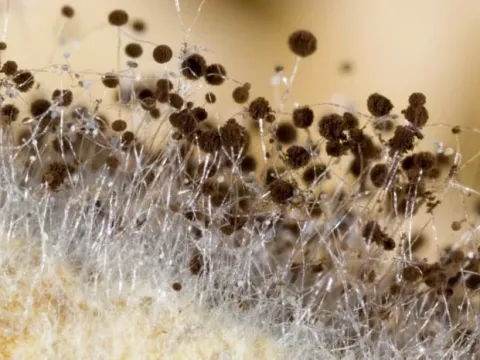
The fungus grows rapidly, producing a fluffy, white to grey mycelium that eventually develops black, spherical sporangia containing asexual spores.
It is classified as a psychrophile, meaning it thrives at low temperatures, which allows it to remain active during winter months and in cold storage facilities.
Reproduction involves both asexual sporangiospores, which facilitate quick spread, and sexual zygospores, which allow the fungus to survive extreme environmental stresses in the soil.
The fungus is highly resilient and can colonize a diverse range of organic substrates, making it a persistent inhabitant of agricultural soils and storage environments.
The primary economic impact of Mucor hiemalis is the degradation of seeds and grains, particularly those with high moisture content or compromised seed coats.
It causes significant losses during post-harvest storage of fruits and vegetables, leading to rapid softening and rotting of the tissue.
In fields, the pathogen can attack seedlings, particularly under cold and wet conditions that inhibit rapid crop emergence, leading to stunted growth or seedling blight.
Seed decay caused by this fungus is often irreversible, as it consumes the embryo and destroys nutrient reserves before germination can occur.
The fungus produces toxic metabolites during colonization, which can adversely affect the rhizosphere and inhibit the growth of beneficial microorganisms.
While the pathogen is present year-round in soil, it shows heightened activity during autumn and winter when temperatures are cooler.
In agricultural settings, the infection cycle is frequently triggered during the early spring planting season, especially if soil conditions are waterlogged and cool.
Storage facilities are high-risk environments throughout the year, especially if humidity levels are poorly managed, leading to condensation on produce.
Prolonged rainy seasons provide ideal conditions for the fungus to spread in the field, as moisture supports both spore germination and fungal mycelial expansion.
During the peak summer heat, the fungus may become less active due to competition from thermotolerant microbes, but it remains present in the soil as dormant spores.
Initial infection is marked by a rapid appearance of white, cottony mycelial growth, which eventually darkens as it develops sporangia.
Infected fruits and seeds become soft and mushy, often emitting a distinct, musty odor caused by the rapid decomposition of organic matter.
When seeds are affected, they fail to germinate, or if they do, the seedlings appear weak and quickly collapse under a fuzzy grey growth.
- Dense, woolly mycelial mats covering the substrate.
- Black, pinhead-sized sporangia visible under magnification.
- Tissue softening and browning of affected areas.
Microscopic examination reveals the characteristic non-septate hyphae and large, spherical sporangia, distinguishing it from other common molds.
Effective management requires strict environmental control in storage, specifically maintaining low humidity and proper aeration to prevent condensation.
Seed treatment with broad-spectrum fungicides is essential to provide a protective barrier against soil-borne inoculum during the germination phase.
Crop rotation and deep plowing to bury infested plant residues help reduce the overall inoculum density in the field.
Sanitation of storage units, including the use of disinfectants, is crucial to eliminate overwintering spores and prevent outbreaks.
Optimizing planting depth and timing helps ensure rapid seedling establishment, which is the most effective biological defense against early-season fungal infection.