
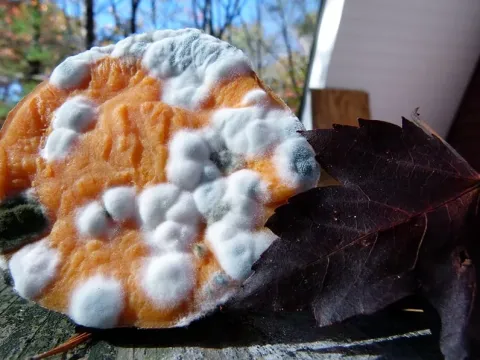
Mucor
Mucor
Mucor (Mucor) is a genus of filamentous fungi within the order Mucorales. These fungi are ubiquitous in nature, typically functioning as saprotrophs, but often acting as opportunistic pathogens on crops.
What the section contains
Mucor
The fungus is characterized by rapid hyphal growth, forming expansive, white-to-greyish mycelial mats. It possesses coenocytic hyphae, meaning it lacks septa (cross-walls) between the individual cells.
Reproduction is primarily asexual, involving the production of sporangia at the tips of sporangiophores. These structures contain thousands of tiny spores capable of traveling long distances via wind.
Zygospores may be formed under specific conditions, providing a mechanism for long-term survival in soil. This hardiness makes them difficult to eliminate from agricultural environments.
They are classified as Zygomycota (or Mucoromycota in recent taxonomies). In the field or laboratory, they are easily distinguished by their diffuse, cotton-like appearance and lack of specific pigmentation.
Mucor species are significant spoilers of agricultural produce, primarily attacking seeds, bulbs, and fleshy fruits. They are major contributors to storage decay in many horticultural products.
In field crops, the fungus causes seed rot, which results in poor emergence and seedling blight. This significantly affects the uniformity of plant stands in various grain and vegetable crops.
Post-harvest, Mucor causes rapid softening and disintegration of fruits. Tomatoes, strawberries, and root vegetables are particularly susceptible if their surfaces are compromised by bruises or cuts.
The damage is often characterized by the rapid collapse of tissue. Because the fungus thrives in high-moisture conditions, a single infected fruit can quickly ruin a whole batch in a storage container.
Furthermore, some species are associated with the production of mycotoxins, which can compromise the quality of the produce, rendering it unsafe for livestock feed or human consumption.
Development is highly correlated with moisture availability. High humidity and cool, damp weather in the spring are the most favorable conditions for the initial infection of seeds.
During the summer, the pathogen often takes advantage of mechanical injuries caused by harvest machinery, insects, or weather-related damage such as hail to enter plant tissue.
Autumn harvest conditions are critical; if crops are harvested during wet weather, the moisture on the surface of the produce provides an ideal substrate for fungal colonization.
In warehouses and storage facilities, the fungus can develop throughout the year if ventilation is inadequate, allowing condensation to accumulate on the surface of the goods.
Temperature range for Mucor activity is broad, but outbreaks are most frequent when temperatures are between 15°C and 25°C, especially in the presence of excess moisture.
The most distinctive sign of Mucor infection is the presence of fluffy, white-to-grey mycelium that spreads rapidly across the surface of the plant tissue.
As the fungus matures, it produces numerous small, dark spherical sporangia, giving the growth a "salt and pepper" appearance when viewed closely.
Infected tissues become soft and watery. Unlike some other rots that cause discoloration, Mucor often preserves the initial color of the fruit while rapidly breaking down its cellular structure.
- White or grey fluffy fungal growth (mycelium).
- Rapid softening of tissues leading to liquid rot.
- A distinct, musty, earthy odor emitted by the decomposing tissue.
- Dark, visible sporangia dotting the surface of the mycelial mat.
Seed infection presents as a grayish fuzz covering the seed coat, which prevents germination and eventually kills the embryo within the soil.
Prevention starts with seed treatment using effective fungicides. This protective coating shields the seed during the critical germination phase in moist, cold soil.
Effective post-harvest management involves keeping storage areas cool, dry, and well-ventilated. Reducing the humidity to below 80% is the most effective way to prevent outbreaks.
Great care should be taken to minimize bruising and cuts during harvest and transport. Healthy skin serves as a primary barrier against Mucor infection.
Sanitation is paramount; removing crop debris and thoroughly cleaning storage facilities with appropriate disinfectants prevents the buildup of spores that cause future infections.
Implementing a proper crop rotation and ensuring good soil drainage can help reduce the population of dormant spores in the field, thus lowering the risk of initial contamination.