
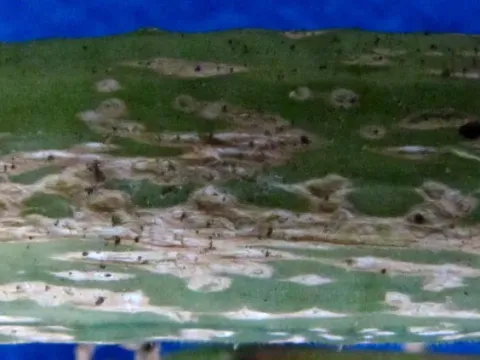
Monographella cucumerina
Monographella cucumerina
Monographella cucumerina is an ascomycete fungus within the Microascaceae family that acts as a soil-borne pathogen responsible for various plant diseases, particularly in protected environments.
What the section contains
Monographella cucumerina
The fungus is a facultative parasite capable of surviving for long periods in soil, decaying plant matter, and greenhouse structures, waiting for favorable conditions to infect susceptible hosts.
The life cycle involves the production of conidia that are easily dispersed through irrigation water, splashing, and contaminated farming equipment, facilitating rapid spread within a crop cycle.
At the microscopic level, the pathogen penetrates the root tissues, establishing itself in the vascular system and parenchyma, where it secretes enzymes to break down plant tissues for nutrient absorption.
It is a highly opportunistic organism that thrives in monocultural systems, where consistent climate conditions allow it to maintain an active population throughout the year.
The primary host for Monographella cucumerina is the cucumber, though other cucurbits like melons and zucchini can also be severely affected by this pathogen.
It causes significant root and crown rot, which disrupts the plant's ability to transport water and essential nutrients from the roots to the shoots, leading to severe physiological stress.
Symptoms often manifest as stunted growth, systemic yellowing of the foliage, and a drastic reduction in fruit yield, often leading to the early termination of the crop in infested greenhouses.
In addition to direct plant mortality, the pathogen causes economic losses due to the increased costs of chemical and biological treatments, as well as the necessity of removing entire sections of plants.
Repeated infestations can lead to long-term soil contamination, rendering the growing medium unsuitable for future production unless extensive sterilization procedures are implemented.
The development of the fungus is highly dependent on environmental moisture and soil temperature; it flourishes in humid conditions with temperatures between +18°C and +24°C.
In protected cultivation systems, the fungus can remain active throughout the entire growing season if high humidity and poor ventilation allow for persistent condensation and soil saturation.
The most dangerous period for infection is during the transition from seedling stage to active fruit-bearing, when the root system is rapidly expanding and potentially vulnerable to invasion.
Poor soil aeration acts as a catalyst for the pathogen's growth, as hypoxic conditions in the root zone provide an advantage for Monographella over beneficial microorganisms.
During the warmer, drier months, the fungus may enter a quiescent state, yet it remains a persistent threat that can reactivate immediately once environmental conditions become favorable again.
The initial signs of infection include a brownish discoloration and soft, water-soaked appearance of the root crown near the soil line.
Wilting of the plant during the hottest hours of the day is a common indicator, often progressing to permanent wilting even when soil moisture is adequate, indicating a blockage of the vascular tissues.
When observing the root system, the main roots may appear decayed, brittle, and dark, with a significant loss of the smaller, fine hair roots responsible for water uptake.
A cross-section of the lower stem often reveals a characteristic brown or necrotic ring in the internal tissues, confirming the presence of a vascular pathogen.
- Chlorosis and premature yellowing of lower leaves.
- Stunting of the main vine and irregular growth.
- Damping-off of seedlings.
- Soft, necrotic root tissue.
- Decline in fruit size and quality.
Rigorous sanitation protocols are essential; this includes the thorough cleaning and disinfection of greenhouse floors, structures, and tools between crop cycles to eliminate overwintering spores.
Implementing effective drainage systems and careful irrigation management is crucial to avoid waterlogged conditions, which are the primary driver of Monographella outbreaks.
Biological control agents, particularly beneficial fungi such as Trichoderma species and beneficial bacteria, can be introduced to the soil to suppress the pathogen through competition and antibiosis.
If infection is detected, affected plants must be removed immediately along with the surrounding root zone soil, and the remaining area should be treated to prevent further spread.
Crop rotation and the use of resistant hybrid varieties, where available, provide a robust long-term strategy for managing the presence of the pathogen in the soil environment.