
Monosporascus cannonballus
Monosporascus cannonballus
Monosporascus cannonballus is a soil-borne fungus belonging to the phylum Ascomycota. It is recognized as a major pathogen responsible for vine decline in various cucurbit crops.
What the section contains
Monosporascus cannonballus
The fungus produces small, black, spherical perithecia on the roots of infected plants. These structures look like miniature cannonballs, which is the origin of the species' scientific name.
Its ascospores are highly resistant to heat and desiccation, allowing the fungus to persist in soil for many years, even at considerable depths, waiting for a suitable host.
This pathogen is primarily saprotrophic but shifts to a parasitic lifestyle when it detects root exudates from susceptible plants, triggering infection.
Morphological identification is often confirmed in laboratory settings by examining the specific structure of the perithecia and the size of the ascospores found on necrotized root tissue.
The host range includes melons, watermelons, pumpkins, and cucumbers. The pathogen attacks the root system, causing rapid decline and significant crop yield reduction.
By destroying the cortical tissue of roots, the fungus compromises the plant's ability to transport water and minerals, which is critical during the fruit development stage.
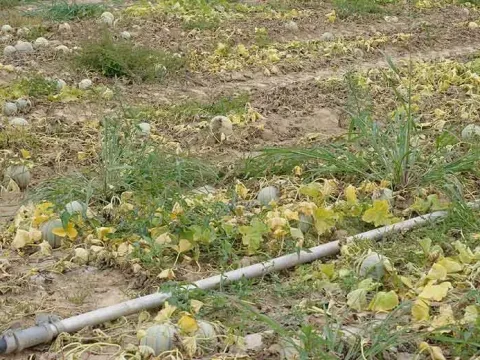
In high-temperature regions, this disease is devastating, often causing a sudden wilt that can kill entire sections of a field in a matter of a few days.
The damage is systemic; once the vascular system is compromised, the plant cannot recover, leading to fruit shriveling and death before harvest.
Secondary infections by other soil bacteria and fungi are common in roots damaged by M. cannonballus, which exacerbates the decline symptoms significantly.
The pathogen thrives in warm soil temperatures, with optimal infection occurring between 25°C and 30°C. High heat stress on plants coincides with the fungus's peak activity.
Infection begins as soon as soil temperatures warm up in the spring, although the most severe above-ground symptoms often appear during the peak of summer fruit growth.
The fungus remains active throughout the cropping season, colonizing plant roots and forming new perithecia on decaying tissue as the host plant begins to die.
In fallow periods or when non-host crops are grown, the pathogen survives as resilient spores in the soil, ensuring the inoculum is present for the next susceptible planting cycle.
Water management, specifically moisture levels in the soil, plays a key role in the dispersal and survival dynamics of this fungus across commercial fields.
Initial symptoms include foliage yellowing (chlorosis) that starts from the leaf margins and progresses inward, often misidentified as nutrient deficiencies.
Plants frequently display temporary wilting during the hottest parts of the day, with partial recovery occurring at night until the infection becomes too advanced.
Visual inspection of the root system reveals severe necrosis, where the root cortex turns dark brown to black and sloughs off easily.
- Stunting of the primary root system;
- Lack of secondary root branching;
- Visible black perithecia embedded in the rotted root tissue;
- Small, underdeveloped, and poor-quality fruit production.
As the disease progresses, the root system becomes brittle, leading to the collapse of the vine as the plant effectively loses its connection to soil nutrients.
Management strategies focus on long-term crop rotation with non-cucurbit crops like cereals to reduce the fungal spore load in the soil over several years.
Soil solarization using plastic mulches during hot summer months is a highly effective method to reduce the viability of spores in the upper soil profile.
The use of grafting onto resistant or tolerant rootstocks is currently one of the most reliable methods for commercial growers to manage the impact of this pathogen.
Biological control agents, such as Trichoderma species, can be applied to the rhizosphere to competitively exclude the pathogen from colonizing healthy roots.
Strict sanitation protocols, including the thorough removal and destruction of infected plant debris after harvest, are essential to prevent further infestation of the field.