
Monilochaetes infuscans
Monilochaetes infuscans
Monilochaetes infuscans is a filamentous fungus belonging to the group of hyphomycetes. It is recognized as a specific soil-borne pathogen that targets the underground structures of various plants, primarily the sweet potato.
What the section contains
Monilochaetes infuscans
The fungus is characterized by its dark, septate mycelium and the formation of conidia on specialized, moniliform (bead-like) conidiophores. These morphological features are critical for its precise identification in a laboratory setting.
The pathogen is highly persistent, capable of surviving in the soil or within decaying plant debris for several seasons, which makes it a significant challenge for long-term agricultural management.
It thrives in a wide range of environmental conditions, utilizing its resistant spores to endure winter temperatures and soil moisture fluctuations before initiating a new infection cycle.
Standard identification methods involve isolation on nutrient media, such as potato dextrose agar, where the fungus exhibits a characteristically slow growth rate and deep olivaceous-black colony pigmentation.
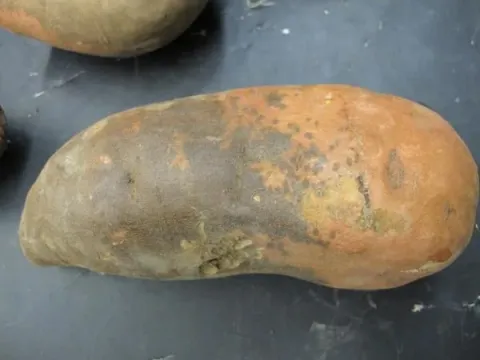
The pathogen is best known for causing "scurf," a disease that significantly impacts sweet potato production worldwide. It primarily affects the skin of storage roots, although it can also infect underground stems.
The infection manifests as surface blemishes that drastically reduce the cosmetic appeal and market value of the sweet potatoes, often rendering them unmarketable for fresh consumption.
While the internal flesh of the root usually remains unaffected, the compromised skin increases the rate of water loss, leading to shriveling and a shortened shelf life during post-harvest storage.
In cases of severe infection, the pathogen creates an entry point for secondary opportunistic microorganisms, which can lead to rapid rot and complete loss of the storage roots.
Agricultural operations often suffer economic losses not only due to direct crop damage but also through the added costs of sorting, sanitizing, and managing storage conditions for infected yields.
The most distinctive sign of Monilochaetes infuscans is the appearance of brown to dark-brown, circular patches on the surface of the root periderm. Over time, these spots darken, eventually turning black.
These patches are often confluent, covering a substantial portion of the root surface. The transition between healthy and infected tissue is generally clearly demarcated.
Under conditions of high moisture, a faint, dark, velvety growth may become visible on the surface of the affected areas, consisting of the pathogen's sporulating structures.
Infections on stems and transplants appear as dark, necrotic lesions near the soil line, which can contribute to plant wilting, chlorosis, and stunted development.
Skin roughening and occasional cracking can also be observed in infected zones, which further contributes to the overall poor appearance of the infected crop.
The foundation of effective management is the use of disease-free, certified "seed" roots or vine cuttings to ensure that the pathogen is not introduced into clean fields.
Crop rotation is a vital strategy, requiring a multi-year break between sweet potato crops to allow for the natural decline of the fungal inoculum in the soil.
Sanitation practices are essential; all crop debris must be removed and destroyed after harvest to minimize the carry-over of the pathogen into the following growing season.
Pre-planting chemical treatments, such as fungicide dips for roots or cuttings, can provide effective protection for young plants against early soil-borne infection.
Maintaining optimal storage conditions, including proper ventilation and temperature control, is crucial to prevent the spread of the fungus from symptomatic roots to healthy ones in storage facilities.