
Monilinia urnula
Monilinia urnula
Description
How to identify
Monilinia urnula is a fungus belonging to the kingdom Fungi and the genus Monilinia. It is an ascomycete fungus that acts as a specialized plant pathogen, often associated with berry-bearing shrubs.
Systemically, it is classified within the family Sclerotiniaceae. The fungus is characterized by its ability to form sclerotia, which are dormant structures allowing the pathogen to survive harsh winters in soil or plant debris.
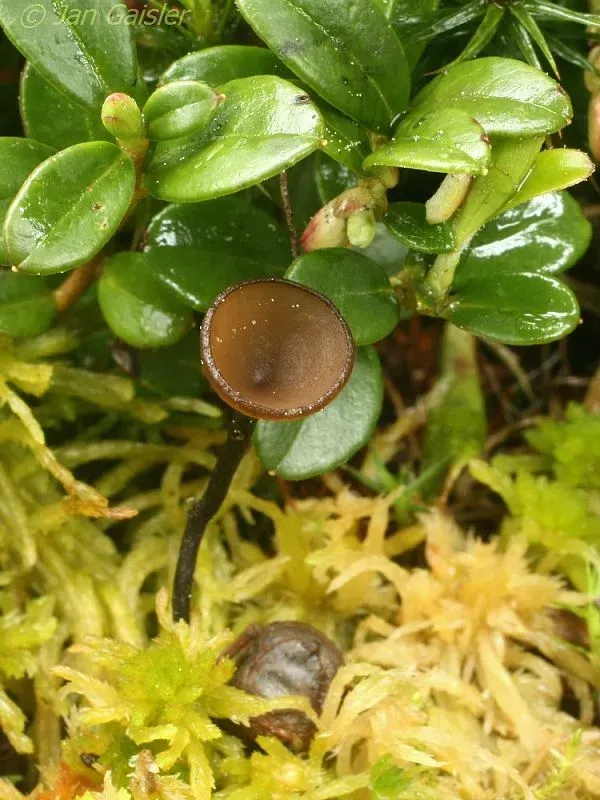
The mycelium of this fungus invades plant tissues, disrupting normal metabolic functions. The apothecia (fruiting bodies) emerge in spring from overwintered sclerotia and possess a distinct urn-like shape, which is the origin of its specific epithet.
This microscopic pathogen is highly adapted to the specific ecological niches of its hosts, utilizing moisture as a key driver for sporulation and subsequent infection processes.
As an obligate parasite, Monilinia urnula maintains a tight biological correlation with the phenology of its host plants, synchronizing its reproduction with the host's flowering cycle.
What it damages
The primary host for this fungus is the lingonberry (Vaccinium vitis-idaea). The pathogen attacks both vegetative structures and, more importantly, the reproductive parts of the plant.
The greatest damage occurs when the fungus infects the ovaries of young berries. This infection arrests fruit development, leading to deformation and premature shedding of the berries.
Young shoots may also be affected, leading to wilting and reduced vitality of the entire plant. This effectively limits the plant's photosynthetic capacity and potential yield.
In high-inoculum scenarios, this pathogen can cause substantial economic losses, significantly reducing the harvest in wild berry fields and cultivated plantations.
Secondary infections often colonize the tissues weakened by Monilinia urnula, further degrading the health and vigor of the infected shrub population.
When it appears
The lifecycle begins in early spring as temperatures rise, signaling the germination of sclerotia resting in the soil and the development of apothecia.
The peak period for infection coincides with the host's flowering phase, during which ascospores are released and dispersed by wind to the susceptible floral organs.
High relative humidity and frequent rainfall are the most critical environmental conditions that facilitate the germination of spores and the establishment of the infection.
During the summer, as the fruit begins to mature, the fungus focuses its metabolic activity on developing sclerotia inside the berries, leading to fruit mummification.
As autumn arrives, the mummified berries fall to the ground, where they serve as a reservoir for the pathogen to survive the winter and repeat the cycle in the following season.
Signs of infestation
The first observable sign of infection is the browning and wilting of flowers, which quickly wither and lose their structural integrity.
A gray, powdery coating may be visible on the young ovaries; this is the conidial sporulation of the fungus, representing a mechanism for rapid secondary dispersal.
As the berries develop, they become hard, black, and shriveled, a phenomenon known as fruit mummification, with a sclerotium forming within the desiccated tissue.
Infected shoots might exhibit abnormal curvature or premature browning, providing a clear indication that the internal tissues have been colonized by fungal hyphae.
Microscopic examination of affected plant parts will reveal dense networks of fungal filaments replacing the normal host parenchyma cells.
Control measures
Effective management of Monilinia urnula relies on an integrated approach, combining sanitary practices with timely chemical interventions.
Sanitation is paramount: collecting and destroying mummified berries is crucial to reducing the primary inoculum source for the following season.
Planting density should be managed to ensure adequate airflow, which helps reduce humidity levels around the bushes, creating a less hospitable environment for the fungus.
Fungicide applications are most effective when timed carefully, specifically before flowering and immediately after the bloom to protect sensitive floral organs.
Using copper-based products or registered systemic fungicides can significantly limit the incidence of the disease if applied at the first signs of symptoms.
Causes diseases · 1
Discussion
No discussions yet — be the first.