
Fomitopsis officinalis
Fomitopsis officinalis
Description
How to identify
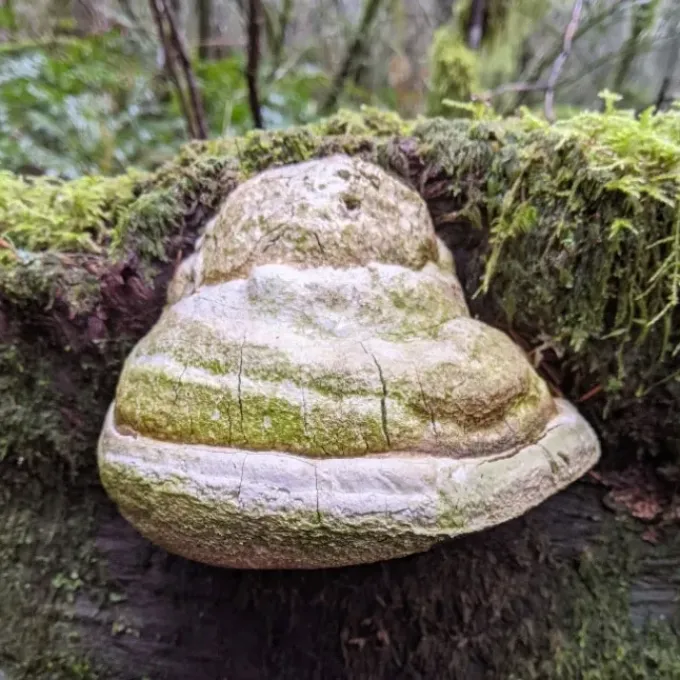
Fomitopsis officinalis, commonly known as the quinine conk or larch polypore, is a perennial wood-decay fungus belonging to the Fomitopsidaceae family.
The fruiting bodies are typically hoof-shaped, elongated, or cylindrical in appearance. They are often covered with a hard, white or yellowish crust that may crack with age.
The context or flesh of the conk is white, chalky, and exceptionally bitter, which serves as a key identification characteristic for this specific species.
As a specialized wood-rotting fungus, it occupies the heartwood of mature conifer trees, functioning as a primary decomposer in forest ecosystems.
Systematically, this fungus is a basidiomycete that persists on its host for many years, growing slowly but steadily within the infected trunk.
What it damages
This pathogen targets mature coniferous trees such as larch, spruce, pine, and fir. It is considered a significant threat to timber quality in old-growth forests.
The fungus enters through wounds, broken branches, or frost cracks, colonizing the core of the tree and breaking down its structural components.
It causes intense brown cubical rot, which destroys cellulose and leaves the lignin intact. The wood loses its mechanical integrity and becomes brittle.
Economic damage is substantial, as infected trees lose their commercial value for construction and high-quality timber production due to the internal rot.
Trees affected by this pathogen become prone to stem breakage, posing a hazard to forest workers and decreasing the overall health of the forest stand.
When it appears
As a perennial fungus, Fomitopsis officinalis fruiting bodies persist on the host tree throughout the year, steadily increasing in size over many years.
The production and release of basidiospores occur mainly during the warmer months, when environmental conditions facilitate successful wind dispersal.
The mycelium thrives inside the wood interior regardless of the season, maintaining steady metabolic activity throughout the tree's lifespan.
The infection process is long-term, spanning years or even decades. The pathogen slowly exhausts the tree's resources until its biological death.
High humidity levels are critical for the survival of the fungus and the successful germination of spores on the surface of exposed woody tissues.
Signs of infestation
The most prominent sign is the presence of the thick, hoof-shaped perennial fruiting bodies attached to the trunks of old conifer trees.
Internal wood decay is characterized by a distinct brown discoloration. When dry, the wood fractures into brittle, cubic blocks, confirming the presence of brown rot.
White, felty mycelial mats may form within the cracks of the decayed wood, which are indicative of an established fungal colony.
External symptoms in the tree include thin crowns, needle drop, and general decline. These signs reflect the lack of water and nutrient transport caused by the rot.
Stems may show signs of mechanical stress or distortion, often leading to structural failure or windfall under the pressure of severe weather conditions.
Control measures
The primary control strategy involves systematic forest sanitation. Infected trees should be identified and removed to minimize the fungal spore load.
Preventing mechanical injuries during silvicultural activities is essential, as these wounds serve as the main entry points for the pathogen's spores.
Maintaining a healthy, balanced forest structure helps improve the natural resistance of trees to opportunistic infections by wood-decay fungi.
Regular forest monitoring allows for the early detection of disease hotspots, ensuring that sanitation efforts are focused and effective.
In managed forestry, it is crucial to avoid over-aging of susceptible conifer stands, as mature trees are significantly more vulnerable to heartwood decay.
Causes diseases · 1
Discussion
No discussions yet — be the first.