
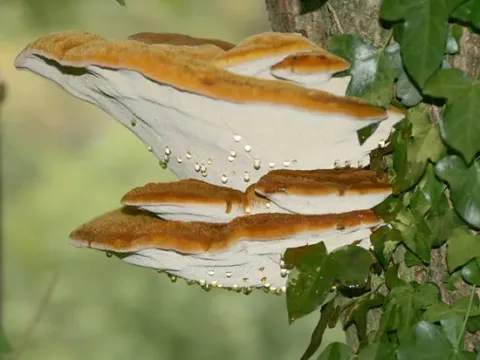
Inonotus hispidus
Inonotus hispidus
Inonotus hispidus, commonly known as the shaggy bracket, is a fungus species in the family Hymenochaetaceae. It acts as a primary pathogen causing white heart rot in various hardwood trees.
What the section contains
Inonotus hispidus
The fungus produces annual, sessile, and thick fruiting bodies. These brackets are often semi-circular or shelf-like, protruding from the trunk of the host tree.
The upper surface is characteristically covered in stiff, coarse, orange-brown hairs, which give the fungus its distinct shaggy appearance during the growing season.
Internally, the context of the fruit body is fibrous, dense, and displays a deep rusty-brown color, which is a key diagnostic feature for field identification.
The hymenium, located on the underside of the bracket, is made up of fine, dense pores that release spores to facilitate the spread of the pathogen to neighboring trees.
This pathogen specifically attacks living deciduous trees, with apple, pear, walnut, ash, and oak being highly susceptible to infection and subsequent decay.
By degrading lignin and cellulose within the wood, Inonotus hispidus significantly weakens the mechanical structure of the trunk, often leading to structural failure.
Infected trees often suffer from internal rot that remains hidden for years, making the tree prone to breaking during high winds or heavy storms, posing a safety risk.
The decay process disrupts the tree's vascular system, leading to stunted growth, nutrient deficiency, and reduced fruit production in horticultural varieties.
In forest and urban landscapes, this fungus is a significant cause of tree mortality, often resulting in the premature loss of valuable specimens if not managed correctly.
The fungus is active throughout the warmer months, with the mycelium colonizing the heartwood of the host tree whenever temperatures allow for metabolic activity.
Fruiting bodies typically emerge in late summer and autumn, which serve as the primary window for visual detection and the release of reproductive spores.
Dissemination is driven by wind and splashing rainwater, which carry spores to fresh wounds on the bark, pruning scars, or storm-damaged branches of potential hosts.
During the winter season, the fungus enters a dormant state as mycelial mats inside the tree trunk, ready to resume colonization as soon as spring temperatures return.
Environmental stress, such as drought or severe frost, can increase a tree's susceptibility to initial colonization by providing more points of entry through cracked bark.
The most reliable sign of infection is the presence of the shaggy, rust-colored fruiting bodies growing directly from the trunk or the base of major branches.
Visible decline in the tree's crown, characterized by sparse foliage, yellowing leaves, and dieback of the upper branches, often indicates advanced internal wood decay.
Cracks in the bark, localized weeping of dark fluid, or swelling of the trunk surface are common indicators of the rot process occurring deeper within the xylem.
Sounding the trunk with a mallet can reveal hollow or soft spots in the wood, confirming the presence of structural degradation caused by the fungal mycelium.
The shedding of bark in irregular patches near the site of the fruiting body is another classic symptom that the fungus has been active for a significant period.
Management of Inonotus hispidus relies heavily on preventative horticultural practices, as there are no curative chemical treatments once the heartwood is colonized.
Pruning should be performed with care to avoid large wounds, and any necessary cuts must be sealed with appropriate wound dressing to block fungal entry points.
If an infection is detected, the affected tree should be evaluated by a professional arborist to determine if it poses a risk or can be salvaged by surgery.
Severely infected trees or branches showing extensive fruiting bodies should be removed and destroyed to minimize the airborne spore load in the immediate area.
- Monitor trees annually for signs of bracket growth.
- Maintain tree vigor through proper irrigation and fertilization.
- Promptly remove dead wood and fallen logs from the area.
- Sterilize pruning equipment between different trees to prevent transmission.