
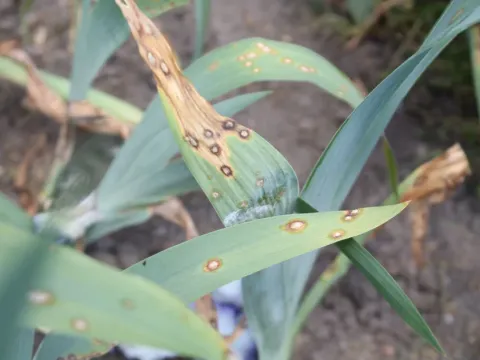
Iris leaf spot
Heterosporium sphaeriiforme
Iris leaf spot is caused by the fungal pathogen Heterosporium sphaeriiforme (syn. Mycosphaerella iridis). It is a widespread ascomycete fungus that primarily affects the foliage of garden irises.
What the section contains
Iris leaf spot
The fungus overwinters in infected plant debris, specifically in dead leaves, as dormant mycelium or spores. When favorable conditions return in spring, the fungus resumes development and releases conidia.
These spores are disseminated by wind, splashing rain, and irrigation water, landing on healthy tissue to initiate new infection cycles throughout the growing season.
The development of the fungus is highly dependent on environmental moisture; high humidity levels and moderate temperatures create an optimal environment for rapid proliferation.
The pathogen is known for its persistence, meaning it can remain in a garden year after year if sanitation practices are not strictly implemented.
The pathogen specifically targets members of the Iris genus, with bearded irises being particularly susceptible to heavy outbreaks, especially in poorly ventilated sites.
By infecting the leaves, the fungus disrupts the plant's photosynthetic capacity, which directly affects the vigor and health of the iris rhizomes.
Severe infestations lead to premature senescence of foliage. The "burnt" appearance of the leaves ruins the aesthetic appeal of the garden and lowers the quality of the plants.
When the plant is severely weakened by repeated annual infections, it may fail to produce flowers, as the rhizome lacks the energy reserves required for bud formation.
In commercial nurseries or large-scale plantings, the disease can cause significant economic losses by making the plants unsellable due to their unsightly appearance.
Early symptoms typically appear in late spring, corresponding with the initial flush of vegetative growth when the weather becomes warmer.
The disease progresses rapidly throughout the summer, peaking during periods of high humidity and rainfall which facilitate spore germination.
Nighttime dews and foggy mornings provide sufficient moisture on the leaf surface for the fungus to establish infection sites even without heavy rain.
The disease continues to develop until the onset of autumn, at which point the fungus settles into the dead or dying foliage to survive the winter.
In mild climates, the pathogen may remain active for longer durations, potentially starting new infections earlier in the following spring.
Initial signs consist of small, water-soaked, or light green spots that quickly develop a distinct, dark brown or reddish-brown border.
As the spots expand and coalesce, the center of the lesion turns grayish-brown, often exhibiting a velvety, olive-green fungal growth in moist conditions.
The leaves begin to wither from the tips downward, eventually resulting in the total collapse of the leaf blade as the infection progresses.
The disease is usually most visible on the lower, older leaves of the plant, where moisture tends to linger for longer periods.
- Water-soaked spots on the leaves.
- Dark borders around lesions.
- Velvety olive fungal coating.
- Dieback starting from leaf tips.
Strict sanitation is the primary defense: remove and destroy all infected foliage throughout the growing season and perform a thorough cleanup in late autumn.
Improve air circulation by providing adequate spacing between plants and keeping the planting area free from dense weeds that retain moisture.
Apply copper-based fungicides or protectant sprays in early spring to coat the leaves and prevent initial spore germination.
For established infections, utilize systemic fungicides that can inhibit fungal growth and provide curative properties to stop the spread.
Adopt water-wise irrigation habits: use drip irrigation instead of overhead sprinklers to keep the foliage dry and prevent the conditions necessary for infection.