
Indian paint fungus
Echinodontium tinctorium
Description
How to identify
Indian paint fungus (Echinodontium tinctorium) is a significant wood-decay fungus within the order Polyporales. It is well-known as a primary cause of heart rot in various coniferous tree species across mountainous regions of North America.
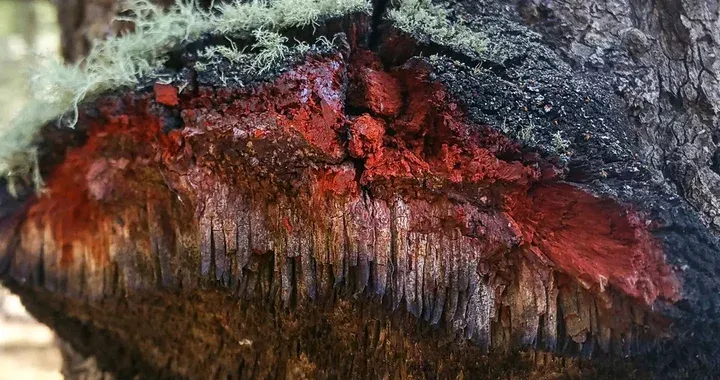
The fungus is characterized by its woody, perennial conks which are typically hoof-shaped. The upper surface is dark and weathered, while the underside features a distinct toothed or spine-like hymenium.
Its common name, "Indian paint," originates from the red-brown pigment found in the flesh of the fruiting body. Indigenous peoples historically used this material to create vibrant red or orange paints and dyes.
Taxonomically, it belongs to the family Echinodontiaceae. As a heart-rot pathogen, it exclusively targets the interior heartwood of living trees, often entering through suppressed or broken branch stubs.
The biology of this fungus is closely tied to the lifecycle of old-growth forests. It prefers cooler, moist environments where host trees can persist for decades, allowing the fungus sufficient time to colonize the wood.
What it damages
The fungus is a major threat to hemlock, fir, and spruce forests. By invading the heartwood, it initiates a slow but progressive decay process that degrades the structural integrity of the tree.
The wood affected by E. tinctorium becomes brittle, crumbly, and develops a reddish-brown discoloration. This decay significantly reduces the commercial value of the timber, as it makes the wood unsuitable for structural lumber.
Since the decay occurs internally, infected trees often appear healthy from the outside for many years. This hidden damage makes the disease particularly dangerous in silvicultural and recreational areas.
Structural weakening leads to increased susceptibility to windthrow. In forestry, trees infected with this pathogen are often removed to reduce the risk of falling debris and to protect the remaining stand.
Beyond timber loss, the decay process creates hollows inside the trees, which can sometimes provide habitat for wildlife, although this is generally outweighed by the economic loss in managed forestry.
Signs of infestation
The most visible sign of an infection is the presence of the fungus's perennial conks. These are commonly found protruding from the branch stubs of infected trees, particularly on the lower trunk.
Internally, the presence of the fungus is confirmed by the distinct rusty-red staining of the wood. This color is the result of the accumulation of fungal pigments and the enzymatic breakdown of the wood fibers.
Advanced infections can be indicated by the presence of numerous fruiting bodies on a single trunk, suggesting that a large portion of the tree’s heartwood has already been compromised.
Field foresters often identify potential infection sites by looking for branch stubs that show signs of damage or decay, as these are the primary entry points for fungal spores.
Microscopic examination of wood samples shows characteristic fungal hyphae and spores. These features are essential for accurate diagnosis in forest pathology surveys and scientific research.
Control measures
Control strategies for the Indian paint fungus focus on sanitation and stand management. Removing heavily infected trees helps to limit the amount of spores released into the environment.
Minimizing mechanical injuries to trees during thinning and harvest operations is crucial. Protecting the bark and branches from damage significantly reduces the chances of initial spore colonization.
Managing the age structure of the forest is another effective tool. Since the fungus primarily attacks mature and old-growth trees, harvesting before the stand reaches peak susceptibility helps minimize losses.
Regular forest monitoring allows for the early detection of infection clusters. In public parks and recreational forests, targeted tree removal is performed to prevent hazards to human safety.
While direct chemical treatment is rarely feasible in a forest setting, integrated forest management practices ensure the overall health and vigor of the stand, reducing its vulnerability to this persistent pathogen.
Causes diseases · 1
Discussion
No discussions yet — be the first.