
Indian cassava mosaic virus
Indian cassava
Description
How to identify
Indian cassava mosaic virus (ICMV) is a significant plant pathogen belonging to the Geminiviridae family and the Begomovirus genus, containing circular single-stranded DNA.
The virus is characterized by a bipartite genome that requires a specific vector for natural transmission between plants in tropical agricultural ecosystems.
The whitefly Bemisia tabaci serves as the primary biological vector, acquiring the virus during feeding and maintaining the ability to transmit it for a long period.
In addition to insect transmission, the virus is easily disseminated through infected cuttings (stem pieces) used by farmers as planting material.
Molecular detection techniques, such as PCR and sequence analysis, are essential for identifying the virus due to its ability to remain latent in some cultivars.
What it damages
ICMV primarily affects cassava (Manihot esculenta), a vital caloric source in many developing regions, leading to severe economic and nutritional losses.
The damage is systemic: the virus inhibits photosynthesis and disrupts the translocation of nutrients to the storage roots, significantly reducing starch content.
Yield reductions are drastic, often ranging from 20% to over 80% depending on the susceptibility of the cassava variety and the timing of the infection.
Secondary effects include lower quality of the harvested tubers, making them less suitable for processing into flour, chips, or industrial starch.
The reduction in tuber size and quality exacerbates food insecurity, forcing farmers to abandon highly susceptible land for cultivation.
Signs of infestation
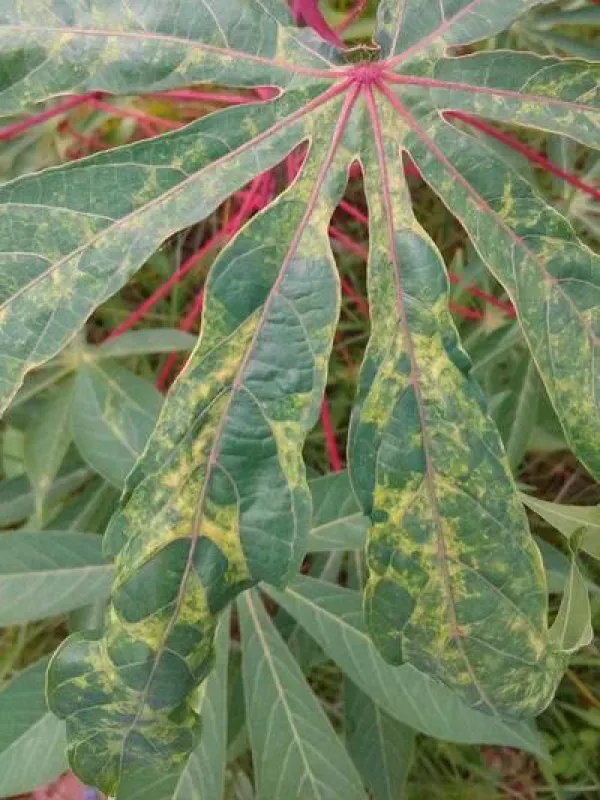
The classic symptoms include a distinct mosaic pattern, characterized by chlorotic yellow-green patches contrasting with healthy green leaf tissue.
Leaves exhibit significant malformation, including curling, twisting, and a reduction in size, which decreases the overall surface area for carbon assimilation.
Infected plants display obvious stunting, characterized by shortened internodes and a bushier appearance due to the proliferation of stunted lateral branches.
Symptoms often manifest as severe leaf distortion, which can be easily confused with nutrient deficiencies, requiring diagnostic verification.
The entire canopy may show a yellowed appearance, which is particularly evident in young, newly emerged leaves during active growth periods.
Control measures
The most effective strategy is the distribution and use of virus-indexed, disease-free planting material developed through tissue culture techniques.
Integrated Pest Management (IPM) focusing on the control of the whitefly population is crucial to limit the rate of secondary spread in the fields.
Crop sanitation practices, such as the rapid roguing and destruction of symptomatic plants, help to reduce the inoculum source within the plantation.
Promoting the adoption of host-plant resistance through breeding programs is the cornerstone of sustainable management against ICMV.
Implementing phytosanitary measures, including strict quarantine regulations, prevents the movement of infected cassava cuttings into non-endemic regions.
Causes diseases · 1
Discussion
No discussions yet — be the first.