
Idriella lunata
Idriella lunata
Description
How to identify
Idriella lunata is an anamorphic fungus belonging to the Ascomycota division. It is classified within the Hypocreales order and is widely recognized as a soil-borne plant pathogen capable of causing significant damage to various crops.
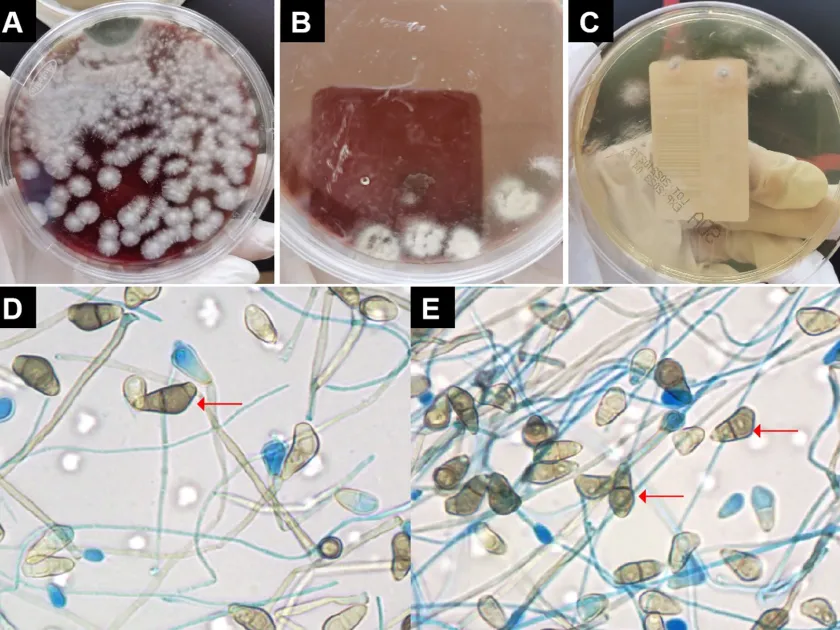
The fungus is characterized by its hyaline conidiophores and sickle-shaped (lunate) conidia, which serve as its primary means of asexual reproduction. These spores are highly resistant to environmental stress and allow the pathogen to persist in soil for extended periods.
Biologically, it is a facultative parasite, meaning it can thrive as a saprotroph on crop residues when a living host is unavailable. This trait makes it particularly challenging to eradicate from agricultural fields using basic crop rotation alone.
Environmental factors, such as soil moisture levels and temperature, play a crucial role in its lifecycle. The fungus prefers moderate temperatures and high soil humidity, which facilitate the germination of conidia and subsequent root infection.
Identification in the field is difficult due to its resemblance to other soil-borne fungi like Fusarium or Rhizoctonia. Accurate diagnosis typically requires isolation on growth media followed by microscopic examination of the conidial structures.
What it damages
Idriella lunata primarily targets cereal crops, including wheat and barley, but it has also been documented affecting horticultural crops such as tomatoes and strawberries. It is often a key component of complex root rot diseases.
The pathogen attacks the root system, causing necrosis and degradation of the cortical tissues. This damage inhibits the plant's ability to uptake water and essential minerals, leading to stunting and severe reduction in biomass.
In seedlings, infection can result in pre-emergence or post-emergence damping-off, causing patchy stands and poor field establishment. This early-season impact is often the most detrimental to final crop yield.
Older plants may exhibit symptoms of "root rot syndrome," where the roots appear darkened and brittle. This significantly weakens the plant's structural integrity, making it more susceptible to lodging during windy conditions.
The economic impact is manifested through reduced grain weight, poor crop quality, and yield losses. In cases of severe infestations, entire sections of a field may suffer complete crop failure, necessitating costly replanting or mitigation efforts.
Signs of infestation
Early symptoms are often subtle and include a general lack of vigor in the crop. Affected areas may appear as localized patches where plants are shorter or have chlorotic leaves, indicating stress.
Upon closer inspection, the root system shows signs of decay, appearing brown or blackish. Unlike healthy roots, which are firm and white, infected roots feel soft, break easily, and show clear evidence of tissue necrosis.
In high-humidity conditions, a thin, grayish fungal growth might be visible at the base of the stem or near the soil surface. This mycelial growth is usually fleeting and disappears as soon as the surface dries out.
- Stunting and uneven growth patterns in the field.
- Chlorosis (yellowing) of the lower leaves.
- Browning and decay of the primary and lateral roots.
- Increased susceptibility to water stress and nutrient deficiency.
Since symptoms often overlap with other root-rot pathogens, diagnosis must consider soil conditions, field history, and specific diagnostic testing to confirm Idriella lunata as the primary causal agent.
Control measures
Effective management begins with robust cultural practices, primarily long-term crop rotation. By avoiding the cultivation of susceptible host crops in the same field for several years, growers can effectively reduce the inoculum pressure.
Soil management strategies, such as improving drainage and incorporating organic matter, help create an environment less favorable for the fungus. Tillage practices that bury crop residues deeply can also accelerate the degradation of the pathogen's substrate.
Seed treatment with broad-spectrum systemic fungicides is the most critical preventative measure. This creates a protective zone around the germinating seed, significantly reducing the probability of early infection by soil-borne conidia.
Maintaining optimal soil fertility, especially balanced phosphorus and potassium levels, helps plants develop stronger roots and improve their inherent defense mechanisms against fungal pathogens.
While chemical applications during the growing season are limited by the pathogen's soil-dwelling nature, integrated pest management (IPM) should focus on preventing the introduction of infected seeds and maintaining overall soil health to minimize the pathogen's impact.
Causes diseases · 3
Discussion
No discussions yet — be the first.