
Hypoxylon serpens
Hypoxylon serpens
Description
How to identify
Hypoxylon serpens is a fungus belonging to the kingdom Fungi, phylum Ascomycota, class Sordariomycetes, order Xylariales, and family Hypoxylaceae. It is a common wood-decaying fungus that acts primarily as a saprotroph but can become a weak pathogen.
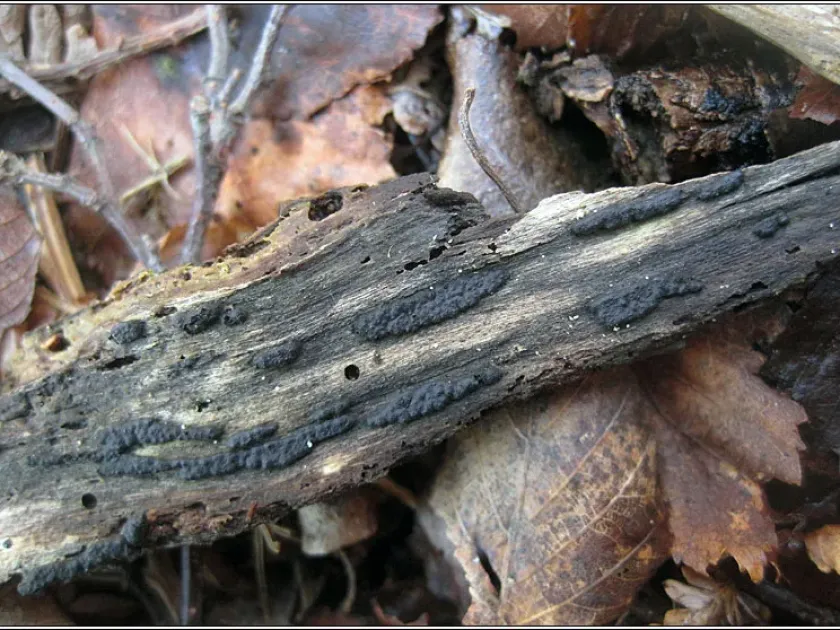
The fungus forms distinctive, flattened, effused-pulvinate stromata on the bark or wood surface. These stromata are often elongated and can merge to cover significant areas of the substrate.
Initially, the color of the stromata is brownish or grayish, but it darkens to coal-black as the fungus matures. The surface appears granular due to the protruding ostioles of the perithecia.
It is widespread in temperate regions and commonly found in forest ecosystems on dead or dying hardwood branches, often seen on fallen logs or standing weakened trees.
Microscopic examination reveals dark, ellipsoid ascospores, which are a critical feature for identifying this specific species within the Hypoxylaceae family.
What it damages
The primary hosts of Hypoxylon serpens include various hardwood species such as oak, beech, birch, and hornbeam. It rarely affects conifers unless the tree is severely compromised.
The pathogen typically invades trees through physical wounds, frost cracks, or improper pruning cuts, colonizing the wood tissues and breaking down lignin and cellulose.
In forestry, this fungus causes wood degradation, reducing the economic value of timber and accelerating the decomposition of logging residues or dead wood.
In orchards and landscapes, it attacks stressed or neglected trees, contributing to bark necrosis and the eventual dieback of limbs or the entire tree.
While often considered secondary, the damage caused by the fungus creates structural instability in trees, increasing the risk of branch failure during strong winds.
Signs of infestation
The most visible sign of infection is the presence of hard, black, crust-like stromata that follow the contours of the bark or spread along cracks in the wood.
Removing the bark near an infection site often exposes discolored, brittle, and necrotic wood. The internal tissues may show signs of white rot or dark decay patterns.
During the active sporulation phase, a light-colored conidial layer may appear on the surface of the stromata, which eventually turns black and carbonaceous.
Bark peeling and local tissue death are classic symptoms of the fungus colonizing the cambium layer, leading to the disruption of water and nutrient transport.
Crown dieback is a common systemic sign of advanced infection, indicating that the fungus has caused significant damage to the main stem or supporting branches.
Control measures
Sanitation is the primary management strategy; pruning and removing infected branches or severely damaged trees are essential to minimize the source of fungal spores.
Exposed wounds on valuable trees should be treated with appropriate sealants or fungicides to prevent colonization by opportunistic wood-rotting pathogens.
Maintaining tree vigor through proper watering, fertilization, and protection from physical damage significantly reduces susceptibility to Hypoxylon serpens.
Biological control methods involving the application of Trichoderma species have shown promise in protecting wound sites from infection by wood-decaying fungi.
Regular forest and orchard inspections are necessary to detect early-stage infections and prevent the localized spread of the fungus within a stand.
Causes diseases · 2
Discussion
No discussions yet — be the first.