
Apple rust
Gymnosporangium yamadae
Description
How to identify
Apple rust is caused by the fungus Gymnosporangium yamadae, a basidiomycete pathogen that belongs to the order Pucciniales. It is an obligate parasite that requires two distinct hosts to complete its life cycle.
The primary hosts for this pathogen are apple trees (Malus species), while various species of juniper, including Chinese juniper, serve as the alternate host for the fungus.
The pathogen overwinters as mycelium within the branches of the juniper trees. In early spring, these infections swell and produce bright orange telial horns that release spores.
These spores are wind-dispersed over long distances and land on apple leaves, where they germinate and colonize the host tissue during periods of high humidity.
The fungus is highly specialized, and its biological success depends on the proximity of both host species, making it a persistent issue in residential and agricultural landscapes.
What it damages
The disease primarily attacks leaves, though severe infections can affect fruit and twigs. This damage significantly interferes with the tree's physiological health.
Extensive leaf loss results in a reduced surface area for photosynthesis, which prevents the tree from producing the energy required for fruit growth and winter survival.
Trees affected by rust exhibit lower vigor, resulting in stunted shoot growth and reduced quality of harvested apples, which often show deformities.
In addition to yield loss, persistent infections weaken the tree's immune system, making it more susceptible to secondary pests and environmental stressors.
Young nursery stock is particularly vulnerable, as repeated defoliation can lead to stunted development or the eventual death of the sapling.
When it appears
Infection cycles begin in the spring during bloom, triggered by rainfall and warm temperatures that facilitate the release of spores from juniper galls.
The incubation period on apple leaves typically ranges from 10 to 20 days, depending on weather conditions. Visible symptoms usually appear by early summer.
By late summer, the fungus produces aeciospores on the underside of apple leaves. These spores are then carried by the wind back to juniper hosts.
Wet and humid weather conditions throughout the growing season are essential for the survival and spread of the rust spores, intensifying the infection rate.
The fungus completes its transition to the juniper host in autumn, where it establishes deep mycelial infections to survive the upcoming winter months.
Signs of infestation
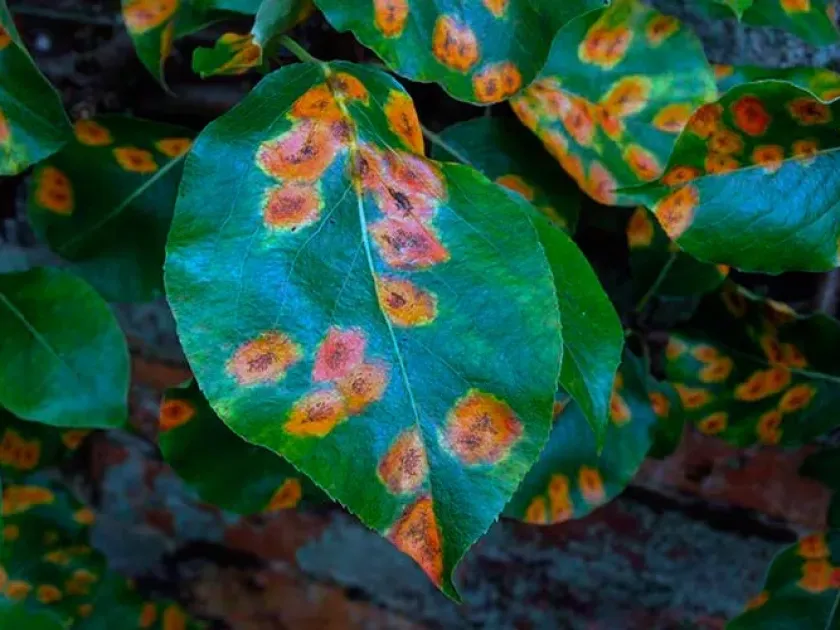
Infected apple leaves display bright orange or reddish-brown circular spots on the upper leaf surface, often bordered by a yellow halo.
Small black dots called pycnidia appear within these spots as the disease progresses. On the underside of the leaf, yellow, cone-shaped structures called aecia develop.
Heavily infected leaves may turn yellow and wither, leading to premature leaf drop during the peak of the growing season.
Apples affected by the disease develop necrotic, orange lesions that cause the fruit to become misshapen, hard, and prone to cracking.
On woody twigs, the infection can cause localized swellings and cracks, leading to dieback of the branch terminals if left unmanaged.
Control measures
The most effective long-term management strategy is to remove alternate hosts, specifically juniper trees, from the vicinity of the apple orchard.
Pruning out infected branches of juniper trees in late winter or early spring helps reduce the initial source of fungal spores in the area.
Fungicide applications are crucial during the bloom period to protect young leaves and blossoms from initial infection.
- Copper-based fungicides are useful for early spring sanitation.
- Systemic fungicides from the triazole or strobilurin classes provide effective protection.
- Maintaining tree vigor through proper pruning and balanced fertilization improves resistance.
Implementing an integrated management program that includes both cultural practices and scheduled spraying is the best approach to control apple rust.
Causes diseases · 5
Discussion
No discussions yet — be the first.