
Description
Symptoms
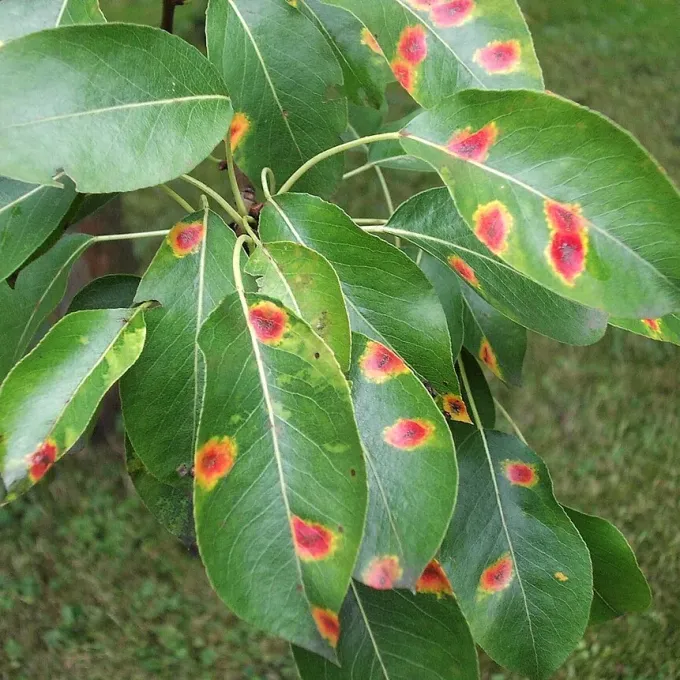
Pear rust symptoms typically appear in early spring. The upper side of the leaves develops bright orange or reddish-brown circular spots that are easily visible.
As the disease progresses, these spots expand, and small black dots (spermogonia) appear on their surface, which is a classic indicator of the fungus activity.
By mid-to-late summer, raised, cone-shaped structures called aecia develop on the underside of the leaves, releasing spores into the air to spread infection.
Severe infestations can spread to the leaf stalks, shoots, and fruits. Affected shoots often show signs of swelling, distortion, and stunted growth.
The damage often results in premature leaf drop, which leaves the tree stressed and vulnerable before it enters the dormancy period in winter.
Pathogen
The pathogen responsible for this disease is a heteroecious rust fungus known as Gymnosporangium fuscum. It requires two distinct plant hosts to complete its cycle.
The primary overwintering host is the Juniper (Juniperus spp.). The fungus persists in the branches and stems of the juniper as mycelium during the cold winter months.
In spring, the juniper develops gelatinous orange galls that swell after rain, releasing spores that are carried by the wind specifically to infect pear trees.
It is crucial to note that the disease cannot spread directly from pear tree to pear tree; the fungal cycle must involve a juniper host to sustain itself.
Understanding this biological relationship is the foundation for effective management, as removing the alternative host often halts the infection cycle.
Conditions for development
The development of pear rust is heavily dependent on the presence of infected juniper plants within a radius of approximately 500 meters of the orchard.
Wet weather during the spring, including frequent rain and high humidity, is essential for the germination of spores and their successful migration to pear foliage.
Ideal temperatures for the fungus range between 15 and 20 degrees Celsius. These conditions often align with the early stages of pear leaf development.
Poor orchard sanitation and high planting density create microclimates with restricted airflow, significantly increasing the risk of widespread infection.
Long periods of moisture on the leaf surface, caused by mist or rain, significantly boost the success rate of the fungal penetration into the pear tissues.
Why it matters
The primary impact of pear rust is the significant reduction in leaf area. This limits the tree's ability to photosynthesize, reducing overall energy production.
Trees affected by the disease store fewer nutrients for the winter, which lowers their cold hardiness and makes them susceptible to frost damage.
In terms of fruit production, the disease leads to a decrease in yield. Infected fruits are often smaller, deformed, and lose their marketability.
Repeated yearly infections weaken the pear tree, causing it to become brittle and eventually leading to a loss of structural integrity and overall vigor.
Failure to manage the disease can lead to severe losses, with trees becoming unproductive within a few seasons if left untreated in high-risk areas.
Protection
The most effective long-term strategy is to maintain a distance between pear orchards and juniper plantings to break the disease life cycle.
Regular inspection of nearby junipers is vital. If orange galls are found, these branches should be pruned and destroyed immediately by burning.
Chemical control involving fungicides is necessary during the spring. Applications should begin before bud break and continue through the blossom period.
- Application of copper-based fungicides for initial protection.
- Systemic fungicides from the triazole group for active treatment.
- Thorough cleanup of fallen leaves in autumn to reduce the inoculum.
Maintaining a healthy, well-pruned tree helps improve airflow, which acts as a secondary deterrent to the rapid spread of the rust fungus.
Pathogens and affected parts
Affects crops · 1
Discussion
No discussions yet — be the first.