
Description
Symptoms
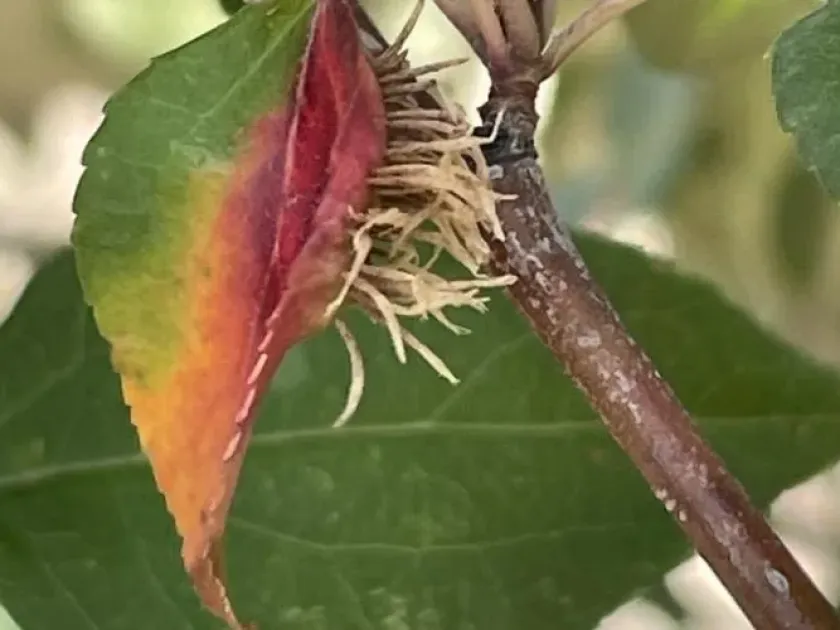
Japanese apple rust manifests as small, bright yellow to orange-red spots on the upper surface of apple leaves during the spring.
Over time, these spots grow larger, and small black dots, known as spermogonia, appear within the lesions as the infection progresses.
The underside of the leaf develops raised, cone-shaped structures called aecia, which contain spores ready to spread the pathogen further.
Severe infestations cause significant leaf deformation, yellowing, and premature leaf drop, which weakens the overall health of the tree.
In rare cases, the fungus can also infect young shoots and fruits, leading to necrotic spots and malformations that ruin the harvest quality.
Pathogen
The disease is caused by the rust fungus Gymnosporangium yamadae, a member of the Basidiomycota phylum.
This pathogen is heteroecious, meaning it requires two unrelated host species to complete its complex biological life cycle.
The primary host is the domestic apple tree (Malus domestica), while various juniper species serve as the obligate alternate hosts.
The fungus overwinters in the woody tissues of juniper branches, producing spore-bearing structures that swell during spring rains.
Once released, these spores are dispersed by the wind to infect young apple leaves, completing the seasonal infection cycle.
Conditions for development
The development of Japanese apple rust is highly dependent on wet and humid conditions during the spring growing season.
Temperatures between 15°C and 22°C are optimal for spore germination and infection establishment on susceptible host tissues.
The proximity of juniper bushes to apple orchards is the most significant factor in the severity and frequency of disease outbreaks.
Wind-driven rain facilitates the dispersal of spores from juniper hosts to apple trees, especially in orchards with dense, unpruned canopies.
Poor orchard hygiene, such as leaving diseased plant debris on the ground, can also provide a local reservoir for the pathogen.
Why it matters
The primary damage caused by Japanese apple rust is the reduction of the leaf surface area available for photosynthesis.
The resulting stress forces the tree to utilize stored energy reserves, leading to poor bud development for the following season.
Heavy infections lead to stunted fruit growth and a significant decrease in the overall vigor of the apple trees within the orchard.
Weakened trees become significantly more susceptible to environmental stressors, such as winter frost, and secondary pest attacks.
If left unmanaged for several years, the accumulation of infection can lead to the decline of the orchard's productivity and health.
Protection
The most effective management strategy is to maintain a physical buffer zone between apple orchards and susceptible juniper species.
Regular monitoring of surrounding juniper trees for galls or rust symptoms allows for the removal of infected branches before spores disperse.
Orchard sanitation is critical; all fallen leaves and infected fruit debris must be collected and disposed of to reduce the inoculum load.
Fungicide applications, particularly those containing copper or triazoles, are effective when timed correctly with the tree's growth stages.
The first application should occur at the green tip stage, with follow-up sprays applied after bloom to prevent secondary infections.
Pathogens and affected parts
Affects crops · 1
Discussion
No discussions yet — be the first.