
Description
Symptoms
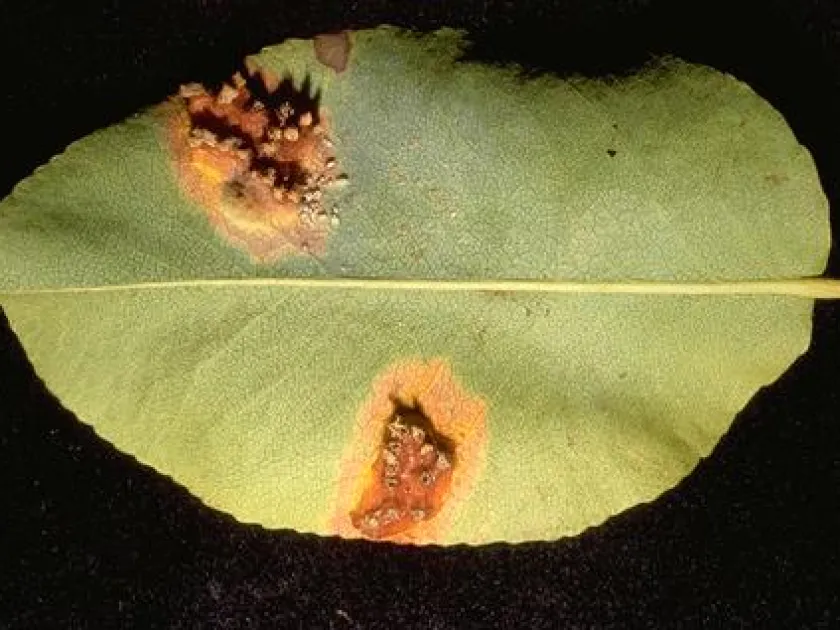
On the leaves of infected pear and apple trees, the initial symptoms appear as small, circular, yellowish-orange spots. Over time, these spots expand in diameter and develop a more vivid reddish tint.
On the underside of the leaf, directly beneath the spots, cone-shaped structures called aecia develop. These structures store a powdery mass of spores that are easily spread by the wind.
Severe infection leads to premature yellowing and mass defoliation. This process significantly impairs photosynthesis and weakens the overall physiological health of the tree during the second half of the growing season.
Unlike some other rust varieties, fruit infection is less common, but under conditions of high inoculum pressure, characteristic rust-colored spots can appear on the fruit, reducing marketability.
On coniferous hosts, the presence of the fungus manifests as swellings or galls on the branches. These structures are the primary reservoirs of infection in orchards where susceptible pomaceous fruit trees are planted close to ornamental conifers.
Pathogen
The disease is caused by the basidiomycete fungus Gymnosporangium libocedri. This is a highly specialized parasite belonging to the rust fungi group, which typically follows a complex life cycle, alternating between different hosts.
The fungus's life cycle requires two specific host types to complete all developmental stages. The primary host is generally coniferous trees, specifically incense-cedars (genus Libocedrus).
The secondary intermediate host, where the fungus replicates and causes the most significant damage, includes members of the Rosaceae family, particularly pear and apple trees, where aeciospores develop on the leaves.
The pathogen typically overwinters in the tissues of coniferous branches, forming specific galls. In the spring, when moisture levels are sufficient, teliospores are released from these galls, initiating the infection of fruit trees.
The biology of this pathogen is closely linked to climatic conditions: spore dispersal occurs via wind over long distances, creating a high infection pressure in areas surrounding infected coniferous ornamental trees.
Conditions for development
The primary factor facilitating the development of epiphytotics is high atmospheric humidity during the spring. Rain and fog provide the ideal environment for the germination of fungal spores on young foliage.
A temperature range between 15°C and 22°C is considered optimal for rapid infection of host tissues. A cool, prolonged spring significantly extends the period of susceptibility and risk.
Disease spread is actively promoted by wind, which carries spores from infected coniferous trees over vast distances. Planting density and the presence of infection "bridges" are critical factors in the severity of an outbreak.
Poor crown aeration due to a lack of proper pruning creates a favorable microclimate within the canopy, allowing the mycelium to establish itself more effectively on leaves and shoots.
Poor agricultural practices, such as neglecting tree health, insufficient nutrition, or environmental stress, make trees significantly more susceptible to pathogen invasion.
Why it matters
The primary damage results from a sharp decline in the photosynthesizing leaf area. Consequently, the tree loses a significant portion of the energy required for fruit development and the formation of flower buds for the following year.
Massive leaf drop during mid-to-late summer causes the tree to enter winter in a weakened state. This reduces cold hardiness and increases the risk of winter kill when low temperatures occur.
The yield of trees infected annually by rust declines steadily. Fruits may become deformed, lose flavor quality, and be less suitable for long-term storage due to the overall physiological exhaustion of the tree.
Systemic infection leads to stunted growth of new shoots. Over time, the overall condition of the canopy deteriorates, and main structural branches may begin to die off due to secondary infections.
In nurseries and young orchards, the disease can cause severe stunting of seedlings, rendering them unfit for sale or necessitating costly rehabilitation measures to save the stock.
Protection
A key preventive measure is spatial isolation. It is recommended to avoid planting susceptible pear and apple varieties near ornamental conifers that act as fungal reservoirs.
Regular sanitary pruning improves canopy ventilation, which reduces the risk of moisture retention. Removing and destroying infected branches from coniferous plants helps reduce the infection load directly on the premises.
Fungicide application is the primary chemical method of control. Treatments should begin in early spring before bud break and continue through the blooming phase, following strict label regulations.
Copper-based preparations and modern systemic fungicides from the triazole group are effective. It is important to rotate chemical classes to prevent the development of pathogen resistance.
- Spraying with contact fungicides before flowering.
- Systemic applications at the first signs of spotting.
- Collecting and disposing of fallen leaves in autumn to prevent reinfection.
Pathogens and affected parts
Affects crops · 1
Discussion
No discussions yet — be the first.