
Description
Symptoms
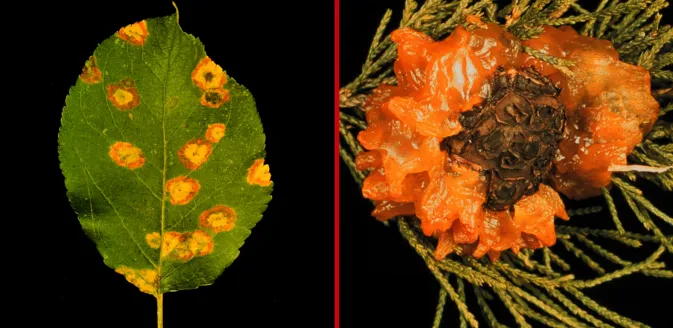
In spring, bright orange or reddish-brown spots appear on the upper surface of pear leaves. Over time, these spots expand, and small black dots called spermogonia emerge.
During the second half of summer, cone-shaped structures called aecia form on the underside of the leaves. These structures resemble tiny horns and release large amounts of spores.
Heavy infections cause leaves to turn yellow and drop prematurely, often by mid-August. This defoliation significantly affects the tree's vitality throughout the growing season.
The disease can also affect young shoots, petioles, and fruits. Infected shoots may become thickened, distorted, and prone to cracking, making them physically brittle.
Severely affected trees look stunted, with sparse foliage and reduced growth vigor compared to healthy counterparts in the same orchard.
Pathogen
The causative agent is the basidiomycete fungus Gymnosporangium sabinae. It is a heteroecious parasite that requires two distinct hosts to complete its life cycle.
The primary alternate host is the juniper tree (especially Juniperus sabina or J. communis). The fungus survives the winter in the juniper tissues, causing galls and swellings.
In spring, orange, jelly-like telial horns emerge from the juniper galls during wet weather. These structures release basidiospores that are carried by the wind to pear trees.
Once on the pear leaves, the spores germinate and infect the host tissues. The fungus cannot survive solely on pear trees; it must return to the juniper host to complete its cycle.
Understanding this biennial life cycle is essential for effective orchard management and long-term disease prevention strategies.
Conditions for development
The development of pear rust is favored by warm, humid spring weather, especially during the blossom and leaf-opening stages when trees are most susceptible.
Rainy conditions are critical for the dispersal of spores from junipers. High humidity and temperatures between 15 and 20 degrees Celsius trigger the release and germination of spores.
Proximity to infected juniper hedges is the most significant factor for infection. The closer the juniper, the higher the likelihood of a severe outbreak of rust.
Orchards with poor air circulation or dense canopies tend to stay moist longer after rainfall, creating an environment that encourages fungal colonization.
Lack of proper pruning and sanitation leads to an increased buildup of the fungal inoculum, exacerbating the spread of the disease within the orchard.
Why it matters
Pear rust reduces the tree's photosynthetic area by destroying leaf tissue. This process weakens the tree and significantly limits its ability to accumulate energy reserves.
Premature leaf drop prevents the tree from properly preparing for winter, which increases susceptibility to frost damage and bud death during the cold season.
Infection of young shoots causes tissue death and deformation, leading to structural damage and reduced long-term productivity of the tree canopy.
Affected fruits become distorted and unappealing. In severe cases, they may drop before reaching maturity, leading to direct economic losses for growers.
Repeated annual infections deplete the tree's carbohydrate resources, which can eventually lead to the death of the tree if not treated or managed correctly.
Protection
The most effective preventative measure is the removal of infected junipers from the vicinity of the pear orchard, or at least regular pruning of infected juniper branches.
Chemical control involves applying fungicides during the critical stages of tree development, such as before and immediately after the flowering period.
Systemic fungicides, particularly those containing triazoles or strobilurins, along with copper-based sprays, provide effective protection against fungal infection.
Sanitation is key: regularly remove and burn any infected plant material from both pear trees and nearby junipers to reduce the amount of spores in the area.
- Maintain a safe distance of at least 500 meters between pears and junipers.
- Monitor trees regularly and apply protective fungicides at the first sign of symptoms.
- Ensure proper orchard hygiene by removing fallen, infected leaves each autumn.
- Select resistant pear varieties if planting a new orchard in high-risk zones.
Pathogens and affected parts
Affects crops · 1
Discussion
No discussions yet — be the first.