
Glomerella graminicola
Glomerella graminicola
Glomerella graminicola is a significant fungal pathogen, recognized in its anamorph stage as Colletotrichum graminicola, belonging to the family Glomerellaceae.
What the section contains
Glomerella graminicola
This fungus is a specialized parasite that targets various grass species, with corn being the most economically important host for agricultural production.
The fungus persists in soil and crop debris through mycelium or sclerotia, ensuring survival across multiple seasons until a suitable host becomes available.
The life cycle is characterized by the production of conidia within acervuli, which serve as the primary source of secondary infections during the growing season.
Positive identification is often achieved by microscopic examination, revealing characteristic black setae present in the fruiting bodies of the fungus.
The pathogen is primarily responsible for anthracnose, a severe disease that significantly affects the development and yield of corn crops globally.
It attacks almost all plant organs, including leaves, stalks, and roots, leading to physiological stress and reduced photosynthetic efficiency.
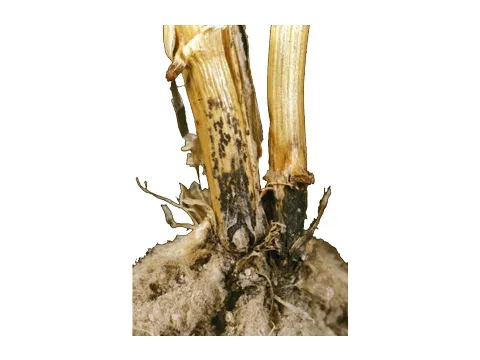
Stalk rot caused by this pathogen is particularly damaging, as it weakens the plant structure, leading to lodging and difficulty during mechanical harvesting.
By infecting vascular tissues, the fungus restricts the flow of water and nutrients, which causes premature death of the plant tissue.
In cases of severe infestation, farmers experience substantial yield losses, sometimes exceeding 50% depending on environmental factors and hybrid susceptibility.
Outbreaks usually occur during the middle of the growing season, particularly when warm temperatures and high humidity prevail in the field.
Conidia are spread through rain splashes and wind, establishing new infection sites on leaves during periods of rapid plant growth.
The flowering phase of corn is a critical window for infection, as the plant becomes more susceptible to systemic colonization by the pathogen.
As the season progresses toward maturity, the fungus transitions to the stalk rot phase, actively invading the inner tissues of the stem.
Extended periods of leaf wetness are essential for the germination of spores and the subsequent penetration of the epidermis by the fungus.
The infection typically begins with small, chlorotic leaf spots that expand rapidly and turn into dark brown or black necrotic lesions.
Presence of dark, hair-like structures known as setae, grouped in small black clusters (acervuli), is a definitive sign of the pathogen on leaf tissues.
Stalk symptoms involve internal discoloration, where the pith becomes dark and soft, causing the plant to lose structural integrity.
- Yellowing and blight of the lower foliage.
- Discolored, rotten nodes within the corn stalk.
- Premature wilting and dry-down of the ear husks.
- Poor grain fill resulting in lower kernel weight.
Under humid conditions, a pinkish mass of spores may be visible on the surface of infected stems and leaves.
The most effective strategy is the integration of resistant corn hybrids into the farming practice to mitigate the impact of the disease.
Crop rotation remains a fundamental cultural practice, breaking the cycle of infection by eliminating the host for consecutive seasons.
Effective management of crop residue through tillage or deep plowing reduces the initial inoculum present in the field before the next planting.
Seed treatment with high-quality fungicides provides an essential barrier for germinating seedlings against early-stage infections.
When environmental conditions favor disease, foliar application of systemic fungicides can help protect the crop and limit the spread of the pathogen.