
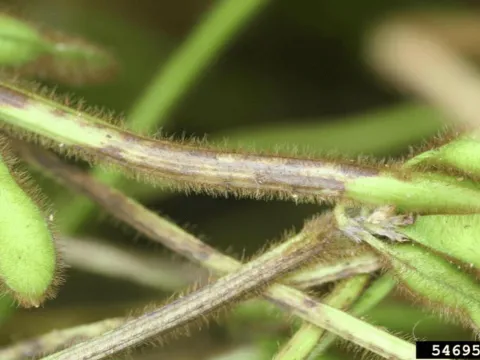
Glomerella glycines
Glomerella glycines
Glomerella glycines is a fungal pathogen belonging to the Ascomycota division. It is the teleomorph (sexual stage) of the fungus Colletotrichum glycines, which is the primary form identified as the cause of soybean anthracnose.
What the section contains
Glomerella glycines
The fungus produces spores known as conidia within specialized fruiting bodies called acervuli. These structures are typically dark and feature stiff bristles (setae), which are key diagnostic characteristics when observing samples under a microscope.
The pathogen is highly specialized and can persist in soybean debris, soil, and infected seeds. Its ability to overwinter in diverse environments makes it a persistent threat to soybean production worldwide.
Scientific studies classify it within a complex of Colletotrichum species that affect leguminous crops, making precise identification essential for determining the appropriate management strategy for specific fields.
The mycelium of the fungus is septate and branches extensively within the plant tissue, eventually erupting through the epidermis to release spores, which are then dispersed by rain splashes or wind.
Soybean anthracnose caused by Glomerella glycines affects all parts of the plant, from seedlings to mature pods. The infection restricts nutrient and water flow, leading to stunted growth and reduced yields.
Seedling blight is a common outcome when infected seeds are planted. This results in poor stand establishment, gaps in the field, and a significant reduction in the potential plant population density.
In mature plants, the fungus invades the stems and petioles, causing necrotic lesions that weaken the plant structure. This often leads to lodging or stem breakage during high winds, hindering mechanical harvesting.
Pod infection is particularly damaging as it directly impacts seed quality and weight. Seeds from infected pods may be shriveled, discolored, or covered in fungal growth, significantly reducing their market value.
Overall yield loss can be severe, especially in humid regions where the environmental conditions favor rapid pathogen spread throughout the growing season.
Infection cycles typically begin during the growing season when temperatures range between 20°C and 28°C. Frequent rainfall and high relative humidity are critical triggers for the rapid spread of the disease.
During the flowering and pod-filling stages, the crop is at its most vulnerable. Dense plant canopies help trap moisture, creating an ideal microclimate for the fungus to multiply and spread.
Spores are disseminated primarily by splashing water droplets and wind currents. The disease often moves from the lower leaves and stems toward the upper parts of the plant as the season progresses.
As the plant reaches maturity and the season draws to a close, the fungus survives by forming structures on crop residues. These residues serve as the primary reservoir for the next season's infection cycle.
Timing of the initial outbreak is critical; early-season infections are usually linked to contaminated seed, whereas late-season flare-ups are caused by airborne inoculum from local debris.
Initial symptoms on seedlings include dark, sunken lesions on the cotyledons or hypocotyls. As the plant grows, stems often develop elongated, brownish-black lesions that may expand to cover large areas.
A hallmark sign of this pathogen is the appearance of small, dark acervuli within the lesions. These structures often contain black bristles, which can be seen with the naked eye or a hand lens under good lighting.
Foliar symptoms appear as necrotic spots, often surrounded by a chlorotic halo. In severe cases, leaves may curl, turn yellow, and drop prematurely, leading to significant defoliation before harvest.
- Dark, necrotic lesions on seedling stems.
- Distinctive black acervuli within plant lesions.
- Premature yellowing and leaf abscission.
- Sunken, discolored spots on pods.
- Mycelial growth on infected tissues during humid conditions.
Infected pods may fail to develop seeds properly or may contain shriveled, moldy seeds. The entire plant may appear prematurely aged or withered compared to healthy neighboring plants.
The most effective strategy is the use of high-quality, certified, disease-free seed. Seed treatments with systemic fungicides are essential to protect the crop during the vulnerable germination phase.
Crop rotation remains a fundamental practice, with at least a 3-year gap before replanting soybeans in the same field. This prevents the accumulation of inoculum from previous crops.
Effective management includes deep plowing to bury crop residues, which helps speed up the decomposition of organic matter that harbors the fungus. Controlling volunteer soybeans and leguminous weeds is also vital.
Chemical control involves the application of fungicides, particularly strobilurins and triazoles, during the flowering and pod-filling stages. Proper timing is crucial to maximize the efficacy of these treatments.
Breeding and planting resistant or tolerant soybean varieties is the most sustainable approach, reducing the frequency of fungicide applications and ensuring more stable yields in high-risk areas.