
Diaporthe longicolla
Diaporthe longicolla
Diaporthe longicolla is an ascomycete fungus and a significant plant pathogen, primarily known for causing soybean phomopsis and seed decay. It has been extensively studied due to its economic impact on global legume production.
What the section contains
Diaporthe longicolla
Taxonomically, it belongs to the Diaporthaceae family within the order Diaporthales. It produces both sexual ascospores and asexual conidia, which enables it to persist in diverse environmental conditions and spread rapidly across agricultural landscapes.
The fungus is characterized by its ability to remain latent in host tissues for extended periods. It can be found in crop debris, infected seeds, and the soil, making it a persistent threat in many soybean-growing regions.
Optimal development occurs under warm and humid conditions, typically when temperatures are between 20°C and 28°C. Frequent rainfall during the reproductive stages of soybean growth significantly favors the dispersal of spores.
Molecular identification has clarified its position among other Diaporthe species, distinguishing it from Diaporthe sojae. Understanding its specific genetic profile is crucial for developing targeted diagnostic tests for field monitoring.
Soybean (Glycine max) is the primary host of Diaporthe longicolla. The pathogen causes systemic infection, which can lead to seedling blight, stem lesions, and ultimately, poor seed quality and reduced grain yield.
The damage often begins with root and crown rot, which disrupts nutrient uptake. As the season progresses, the fungus colonizes the stems, causing structural weakness and premature lodging, which complicates harvesting operations.
In the pods, the pathogen causes discoloration and shriveling of the seeds. Infected seeds show reduced germination rates and low vigor, which poses a serious risk if such seeds are reused for the next planting season.
Yield losses can range from minor localized incidents to widespread field failure in cases of heavy infestation. The quality loss extends to the protein and oil content, making the harvested product less valuable for processing.
Furthermore, the accumulation of fungal metabolites in infected seeds can be detrimental, especially when used in livestock feed. This makes the pathogen a concern for both food safety and agricultural economics.
Initial infection often manifests as brown or dark lesions on the lower stems, particularly near the nodes. Over time, these lesions can expand and encircle the stem, leading to plant death or severe stunting.
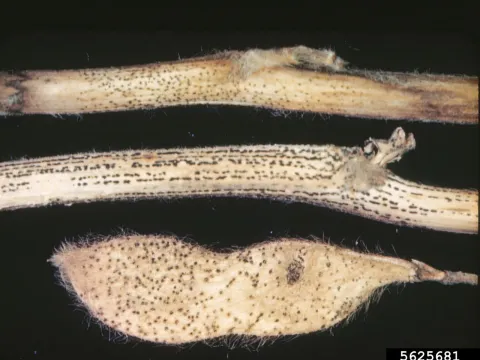
Black pycnidia, which are the fungal fruiting bodies, appear as small dots on the surface of infected stems and pods. They serve as primary diagnostic features that confirm the presence of the pathogen in the field.
Foliar symptoms include chlorotic spotting that progresses to necrosis. These symptoms are often misinterpreted as early senescence, but the presence of sporulating bodies inside the necrotic tissue indicates a pathogenic attack.
Seeds harvested from infected plants are often dull, shriveled, and may exhibit a white, moldy fungal growth on their surface. These seeds are usually lighter in weight and have a reduced appearance of health compared to sound seeds.
Internally, the stem tissues turn brown to black as the fungus consumes the pith. This tissue degradation prevents water from reaching the upper parts of the plant, leading to the characteristic wilting observed in late-stage infections.
The first line of defense is the use of high-quality, pathogen-free seeds. Seed treatment with systemic fungicides is highly recommended to protect seedlings during the crucial early stages of growth.
Crop rotation is essential for disease management. Avoiding soybean production in the same field for at least three consecutive years helps break the disease cycle and reduces the inoculum load present in the soil and crop debris.
Deep plowing or mechanical incorporation of crop residues into the soil helps accelerate decomposition, which reduces the survival rate of the fungus during the winter months.
Foliar fungicide applications during the R3 (beginning pod) to R5 (beginning seed) stages of development can significantly reduce the severity of the disease and improve overall grain quality, especially in humid seasons.
Selecting resistant or tolerant soybean cultivars is the most sustainable approach to control. Breeding programs continuously evaluate new varieties for their ability to withstand Diaporthe longicolla infection without significant yield penalties.