
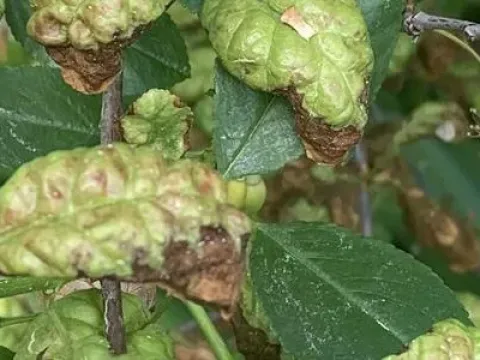
Cherry crinkle leaf
Crinkly leaf
Cherry crinkle leaf is a viral disease caused by the Cherry crinkle leaf virus. It is a persistent phytopathogen that primarily affects various species within the Prunus genus, particularly cherries.
What the section contains
Cherry crinkle leaf
As a virus, it lacks the cellular structures of fungi or bacteria. It functions as a genetic parasite, integrating its RNA into the host plant's cells and forcing them to replicate the viral particles, which disrupts normal development.
The virus is systemic, meaning it colonizes the entire vascular system of the tree. Once established, it remains in the host plant for the duration of its life, as there are no curative measures available once the infection becomes chronic.
Transmission occurs predominantly through vegetative propagation, such as grafting with infected scions or rootstocks. Mechanical transmission via pruning tools is also a significant factor in orchard spread.
Detection is difficult during the latent phase, which can last for several seasons. Laboratory diagnostics like ELISA or PCR are the only reliable methods to confirm the presence of the virus in asymptomatic trees.
The primary host for this pathogen is the domestic cherry. The virus inflicts substantial damage on the plant's metabolic processes, leading to reduced vitality and vigor.
The disease causes significant economic losses for growers by reducing the quality and quantity of the harvest. Fruits from affected trees are often misshapen, small, and fail to reach maturity.
The aesthetic value of the tree decreases as the foliage becomes distorted. This loss of leaf surface area directly translates into reduced photosynthesis and limited energy storage for the next growing season.
Structural damage can also occur, as the tree’s overall growth habit is stunted. The disruption of growth hormones leads to irregular branch development, which can weaken the tree's structural integrity over time.
If left untreated in an orchard, the virus can spread to neighboring healthy trees through contaminated pruning equipment, eventually endangering the entire plantation's productivity.
The most characteristic sign is the distinct crinkling or puckering of leaves. The leaf margins often become wavy, and the surface appears uneven or "gauffered" due to localized tissue stress.
Chlorotic patterns, including spots, streaks, or mosaic-like symptoms, often appear on the foliage. The leaves may also become brittle and show signs of necrosis at the edges in advanced stages.
Shoot growth is significantly affected; internodes may become shortened, resulting in a stunted appearance. In some cases, the tree may produce excessive side shoots, giving it a bushy or "witches' broom" look.
The fruit set is typically poor, and the fruits that do develop often exhibit deformities or discoloration. The overall canopy density may be reduced due to premature leaf drop during the summer months.
- Distorted, crinkled, and puckered leaves.
- Presence of chlorotic mosaics or mottling.
- Stunted shoot growth and shortened internodes.
- Deformed or undersized fruit.
- Premature senescence and leaf abscission.
The primary management strategy is prevention. Growers should only utilize certified, virus-free planting stock sourced from reputable nurseries that employ rigorous health screening programs.
Sanitation is paramount. All tools used for pruning or grafting must be disinfected with appropriate agents, such as bleach or high-concentration alcohol, between each tree to prevent mechanical transmission.
Early identification and removal of infected trees are essential. Once a tree is confirmed to be carrying the virus, it should be removed and destroyed to prevent it from becoming a reservoir for further infection.
Orchard management should also include strict vector control. While mechanical transmission is common, controlling sap-sucking insects like aphids can help mitigate the risk of spreading other related viruses within the planting.
While there is no chemical cure for viral infections in plants, maintaining high plant health through balanced fertilization and proper irrigation helps the trees withstand the stress caused by the pathogen.