
Chalara elegans
Chalara elegans
Description
How to identify
Chalara elegans (syn. Thielaviopsis basicola) is a soil-borne pathogenic fungus classified within the Ascomycota division. It is a highly specialized parasite that primarily attacks plant roots.
The fungus produces two distinct types of spores: colorless endoconidia and dark, thick-walled chlamydospores. These chlamydospores are resilient structures that allow the pathogen to survive in soil for several years.
Diagnosis requires microscopic examination of infected tissues, where characteristic chains of spores can be identified. Laboratory isolation on agar media is commonly used to confirm the presence of the pathogen.
It is widespread globally and poses a significant threat in greenhouse environments where monoculture and favorable humidity levels prevail.
Systematic position: Kingdom Fungi, division Ascomycota, genus Chalara.
What it damages
This pathogen has a wide host range, including tobacco, cotton, various legumes, cucurbits, and many ornamental greenhouse plants such as poinsettias and cyclamens.
The fungus infects the roots, destroying the primary cortex and limiting the plant's ability to absorb essential water and nutrients from the soil.
Severe infestations lead to a complete breakdown of the root system, causing plant wilting, stunting, and eventual death, especially in young seedlings.
In addition to root damage, the pathogen can infect the stem base, creating dark, sunken lesions that further compromise the plant's structural integrity.
Economic impact is significant, as infections often result in total crop failure within nurseries or substantial yield reductions in field production.
When it appears
The fungus thrives in moist soil conditions with temperatures ranging from 15°C to 22°C (approx. 59-72°F). These conditions are often found in greenhouse production.
The disease cycle is initiated when chlamydospores germinate in response to root exudates from a susceptible host plant, allowing the fungus to colonize the root surface.
The pathogen is easily transmitted through contaminated soil, irrigation water, non-disinfected tools, and infected nursery stock, which can serve as a primary source for outbreaks.
Soil pH plays a critical role in disease development; the pathogen is generally more aggressive in neutral to alkaline soils, whereas lower pH levels can sometimes inhibit its progress.
Under favorable greenhouse conditions, the disease can persist year-round if proper sanitation and hygiene measures are not strictly enforced.
Signs of infestation
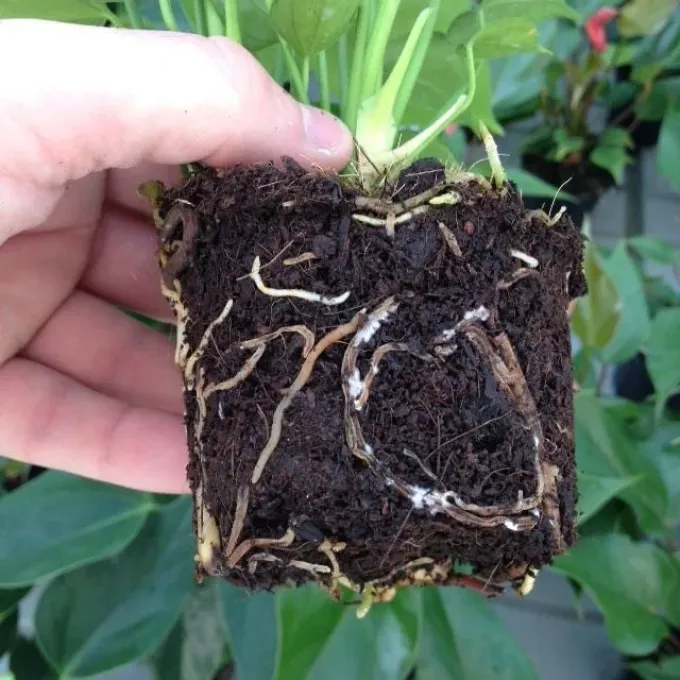
The most distinctive symptom is a characteristic black discoloration of the roots, which gives the disease its common name, black root rot.
Above-ground symptoms include chlorosis (yellowing of the leaves), stunted growth, and a tendency for the plants to wilt during the day, even when soil moisture is adequate.
Infected root systems appear underdeveloped, with brittle, blackened sections that easily break off when the plant is pulled from the growing medium.
The stem base may show dark, necrotic lesions, which can eventually girdle the stem, leading to the collapse of the plant.
- Blackened root tips and branches
- Premature yellowing of lower foliage
- Stunted plant development
- Wilting in response to limited water uptake
- Death of seedlings in nursery trays
Control measures
Management is centered on strict sanitation, including the use of sterilized soil or soilless media and ensuring that all tools and containers are thoroughly disinfected.
Crop rotation is essential for field-grown crops, with a recommended interval of 4 to 5 years between susceptible crops to allow soil populations to decline.
Adjusting the soil pH to a more acidic level (below 5.5) can be an effective cultural practice to suppress the growth and infectivity of the pathogen.
Fungicide treatments are available for soil drenching or seed treatment, providing a chemical barrier to prevent initial colonization of the roots.
Biological control agents, particularly specific strains of Trichoderma fungi, have shown efficacy in suppressing Chalara elegans by competing for space and nutrients in the rhizosphere.
Causes diseases · 6
Discussion
No discussions yet — be the first.