
Cherry mottle leaf
Cherry mottle
Description
How to identify
The causal agent of this disease is the Cherry mottle leaf virus (CMLV), which belongs to the genus Marafivirus. It is a systemic plant pathogen that specifically affects stone fruit species, primarily cherry trees.
The virus consists of single-stranded RNA virions. Its biological cycle is closely tied to the host plant, as the virus persists in the vascular tissues, ensuring its survival throughout the life of the infected tree.
The primary vector for the transmission of this virus is the eriophyid mite, Eriophyes cerasicola. These microscopic pests acquire the virus while feeding on infected sap and transmit it to healthy tissues during subsequent feeding events.
Molecular diagnostics, including ELISA and RT-PCR, are the only reliable methods for identifying this pathogen. Visual identification is often complicated by environmental stressors that can mimic viral symptoms.
Due to its nature as a virus, the pathogen cannot be eradicated once established in a tree. Therefore, management focuses exclusively on prevention and long-term containment rather than curative treatments.
What it damages
The primary host for this virus is the sweet cherry, but sour cherry varieties are also susceptible. Infection leads to significant physiological stress in trees, resulting in reduced vegetative growth and crop failure.
Photosynthetic efficiency in infected leaves drops significantly, which deprives the tree of the energy required for fruit development. As a result, fruits remain undersized and often fail to reach full maturity.
The cumulative damage to the tree's health often leads to a decline in vigor, making the plant more susceptible to secondary fungal infections or adverse climatic events such as extreme winter cold.
Trees affected by the virus exhibit reduced fruit quality, including poor color development and a bland taste, which makes the harvest commercially non-viable for high-quality markets.
The long-term impact on the orchard is severe. Infected trees may remain productive for fewer years than healthy trees, necessitating costly early removal and orchard replanting.
Signs of infestation
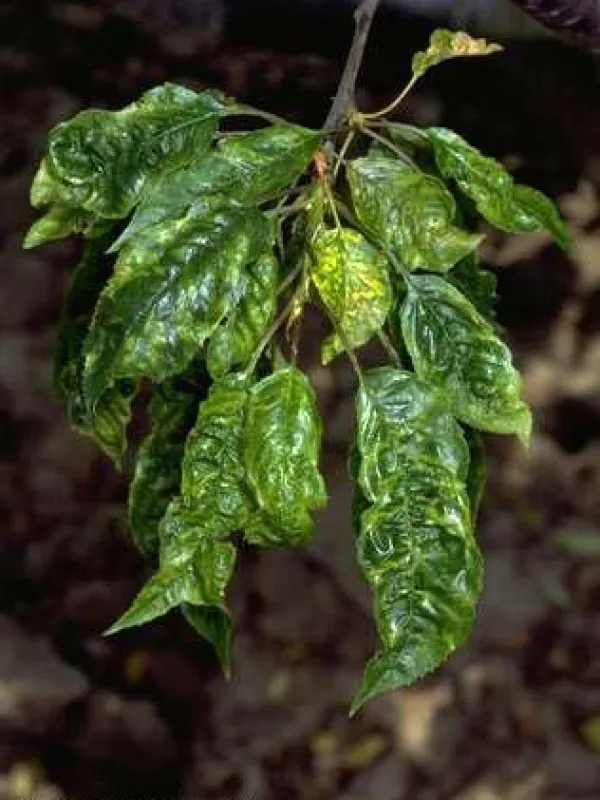
The hallmark sign of the infection is the development of chlorotic spots on the foliage, which often coalesce into a distinct mosaic-like pattern. Leaves frequently become wrinkled and deformed.
Affected trees often show a characteristic reduction in leaf size. The margins of the leaves can become irregular, and the veins may exhibit subtle distortion, significantly altering the canopy appearance.
Symptoms are typically most prominent on young growth during the spring flush. While the symptoms may appear to fade as the season progresses into warmer temperatures, the virus remains active within the tree.
Stunted growth is a common indicator, with shortened internodes leading to a bushy or dwarfed appearance of the shoots. This reduction in terminal growth is a diagnostic key for growers.
- Chlorotic spotting and mosaic patterns on leaves.
- Deformed, wrinkled, or cupped foliage.
- Reduced terminal shoot growth.
- Premature fruit drop and stunted fruit size.
- Overall tree loss of vigor and symmetry.
Control measures
The most important control strategy is the exclusive use of certified virus-free nursery stock. Ensuring the integrity of the planting material is the first line of defense against introducing the virus.
Mite management is crucial for limiting the spread of the virus. Implementing a robust acaricide spray program during the periods of mite activity reduces the risk of viral transmission within the orchard.
Establishing spatial isolation between new orchard blocks and older, potentially infected plantings is a key preventative measure. Removing wild stone fruit hosts from the vicinity helps reduce vector reservoirs.
Rogueing, the process of identifying and completely removing infected trees including the roots, is essential to halt the spread of the virus. Prompt removal prevents the virus from serving as a source of infection.
Sanitation practices, including the sterilization of pruning equipment between trees, are vital to prevent mechanical transmission of the virus, especially during pruning or grafting activities.
Causes diseases · 1
Discussion
No discussions yet — be the first.