
Chickpea bushy dwarf virus
Chickpea bushy
The Chickpea bushy dwarf virus (CBDV) is a plant pathogenic virus belonging to the Fabavirus genus, within the Secoviridae family. It is a serious pathogen that specifically targets chickpea (Cicer arietinum) and other legumes.
What the section contains
Chickpea bushy dwarf virus
The virus is primarily transmitted through infected seeds, which is the main factor for long-distance dissemination. Additionally, aphids serve as insect vectors that spread the virus within and between fields during their feeding process.
As an obligate parasite, this virus relies entirely on the host plant's cellular machinery to replicate. It remains infectious in seeds for several seasons, allowing the pathogen to persist in the soil or in stored seed stocks.
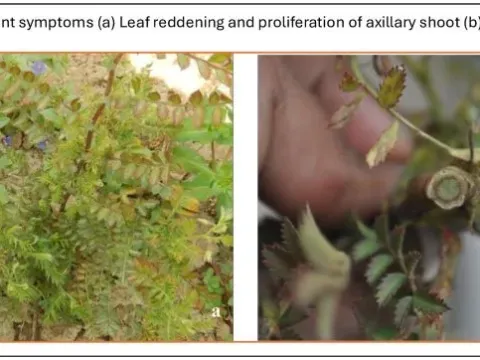
The molecular mechanism of the virus involves altering the hormonal balance within the plant, specifically inhibiting apical dominance, which leads to the characteristic stunted, bushy appearance of the host plant.
Detection in the field requires careful observation, but definitive identification often necessitates laboratory techniques such as ELISA or RT-PCR to distinguish it from other viral or fungal diseases affecting legumes.
The primary host is chickpea, but the virus can infect other leguminous plants that act as asymptomatic reservoirs. The damage caused by the virus is systemic, affecting the entire morphology and physiology of the plant.
Growth is significantly stunted due to the shortening of internodes. The plant loses its normal architectural structure, failing to produce a main stem of typical height, and instead develops multiple crowded branches.
The reproductive development is severely compromised. Infected plants produce very few pods, and the seeds formed are often small, shriveled, and have poor germination potential, rendering them unsuitable for future sowing.
Photosynthetic efficiency is drastically reduced due to the virus-induced chlorosis and leaf deformation. This limits the plant's ability to accumulate biomass and store nutrients in the seeds.
In severe infestation cases, the economic impact is substantial, leading to yield losses of over 50% in affected areas. The overall quality of the harvest is significantly degraded, affecting market value.
The most distinctive sign is the "bushy dwarf" phenotype. The plant displays an extremely short height with an unnaturally high number of side branches, resembling a miniature shrub.
Leaves often exhibit mosaic patterns, yellowing (chlorosis), or severe crinkling. These symptoms indicate a disruption in chlorophyll production and leaf tissue expansion.
Flowering is typically inhibited or distorted. If flowers do appear, they often fail to set fruit or drop prematurely, contributing to the overall decrease in yield.
Root systems are underdeveloped, which makes the plant more susceptible to soil-borne stresses, such as water deficit or nutrient deficiency in the substrate.
Fields showing signs of the virus exhibit patchy growth patterns. These patches contain clusters of stunted plants that are clearly distinguishable from the surrounding healthy crop.
The primary control strategy is the use of virus-free certified seeds. Since the pathogen is seed-borne, sourcing healthy material is the most effective way to prevent the introduction of the virus into new fields.
Management of aphid populations using systemic insecticides is crucial, especially during the early vegetative growth stages of the chickpea crop, to minimize the rate of viral spread.
Cultural practices should emphasize field sanitation, including the removal of weeds and volunteer crops that may serve as alternative hosts for the virus and its vectors.
Spatial isolation of chickpea fields from other legumes helps reduce the risk of secondary transmission. Practicing a crop rotation schedule further disrupts the virus cycle.
- Use only certified, disease-free seed lots.
- Monitor aphid population densities closely during the season.
- Implement proper weed management to reduce insect habitats.
- Remove and destroy infected plants immediately upon early detection.