
Chalaropsis thielavioides
Chalaropsis thielavioides
Chalaropsis thielavioides is a soil-borne fungal pathogen belonging to the order Hyphomycetes. It is primarily recognized as the causal agent of black root rot in various vegetable and ornamental plants.
What the section contains
Chalaropsis thielavioides
The fungus is characterized by the production of two distinct types of conidia: endoconidia and large, dark-walled chlamydospores. These thick-walled spores are essential for the survival of the pathogen in the soil for several years.
The mycelium of the fungus penetrates plant tissues through natural openings or mechanical injuries. Once inside, the fungus colonizes the root system or the base of the stem, breaking down plant cells.
The pathogen persists in the soil on infected plant debris. It can also be disseminated through contaminated seeds, bulbs, or gardening tools, making it a persistent problem in nurseries.
Under a microscope, the fungus can be identified by its distinctive phialides producing chains of club-shaped endoconidia and its highly resistant, pigmented resting spores.
The most significant economic damage caused by Chalaropsis thielavioides is seen in carrots, where it induces black root rot. It also affects other crops like parsnips, parsley, and various woody ornamentals such as roses.
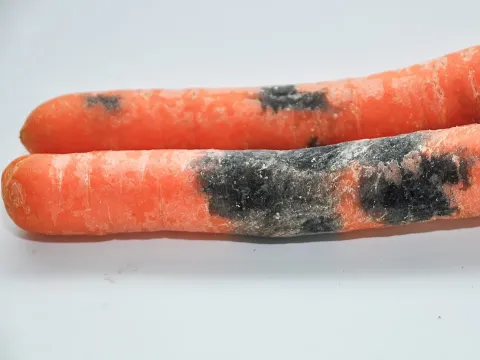
In carrots, the infection manifests as dark, almost black spots on the root surface. These lesions may progress into deep rot, turning the root tissue soft or dry depending on environmental conditions.
For ornamental plants, particularly grafted roses, the fungus targets the graft union. This leads to necrosis, hindering sap flow and resulting in the gradual decline or total death of the plant.
During storage, the disease can spread rapidly from infected produce to healthy vegetables if humidity levels are high. This poses a major risk to post-harvest quality and yield storage.
The pathogen not only affects the appearance of the product but also renders it unfit for human consumption due to potential mycotoxin accumulation and texture degradation.
Field infection typically occurs during the later stages of crop development, especially when soil moisture is high and temperatures are moderate to warm.
Post-harvest, the disease progresses throughout the winter if storage conditions are suboptimal. Temperatures above 5°C combined with high humidity are ideal for its proliferation.
The fungus overwinters in the soil in the form of chlamydospores, which remain viable for several seasons until a suitable host root system is available.
Dispersal occurs via water splash, infested soil movement, and contaminated equipment during harvesting or processing. Once introduced into a field, it is difficult to eradicate.
The life cycle of the pathogen is relatively fast under optimal conditions, allowing for secondary infections and continuous spread within a crop population if not managed correctly.
Initial symptoms often appear as localized, dark-colored lesions on the root surface. Over time, these spots become depressed and turn jet-black, indicating the development of the fungal colonies.
Under high humidity, a greyish-brown or olive-colored fungal growth (spore mass) often appears on the lesion surface. This provides an easy way to distinguish it from other root rots.
Inside the root, the tissues turn dark brown to black. Despite the rot, the roots may initially maintain some firmness, differentiating this disease from soft, watery bacterial rots.
In grafted roses, the diagnostic sign is the localized blackening and death of the tissue at the junction of the rootstock and scion, often accompanied by foliage wilting.
Detection in the field can be difficult in early stages, as symptoms are often restricted to the underground parts of the plant, which are not visible without digging.
The primary management strategy is crop rotation, with a 4 to 5-year break between planting susceptible crops in the same soil to reduce pathogen inoculum levels.
Sanitation of storage facilities is critical. Cleaning walls, crates, and floors with effective fungicides or sanitizing agents before storing the harvest is highly recommended.
- Thoroughly drying vegetables before placing them into storage.
- Strict culling of any produce showing signs of infection.
- Maintaining storage temperatures close to 0°C.
- Using high-quality, disease-free planting material.
- Implementing integrated pest management to reduce root-damaging insects.
If an outbreak is detected in storage, immediate ventilation and reduction of humidity are essential to slow the spread of the fungus.
While chemical treatments for seeds or soil are available, they should be used as part of an integrated program since the fungal chlamydospores are highly resilient to many standard disinfectants.