
Cherry leafroll virus
Cherry leafroll
Cherry leafroll virus (CLRV) is a significant plant pathogen belonging to the genus Nepovirus and the family Secoviridae. It is a systemic virus, meaning that once a tree is infected, the pathogen spreads throughout the vascular system, affecting all parts of the plant.
What the section contains
Cherry leafroll virus
The virus consists of isometric particles approximately 30 nm in diameter, which contain a single-stranded RNA genome. Being systemic, it can be detected in leaves, shoots, fruit, and even in the pollen and seeds of the host plant.
Field diagnosis of CLRV is notoriously difficult due to the wide range of symptoms that can mimic other biotic and abiotic disorders. To confirm an infection, laboratory methods such as ELISA (Enzyme-Linked Immunosorbent Assay) or RT-PCR are required.
The virus is primarily transmitted through the soil via nematodes of the genus Xiphinema. Additionally, it can be spread through infected seeds, pollen, and via mechanical transmission during grafting or pruning activities with contaminated tools.
It is widely distributed throughout temperate regions of the Northern Hemisphere. It affects a vast array of woody hosts, making it a persistent problem in orchards and natural landscapes where reservoir hosts exist.
While named after the cherry tree, CLRV has a broad host range, including walnuts, elders, birches, raspberries, and several ornamental species. This host diversity makes it a challenge to manage in polyculture garden settings.
Infection results in impaired metabolic function, significantly reducing the vigor and overall productivity of the tree. The virus competes for resources within the host, leading to weakened growth and stunted development.
The impact on orchards is severe, as the disease leads to branch dieback and decreased cold tolerance. Infected trees often succumb to winter injury, leading to significant yield loss and long-term orchard decline.
Fruit quality is also severely compromised. Harvested fruit from infected trees often appears small, irregular in ripening, and poor in taste, rendering it unsuitable for commercial sale.
The latent phase of infection is a major concern. A tree may harbor the virus for a considerable time before showing visible symptoms, all while serving as an active source of inoculum for vectors to spread the disease further.
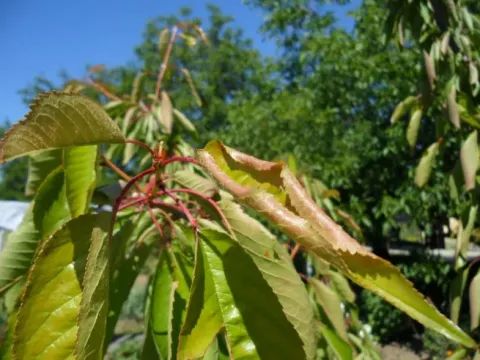
The most distinctive symptom is the downward rolling of the leaves, which often appear chlorotic or mottled. Over time, these leaves may develop ringspots or necrotic line patterns.
Inter-nodal shortening is frequently observed, giving the foliage a stunted or bushy appearance. In severe cases, the tree shows significant dieback beginning from the upper branches and moving downwards.
Young trees often show signs of stunted growth and may fail to produce normal terminal buds. During the spring, infected trees typically exhibit a delayed bud break compared to neighboring healthy trees.
Bark symptoms, such as necrotic streaks or lesions, may appear on the trunks of older trees, which can sometimes be confused with bacterial canker. Ultimately, the entire tree may decline and die prematurely.
- Downward curling or rolling of leaves.
- Chlorotic ringspots on the leaf surface.
- Reduced internode length and stunted shoots.
- Premature leaf drop and fruit deformation.
- Gradual systemic decline and branch death.
There is currently no cure for viral infections in plants. Therefore, management focuses entirely on exclusion, sanitation, and the reduction of vector populations to prevent the spread of the pathogen.
Planting certified virus-free nursery stock is the most critical management strategy. Only purchase trees from reputable sources that perform routine testing for major plant viruses to ensure a clean start for the orchard.
Managing the nematode vectors (Xiphinema spp.) is essential in high-risk areas. Pre-plant soil sampling to detect these nematodes and subsequent soil fumigation or fallowing can significantly reduce initial infection pressure.
Strict sanitation protocols must be followed during pruning. Disinfect all cutting tools with a strong disinfectant (such as 70% alcohol or specialized bleach solutions) between each tree to prevent mechanical transmission.
Prompt removal of infected trees is necessary to protect the rest of the orchard. Always remove the entire root system, as the virus can persist in the soil for a period, and avoid replanting on the same site for several years.