
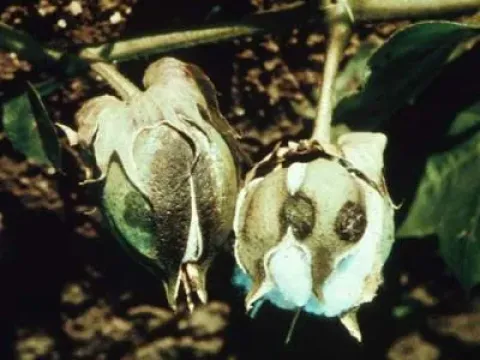
Cotton anthracnose fungus
Colletotrichum gossypii
Colletotrichum gossypii is a destructive fungal pathogen belonging to the Ascomycota phylum. It is the primary cause of cotton anthracnose, a severe disease that negatively impacts cotton production worldwide.
What the section contains
Cotton anthracnose fungus
The fungus survives in soil, crop debris, and within cotton seeds as mycelium or chlamydospores. When environmental conditions become favorable, the pathogen initiates the infection process by germinating and forming appressoria to penetrate the host tissue.
The characteristic structure produced by the fungus is the acervulus, a small fungal fruiting body. These structures produce mass amounts of conidia, which are easily disseminated by water splashes and wind currents.
Development is highly dependent on environmental variables. High relative humidity, persistent rain, and temperatures ranging from 20°C to 25°C are critical for the fungus to germinate and spread rapidly throughout the field.
The disease cycle consists of the primary inoculum source, usually infected seeds or soil, and secondary infections caused by conidia. These spores infect healthy cotton tissues, creating a continuous cycle of disease progression.
The pathogen primarily affects the cotton plant (Gossypium). It causes damage to all vegetative and reproductive stages of the crop, resulting in yield losses and diminished fiber quality.
Seedling blight is a common symptom where lesions form on hypocotyls and cotyledons, leading to the collapse and death of young plants. Later, leaf lesions appear with distinct reddish margins.
The most visible damage occurs on bolls, showing sunken, circular, dark lesions. Eventually, these lesions are covered in a pinkish spore mass, which is a classic diagnostic sign of this anthracnose species.
The most effective management strategy is the use of disease-free, certified seeds. Seed treatment with systemic fungicides is a standard procedure to prevent seed-borne infection during germination.
Crop rotation practices should be strictly observed, avoiding the planting of cotton in infected fields for several years. Deep plowing and removal of crop residue are essential to reduce the primary inoculum load.
- Monitor fields regularly during wet weather conditions.
- Apply registered foliar fungicides if the disease threshold is reached.
- Use resistant cultivars when available.
- Ensure proper plant spacing to improve air circulation and reduce humidity.