
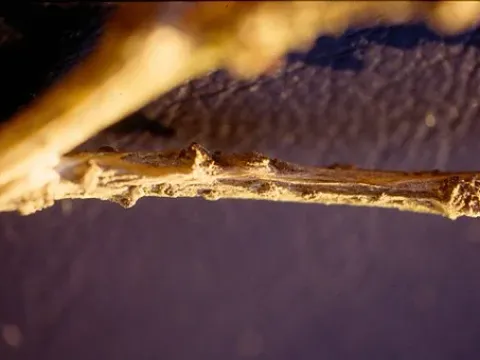
Corticium stevensii
Corticiumstevensii
Corticium stevensii is a pathogenic fungus belonging to the kingdom Fungi and the phylum Basidiomycota. It is primarily known as the causative agent of the disease commonly referred to as thread blight.
What the section contains
Corticium stevensii
The fungus is characterized by the production of rhizomorphs, which are thread-like or cord-like strands of mycelium that wrap around the branches and twigs of the host plant.
It acts as an obligate parasite, feeding on the nutrients of the plant host and causing necrosis of the bark and cambium layers of the branches.
The taxonomic classification places it within the Corticiales order, reflecting its typical morphology of forming thin, crust-like or web-like fungal mats on surfaces.
This pathogen is highly specialized and is known for its ability to withstand adverse environmental conditions by forming sclerotia on the bark of its host.
The primary damage caused by Corticium stevensii includes the death of twigs and branches, which leads to significant defoliation and a decline in tree vigor.
Host range primarily includes deciduous fruit trees such as apples and pears, as well as various evergreen species in humid tropical and subtropical regions.
The infection disrupts the transport of water and nutrients, resulting in the wilting and subsequent death of the leaves and woody tissue distal to the infection site.
In severe cases, the entire canopy of the tree can be affected, leading to substantial yield losses and potentially the death of the tree if left untreated.
The aesthetic and economic impact is compounded by the need for intensive pruning and removal of significant portions of the tree's structure.
The disease development is heavily dependent on weather conditions, peaking during periods of high humidity and moderate to warm temperatures.
Rainy seasons provide the optimal environment for the proliferation of the mycelium and the spread of fungal spores via water splashes and air currents.
During the dormant season, the fungus persists in the form of sclerotia or latent mycelium on the surface of the bark, ready to resume growth when conditions improve.
The rate of infection often increases during periods of canopy closure, where reduced sunlight and poor air circulation create a microclimate favorable to the pathogen.
Insects and orchard tools may also facilitate the mechanical transmission of the fungus between infected and healthy trees throughout the growing season.
The presence of the fungus is clearly visible as thin, brown, thread-like mycelial strands that resemble hair or spider webs spreading along the branches.
Leaves on infected twigs often show signs of blight, characterized by rapid wilting, browning, and necrosis, followed by premature leaf drop.
The affected bark may develop cracks or lesions, and small, dark-colored sclerotia can frequently be seen firmly attached to the surface of the twigs.
In humid conditions, the mycelium may spread to the undersides of the leaves, creating a fine, white to tan-colored web-like network.
Visible decay of the twigs occurs underneath the fungal strands, with the wood becoming brittle and susceptible to further secondary infections.
Management of thread blight relies heavily on rigorous sanitation, which includes pruning and destroying all affected branches as soon as they are identified.
Copper-based fungicides are standardly recommended for prophylactic treatment, applied during the dormant season and early spring to reduce the initial inoculum.
Enhancing air circulation and sunlight penetration through proper canopy management is essential to disrupt the microclimate required by the fungus to thrive.
Sterilization of pruning tools using appropriate disinfectants is a critical step to prevent the human-aided spread of the pathogen between trees.
Integrating cultural practices like balanced fertilization and proper irrigation helps improve tree health, making the plants more resilient to infection by Corticium stevensii.