
Corticium salmonicolor
Corticium salmonicolor
Description
How to identify
Corticium salmonicolor is a basidiomycete fungus that serves as the causal agent of pink disease. It is a highly destructive pathogen, particularly in tropical and subtropical regions where it affects various woody plants and tree crops.
The pathogen is known for its polymorphism, existing in four different stages: cobweb, pustule, corticium, and necator stages. Each stage is adapted to different environmental conditions, ensuring the survival and spread of the fungus.
The fungus invades the host through bark fissures, penetrating the cambium and xylem. Once inside, it develops an extensive mycelium that disrupts the transport of water and nutrients, leading to systemic stress and eventual tissue necrosis.
Environmental factors such as high humidity (above 90%) and temperatures between +20°C and +30°C are ideal for the rapid proliferation of the fungus. Rain and wind act as the primary vectors, dispersing spores across wide areas.
The fungus remains viable within the affected bark during the dry season, waiting for the return of favorable moisture conditions to continue its growth cycle. This resilience makes it a difficult pathogen to eradicate once established.
What it damages
Pink disease has a broad host range, causing significant damage to economically important crops such as citrus, coffee, cocoa, and rubber trees. It is also found on various ornamental trees and fruit orchards in humid climates.
The disease causes substantial agricultural losses by killing branches and weakening or destroying entire trees. If left unchecked, the fungus can progress from small branches to the main trunk, leading to the collapse of the plant's vascular system.
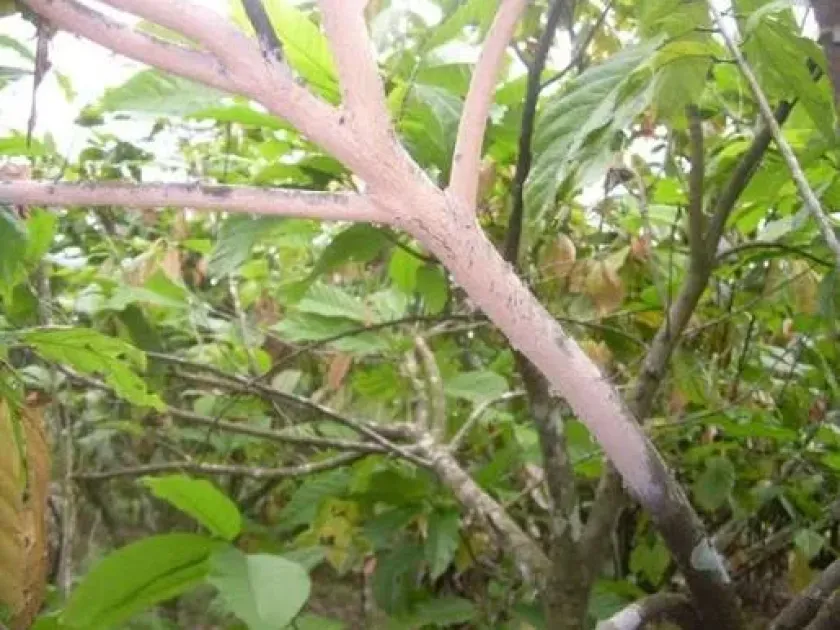
Symptoms initially appear as white, spiderweb-like mycelial threads on the bark. As the infection progresses, these threads thicken and develop a characteristic bright pink or salmon-colored powdery layer, which is the most recognizable sign of the pathogen.
The infected bark dries out, cracks, and eventually peels away, exposing the wood to secondary pathogens and pests. This degradation further compromises the structural integrity of the affected plant parts.
Damage is cumulative; if not controlled early, the disease can lead to complete defoliation, dieback, and the death of young plants within a few seasons. Large-scale plantations are particularly susceptible to rapid outbreaks.
Control measures
The primary control measure is the early detection and pruning of infected branches. All diseased wood should be removed with a clean cut into healthy tissue and immediately burned or buried to minimize spore dissemination.
Chemical control focuses on applying copper-based fungicides to the canopy and branches, especially during the onset of the rainy season. These products act as a protective layer that prevents fungal spores from establishing infection sites.
Maintaining optimal orchard hygiene is critical. Tools used for pruning must be disinfected with appropriate antimicrobial solutions after each use to prevent cross-contamination between healthy and infected trees.
Improved cultural practices, such as proper spacing and tree training, help to reduce humidity levels within the canopy. By increasing air circulation and sunlight penetration, growers can create an environment less favorable for fungal growth.
Long-term management often involves breeding for host resistance. Monitoring the plantation during peak growth periods and removing inoculum sources are essential practices for sustaining productivity and preventing severe disease epidemics.
Causes diseases · 1
Discussion
No discussions yet — be the first.