
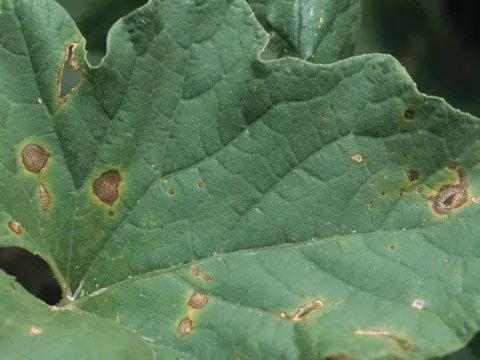
Corynespora cassiicola
Corynespora cassicola
Corynespora cassiicola is a highly adaptable soil-borne fungus belonging to the kingdom Fungi and the division Ascomycota. It is recognized as a serious plant pathogen with a broad host range, affecting over 500 plant species worldwide.
What the section contains
Corynespora cassiicola
The fungus exists in the soil as dormant structures like chlamydospores, which allow it to survive for extended periods, even in the absence of suitable host plants.
Infection is primarily spread via conidia, which are disseminated by wind, rain splashes, and contaminated agricultural machinery moving across different fields.
Genetic diversity within the species is significant, leading to the development of various physiological races that can overcome the natural resistance of many crop cultivars.
It is classified as an anamorphic fungus, and its ability to switch between sexual and asexual stages contributes to its evolutionary success and persistence in various environments.
This pathogen causes severe diseases, most notably "target spot," in key crops such as soybeans, cotton, cucumbers, tomatoes, and various tropical tree species.
Economic damage is caused by the destruction of leaf tissue, which drastically reduces the photosynthetic capacity of the plant and leads to significant yield losses.
In addition to foliage, the fungus attacks stems and fruit, causing necrotic lesions that render the produce unmarketable and decrease the overall quality of the harvest.
In high-density crops, the disease can spread rapidly, leading to complete defoliation and the death of young plants if infection occurs during early growth stages.
The reduction in biomass and reproductive output can reach catastrophic levels in regions with climate conditions favorable to the rapid proliferation of the fungus.
The pathogen thrives in warm and humid conditions, with optimal development occurring at temperatures between 20°C and 30°C and high relative humidity.
Extended periods of leaf wetness are essential for the germination of fungal spores, making rainy seasons or frequent irrigation key windows for disease outbreaks.
In protected cultivation, such as greenhouses, the fungus can remain active year-round if the climate is managed in a way that favors high moisture levels.
Field outbreaks typically peak mid-to-late season, when dense crop canopies create a microclimate that traps humidity and prevents rapid leaf drying.
The fungus overwinters primarily on crop debris left on the soil surface, re-emerging to infect the next season's crop as soon as environmental conditions improve.
The most characteristic symptom is the formation of circular to irregular brown spots on leaves, which often display a distinct concentric pattern resembling a target.
Affected leaves may turn yellow and wither prematurely, leading to significant chlorosis and eventual necrosis of the entire leaf structure.
On stems, the fungus manifests as elongated dark brown lesions that can girdle the plant, cutting off nutrient transport and causing localized or systemic wilting.
During periods of high humidity, a characteristic greyish or olive-colored fungal growth appears on the lesions, representing the mass production of conidia.
- Target-like concentric spots on leaves.
- Premature defoliation and yellowing.
- Dark necrotic lesions on stems and fruit.
Effective management requires strict crop rotation with non-host species to reduce the level of fungal inoculum present in the soil over several years.
Deep plowing or mechanical incorporation of crop residues is recommended to accelerate the decay of plant matter, thereby reducing overwintering sites for the fungus.
Fungicide application, specifically utilizing FRAC group 11 (strobilurins) and group 3 (triazoles), is the standard chemical approach to curb the spread of the disease.
Maintaining proper plant spacing and ensuring good ventilation in greenhouses help lower humidity, making the environment less hospitable for spore germination.
Monitoring fields for initial symptoms and rogueing infected plants are vital practices to prevent localized outbreaks from turning into widespread epidemics.