
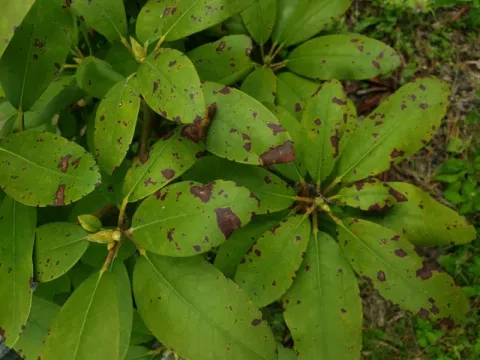
Coryneum blight of rhododendron
Coryneum rhododendri
Coryneum blight, caused by the fungus Coryneum rhododendri (syn. Stigmina rhododendri), is a fungal pathogen that specifically affects the foliage and stems of rhododendrons. It belongs to the class Dothideomycetes and thrives in cool, humid environments typical of ornamental gardens.
What the section contains
Coryneum blight of rhododendron
The fungus reproduces through conidia, which are produced in small, dark fruiting structures called acervuli. These structures break through the plant's surface to release spores, which are then disseminated by water splashes and air currents during rainy weather.
Systematically, this pathogen is recognized as a cause of localized leaf spot disease. It survives the winter in fallen leaves and dead twigs, maintaining its presence in the garden and emerging again when spring temperatures rise.
Infection occurs when spores land on susceptible plant tissue during extended periods of moisture. The fungus penetrates the leaf epidermis through stomata or mechanical wounds, initiating the colonization of plant cells.
Laboratory diagnosis usually involves examining the spores under a microscope, where they typically appear dark, multi-septate, and characteristic of the genus. Distinguishing this from other leaf spot fungi is essential for targeted treatment.
The primary hosts of this fungus are various species and hybrids of rhododendrons. It is particularly problematic in dense plantings where airflow is restricted, leading to prolonged leaf wetness that favors fungal development.
Damage manifests as necrotic spots on leaves, which disrupt photosynthesis and can lead to premature leaf drop. When the infection is severe, the foliage may lose its luster, become brittle, and fall off well before the natural dormancy period.
While the disease is primarily foliar, it can spread to young, succulent shoots. This can cause dieback of tips or lateral branches, weakening the shrub’s overall vigor and reducing its flowering capacity for the following year.
Beyond physical damage, the aesthetic impact is significant, especially for ornamental plants used in landscaping. The presence of unsightly spots diminishes the visual appeal of the rhododendrons, making them unsuitable for displays.
In nursery settings, Coryneum blight can cause substantial economic losses. High humidity and crowded spacing allow the pathogen to move rapidly through blocks of plants, causing widespread defoliation and nursery stock quality decline.
The first signs of infection appear as tiny yellow or reddish-brown spots on the upper leaf surface. Over time, these spots enlarge, turn a deeper brown or black, and often develop a darker, defined margin.
One of the most distinct diagnostic features is the appearance of small, black, pin-point structures (fruiting bodies) within the center of the spots. These structures indicate where the fungus is actively producing new spores.
- Development of distinct brown leaf spots with dark borders.
- Small black fruiting bodies visible in the center of necrotic spots.
- Premature shedding of heavily spotted leaves.
- Tip dieback and potential cracking on young infected stems.
- Yellowing of surrounding tissue as the necrosis spreads across the leaf surface.
During periods of high humidity, a thin, velvety fungal growth may emerge from the spots. This represents the sporulating phase, where conidia are ready to be spread to healthy leaves or nearby plants.
In advanced cases, multiple spots may coalesce, covering large portions of the leaf blade. This total necrosis leads to the death of the leaf tissue, turning it brown and papery before it eventually detaches from the branch.
Effective control of Coryneum blight begins with strict sanitation. All fallen leaves and infected twigs should be removed and destroyed to reduce the primary inoculum load in the garden environment.
Improving cultural conditions is key to management. Pruning to open the canopy of the shrub increases airflow and light penetration, helping to keep the foliage dry and less susceptible to spore germination.
Chemical control should focus on the use of protective and systemic fungicides. Copper-based sprays or systemic products containing triazoles or strobilurins are effective if applied preventatively before the onset of wet weather.
When watering, avoid overhead irrigation that wets the foliage. Instead, utilize drip or soaker hose systems to supply moisture directly to the root zone, keeping the canopy dry and hostile to fungal growth.
Monitor rhododendrons frequently, especially during wet springs. Early detection and pruning of the first infected leaves can prevent the development of an epidemic, keeping the shrub healthy and preserving its decorative value throughout the season.