
Corynespora cassiicola
Corynespora cassiicola
Description
How to identify
Corynespora cassiicola is an imperfect fungus in the division Ascomycota and is classified as a polyphagous phytopathogen. It is the causative agent of target spot disease and is known to infect over 500 species of plants globally.
The fungus produces conidiophores and conidia that serve as the primary source of inoculum. These conidia are highly adapted for dispersal by wind and rain splashes, ensuring rapid spread across agricultural fields.
The pathogen's biology includes the ability to survive in crop debris, seeds, and soil as mycelium or chlamydospores. This longevity makes it an exceptionally resilient organism within various agricultural environments.
Microscopic examination of infected tissues reveals characteristic septate, club-shaped conidia, which serve as the primary diagnostic feature for identifying this specific species.
As a broad-host parasite, the fungus easily adapts to diverse host environments, which presents a significant challenge for plant breeders attempting to develop resistant crop varieties.
What it damages
This pathogen causes severe damage to essential crops including soybean, tomato, cucumber, papaya, and cotton. It affects all aerial parts of the plant, including leaves, stems, and fruits, as well as the root system in some cases.
In soybeans, the disease causes premature defoliation, which directly correlates to seed weight loss and significantly reduced yields. In tomatoes and cucumbers, infection leads to leaf senescence, reduced photosynthetic efficiency, and severe damage to fruit marketability.
Stem infections can lead to lodging, particularly when the disease pressure is high in densely planted fields or environments with high humidity.
The infection triggers tissue degradation, weakening the plant's overall immune status and making it highly susceptible to secondary opportunistic pathogens, further exacerbating yield losses.
On a global scale, the economic impact of Corynespora cassiicola is significant, costing millions of dollars annually, especially in tropical and subtropical agricultural regions.
When it appears
Optimal development of the pathogen occurs under combinations of high air temperatures (between +25°C and +30°C) and high humidity (above 80%). These conditions provide the perfect environment for spore germination and colonization.
Disease outbreaks typically peak during periods of frequent rainfall and prolonged dew periods on leaves, which facilitate the rapid spread of the fungal mycelium through the host tissues.
Infections can occur throughout the entire vegetative cycle, from initial growth stages to plant maturation, especially when crops are grown under continuous monoculture systems.
Required conditions for infection include the presence of free water on the leaf surface for several consecutive hours, which is essential for the conidia to successfully germinate and penetrate the cuticle.
Spread continues as long as environmental conditions remain favorable, with the pathogen retaining high activity even through short dry spells by sheltering within protective crop residues.
Signs of infestation
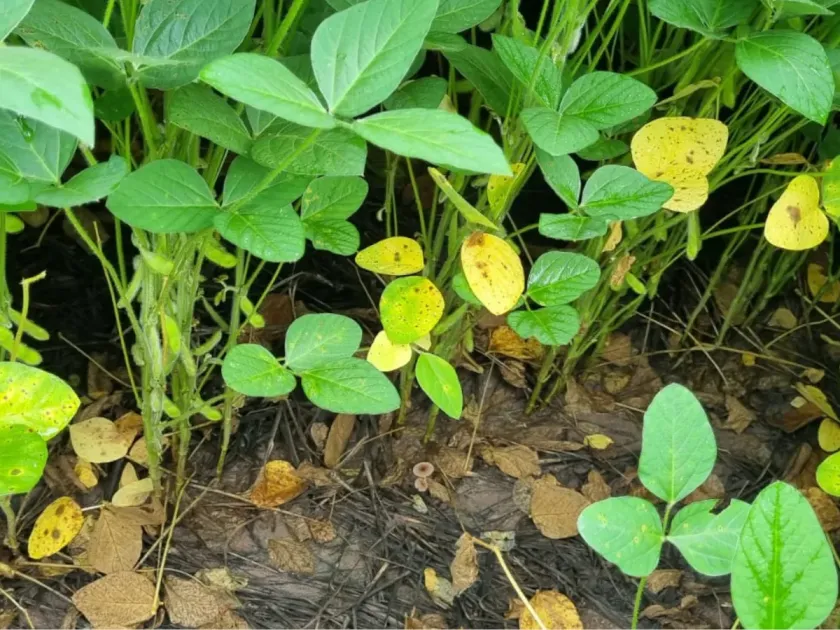
The first visible signs of infection appear as small brown or reddish-brown spots that gradually increase in size and often display a distinct zonal pattern.
The most iconic diagnostic sign is the appearance of concentric rings within the necrotic lesions, creating a "target-like" appearance, which gave rise to the common name, target spot.
As the disease progresses, these lesions merge, covering significant portions of the leaf surface, which triggers chlorosis, yellowing, and eventually massive tissue necrosis.
On stems, the symptoms manifest as elongated brown lesions, which can lead to structural weakness and stem breakage during periods of high disease pressure.
Under conditions of high humidity, a grey or dark olive-colored velvet-like growth may appear on the surface of the lesions, consisting of dense clusters of conidiophores and conidia.
Control measures
The fundamental strategy for management is the implementation of strict crop rotation, excluding host crops for a period of at least 2–3 years to lower the primary inoculum pressure in the field.
It is critical to practice deep tillage or complete destruction of infected crop residues, as these serve as the primary reservoirs where the fungus persists during the off-season.
Utilizing resistant or tolerant cultivars and hybrids remains the most effective and economically sustainable method for long-term crop protection against this pathogen.
Chemical control involves both preventative and curative applications of fungicides, particularly those belonging to the strobilurin, triazole, and carboxamide classes, which have demonstrated high efficacy.
- Maintaining optimal plant density to improve air circulation and reduce micro-humidity.
- Using high-quality, treated seed lots to prevent the introduction of the pathogen into new areas.
- Effective weed control to eliminate alternative hosts that may harbor the fungus between growing seasons.
Causes diseases · 1
Discussion
No discussions yet — be the first.