
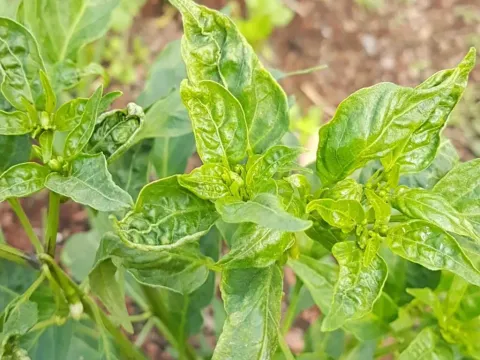
Chili leaf curl virus
Chili leaf
Chili leaf curl virus (ChiLCV) is a destructive plant pathogen belonging to the genus Begomovirus, family Geminiviridae. It contains a single-stranded circular DNA genome and is responsible for major crop losses globally.
What the section contains
Chili leaf curl virus
The virus is primarily transmitted by the whitefly species Bemisia tabaci. This insect acts as a vector, acquiring the virus from infected plants and transmitting it to healthy ones while feeding on phloem sap.
The pathogen thrives in tropical and subtropical climates. It maintains its presence in the environment through alternative weed hosts, which serve as reservoirs between growing seasons.
Once inside the plant, the virus moves systemically through the vascular tissues. It interferes with fundamental physiological processes, including nutrient transport and the plant's hormonal balance.
Molecular diagnosis, such as PCR, is essential for accurate identification, as symptoms of ChiLCV often overlap with other viral infections or physiological disorders common in Solanaceous crops.
The virus primarily affects pepper (Capsicum annuum), including both sweet and chili varieties. It causes severe developmental stagnation, often leading to a total failure of fruit production.
In addition to peppers, the virus can infect tomatoes, tobacco, and wild Solanaceous species. These secondary hosts are critical for the virus's survival, making eradication difficult in mixed-cropping environments.
Infected plants show a drastic reduction in leaf area, which limits photosynthetic efficiency. This leads to energy shortages, causing flowers and young fruit to drop prematurely.
Yield losses can vary depending on the plant's age at the time of infection. Early-stage infection typically results in complete crop failure, causing significant economic hardship for farmers.
The quality of harvested fruit is also compromised, as they become malformed, stunted, and aesthetically unappealing, making them unsuitable for the fresh market or processing.
The most prominent symptom is the upward curling of leaf margins, which is usually accompanied by severe puckering and crinkling. The leaves become thick, brittle, and leathery to the touch.
Nodes are significantly shortened, giving the plant a stunted, bushy appearance. Infected plants fail to grow to their normal height and exhibit poor development of branches.
Leaf discoloration often occurs, manifesting as yellow patches, mosaic patterns, or vein clearing. In advanced stages, the entire canopy can appear chlorotic and distorted.
Fruit development is severely impaired, resulting in tiny, misshapen, and underdeveloped fruits. The plant may cease producing fruit entirely if the infection occurs early in the season.
- Upward curling and severe leaf distortion.
- Stunted growth and shortened internodes (bushy habit).
- Yellowing (chlorosis) or mosaic patterns on leaves.
- Premature abscission of flower buds and immature fruit.
- Reduced size and deformed shape of mature fruits.
Managing the whitefly population is the primary strategy for virus control. Farmers should employ systemic insecticides and integrated pest management (IPM) practices to reduce vector numbers.
Sanitation is vital; growers must identify and rogue out infected plants immediately. These plants should be removed from the field and destroyed to prevent further spread of the virus.
Planting resistant or tolerant pepper hybrids is the most sustainable approach to long-term control. Breeding programs are continuously working to introduce new resistance genes into commercial varieties.
Cultural practices, including the regular removal of weeds that harbor whiteflies, are crucial. Spatial isolation of new plantings from older, infested fields can also mitigate primary infection risks.
Protected cultivation using fine mesh screens in greenhouses acts as a physical barrier against whiteflies, significantly reducing the probability of viral transmission to healthy plants.