
Choanephora
Choanephora
Description
How to identify
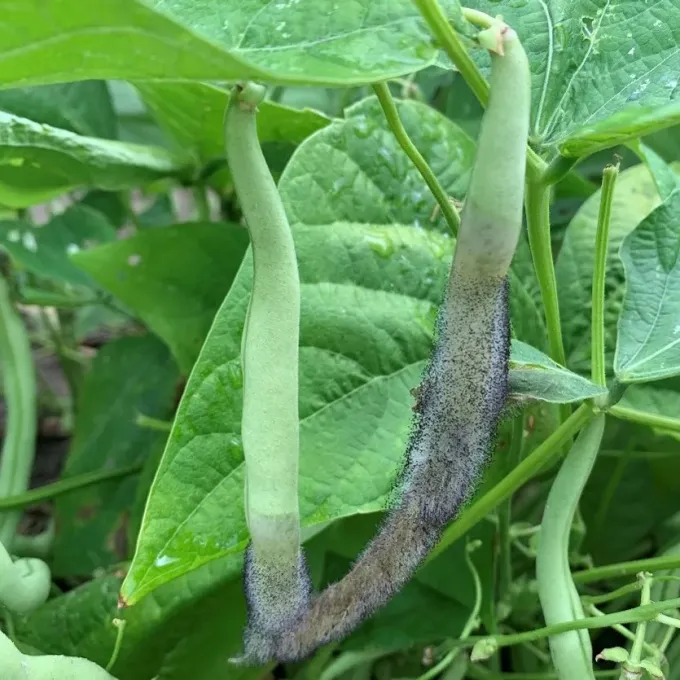
The genus Choanephora belongs to the Mucoromycota division, order Mucorales. The most significant species is Choanephora cucurbitarum. This pathogen is a mycelial fungus that produces distinctive sporangiophores with dark heads of sporangiola, giving infected tissues a fuzzy appearance.
The fungus is a facultative parasite capable of surviving in the soil and on plant debris as zygospores or mycelium for extended periods. Its systematic position classifies it as a soil-borne pathogen that thrives under conditions of high temperature and humidity.
Microscopically, the pathogen is identified by its dichotomously branched sporangiophores, which terminate in dark, nearly black heads containing spores. This dark mass is a key diagnostic feature when examining affected plant areas.
Unlike many other common molds, Choanephora exhibits rapid mycelial growth. The optimal temperature range for the pathogen's development is between +25 and +30 degrees Celsius, making it especially destructive during hot summer months.
The pathogen attacks both vegetative and generative parts of plants, causing necrotic processes and rapid tissue decay. The spread of infection occurs primarily via wind-borne spores, water droplets, and insect vectors.
What it damages
Choanephora causes significant damage to cucurbits, including cucumbers, zucchini, squash, and pumpkins. It has also been documented on tomatoes, peppers, beans, and certain ornamental plants such as hibiscus.
The pathogen frequently targets flowers and young fruitlets, causing premature abscission. This drastically reduces overall yield, as the infection spreads from the decaying flower directly into the developing fruit, causing rot.
Fruit infection begins with small, water-soaked lesions that expand rapidly. Under high humidity, the surface of the fruit becomes covered with a thick, dark-gray or brown moldy growth.
In commercial production, Choanephora infestations can lead to complete loss of marketability within days. Infected fruits become soft, emit an unpleasant odor, and decompose rapidly, rendering them unfit for sale or storage.
Beyond fruit damage, the fungus impacts terminal shoots and leaves, particularly those with mechanical wounds or insect feeding damage. This can lead to systemic wilting of plant parts and reduced photosynthetic activity.
When it appears
The development of the disease is closely linked to periods of extreme heat and high humidity. Outbreaks are most common in mid-to-late summer, when daily temperatures reach peak levels.
The peak infection window coincides with heavy rainfall or overhead irrigation, which provide the necessary moisture for spore germination. The fungus quickly colonizes weakened tissues, often during the flowering and fruiting stages.
In greenhouse environments, Choanephora can occur year-round if climate parameters are neglected. Poor ventilation and high ambient humidity are critical factors that facilitate the rapid dispersal of spores.
The infection persists in the soil as dormant zygospores that can withstand adverse conditions. At the beginning of the growing season, once soil temperatures are sufficient, these spores germinate to establish primary infection foci.
The rapid life cycle of the fungus allows it to produce new generations of spores every few days. This characteristic results in explosive disease spread across fields or greenhouses when environmental conditions are favorable.
Signs of infestation
The first visual sign is the rapid wilting and necrosis of flowers, particularly in cucurbits. Soon after, a characteristic dark, fuzzy mold appears on the affected parts, consisting of fungal sporangiophores and spores.
On fruits, the disease manifests as water-soaked lesions that expand quickly. Tissues beneath the mold soften and darken, exhibiting signs of wet rot, which is a critical stage of the pathogen's life cycle.
Affected plants may show yellowing and premature leaf drop in areas adjacent to infection sites. In severe cases, the petioles of leaves and terminal shoots may turn black as the disease progresses.
The presence of fungal growth on flowers is the earliest indicator that allows for pathogen detection before it spreads to the fruit. Scouting in the early morning hours, when humidity is highest, is essential for early diagnosis.
Secondary signs include a specific rotting odor that attracts various insects. Pollinators and pests often act as mechanical carriers, spreading spores from infected plants to healthy ones.
Control measures
Effective control of Choanephora relies on strict adherence to cultural practices. It is crucial to avoid excessive soil moisture and maintain optimal plant spacing to ensure proper airflow and ventilation.
Regular sanitation of the site is mandatory: timely removal and destruction of all infected plant debris, fruit, and flowers are required. Leaving decaying fruit in the field is strictly discouraged, as it acts as a primary spore reservoir.
Using drip irrigation instead of overhead watering minimizes moisture contact with flowers and fruitlets. This significantly reduces infection risk, as the fungus requires free moisture to germinate.
In cases of severe infestation, the application of broad-spectrum fungicides is recommended. Copper-based products or specific systemic fungicides can suppress mycelial growth, though they are most effective when applied preventively.
Crop rotation and the use of resistant hybrids are vital components of a protection strategy. Avoiding cucurbit crops on the same field for 2–3 years helps reduce the soil-borne inoculum to safe levels.
Causes diseases · 1
Discussion
No discussions yet — be the first.