
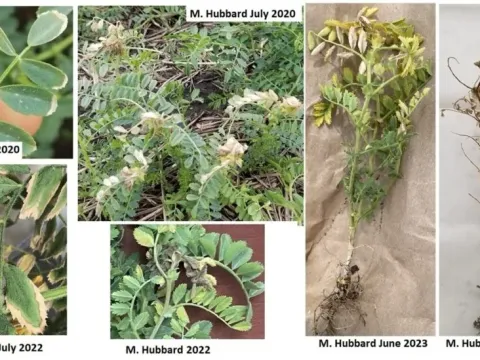
Chickpea chlorosis
Chickpea chlorosis
Chickpea chlorosis is a condition marked by the yellowing of leaves due to a lack of chlorophyll production. It is a widespread problem that can significantly impact the health of chickpea crops globally. The condition is broadly divided into physiological and infectious types.
What the section contains
Chickpea chlorosis
Physiological chlorosis in chickpeas is often triggered by abiotic factors such as high soil pH, which makes essential micronutrients like iron, zinc, or manganese unavailable to the plant. This is particularly common in calcareous soils where nutrient lockout occurs.
Infectious chlorosis is typically caused by plant viruses, such as the chickpea chlorotic stunt virus (CpCSV). These viruses are transmitted by insect vectors, primarily aphids, which feed on the sap of the plants and introduce the pathogen into the vascular system.
The taxonomic classification of the agents varies: if it is a nutrient deficiency, the agent is an abiotic factor; if it is viral, the agents belong to families like Luteoviridae or similar groups. Understanding the cause is essential for correct management.
Distinguishing between these types is critical. While nutrient deficiency can be treated with soil amendments or foliar sprays, viral infections require vector management and resistance breeding strategies.
Chlorosis causes a reduction in the photosynthetic capacity of the plant, which directly translates into reduced biomass accumulation. As the plant cannot produce enough energy, its overall vigor declines significantly.
Damage includes stunted growth, poor root development, and decreased flower production. In severe cases, the plant may fail to set pods entirely, leading to total yield loss in affected areas of the field.
The quality of the harvested seeds is also adversely affected. Seeds from chlorotic plants are often small, shriveled, and have lower germination potential, making them unsuitable for subsequent planting.
Plants affected by chlorosis exhibit a weakened immune system, making them more susceptible to opportunistic secondary infections, such as root rot pathogens, which further deteriorate the crop health.
Economic impact includes lower market value due to smaller seed size and increased costs associated with diagnostic testing and corrective soil treatments.
The primary symptom is the interveinal yellowing of leaves, where the veins remain green while the blade turns pale yellow or white. This pattern is often the first indicator observed by agronomists.
- Yellowing of young, developing leaves.
- Stunted plant height and reduced leaf size.
- Necrotic margins on leaves in advanced stages.
- Curling or deformation of leaf blades (typical in viral cases).
- Reduced number of pods per plant.
In cases of viral chlorosis, the symptoms may be accompanied by mosaic patterns, crinkling, or even plant rosetting. Physiological chlorosis usually appears uniformly or in patches related to soil characteristics.
The symptoms often appear during active growth stages, particularly if there is a sudden change in environmental conditions like high heat or moisture stress, which exacerbates nutrient absorption problems.
As the disease progresses, leaves may shed prematurely, causing the plant to lose its canopy. This exposes the pods to increased solar radiation, which can further degrade the quality of the developing seeds.
Managing physiological chlorosis involves correcting soil nutrient imbalances. Applying iron or zinc chelates via foliar sprays can provide an immediate boost to plants experiencing acute deficiency symptoms.
Improving soil health through the addition of organic matter or pH-adjusting amendments can help unlock soil nutrients, providing a long-term solution to prevent chlorosis in susceptible areas.
Controlling viral chlorosis requires a focused approach on insect vectors. Timely application of insecticides and maintaining weed-free borders helps reduce the population of aphids and other vectors that spread the virus.
Selecting chickpea varieties that are resistant or tolerant to both nutritional stress and common viral pathogens is the most sustainable way to protect the crop from recurring chlorosis issues.
Adopting good agricultural practices, such as proper crop rotation and avoiding the planting of chickpeas near host plants of viral pathogens, effectively limits the spread of the disease across commercial fields.