
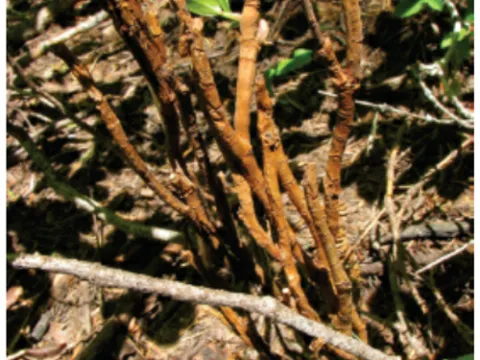
Ceuthospora anomala
Ceuthospora anomala
Ceuthospora anomala is a fungal pathogen classified within the class Leotiomycetes. It acts primarily as a plant parasite that targets members of the Ericaceae family, particularly affecting bog plants like cranberries. This fungus is well-known in mycology for its complex developmental cycle.
What the section contains
Ceuthospora anomala
The fungus produces pycnidia, which are small fruiting bodies that contain conidia. These reproductive spores are crucial for the pathogen's ability to spread within a field. Under high humidity conditions, the pycnidia rupture to release the spores, which can be dispersed by wind or splashing rain.
Biologically, Ceuthospora anomala prefers environments where moisture is abundant and temperatures are moderate. It can survive on dead plant debris throughout the winter months, making the sanitation of growing beds a primary concern for commercial berry growers.
Identification of the fungus relies heavily on microscopic analysis of the fruiting structures and the morphological characteristics of the conidia. In professional agricultural settings, molecular techniques are increasingly used to distinguish it from related Ceuthospora species.
As a pathogen, it exploits the vulnerability of berry plants, especially when the plants are already stressed by unfavorable weather, nutrient deficiencies, or insect infestations. Understanding its ecological niche is essential for creating effective management strategies.
The primary economic damage caused by Ceuthospora anomala occurs in cranberry and other Ericaceous berry plantations. The fungus attacks both vegetative parts and fruits, leading to reduced yield and significant quality degradation.
Fruit decay is the most prominent sign of damage. Affected berries lose their structural integrity and become soft, often rendering the entire crop unsuitable for fresh market sale. This decay can spread rapidly through containers during transport.
In addition to fruit rot, the fungus can infect stems and leaves, causing localized necrosis. This results in weakened shoots that struggle to transport water and nutrients, which ultimately stunts the growth of the entire plant cluster.
The cumulative impact on the plantation is a reduction in overall vigor and productivity. Over time, recurring infections lead to significant dieback, which requires intensive management to restore the health and yield of the berry field.
Financial losses are magnified by the need for costly post-harvest sorting and the potential for complete rejection of the harvest by buyers. Early intervention is vital to prevent the spread from localized outbreaks to the entire plantation.
The first symptoms often appear as irregular, darkened spots on the leaves. As the fungus progresses, these areas become necrotic and may merge, eventually leading to the premature death of the foliage and significant thinning of the canopy.
On the fruits, the initial signs include soft, discolored patches. As the infection develops, the skin of the berry may exhibit tiny, pimple-like structures, which are the fungal pycnidia. In moist conditions, these may show evidence of spore-laden exudate.
Stem infections cause wilting and yellowing of the tips. When examining an infected stem, one might notice a characteristic discoloration in the vascular tissue, which confirms that the pathogen has successfully colonized the internal transport system.
In the field, infected areas often appear as irregular patches where plants seem stunted or dead compared to healthy zones. These patches often expand during periods of frequent rain, reflecting the pathogen's reliance on moisture for movement.
The presence of a fungal mat on the surface of stems or leaves, especially in dense, poorly ventilated plant stands, serves as an additional diagnostic indicator of Ceuthospora anomala infection.
Successful management of this pathogen requires a holistic approach, starting with site-specific drainage systems. Reducing stagnant water in the fields is the most effective way to lower the risk of spore germination and spread.
Rigorous sanitation protocols must be enforced at the end of every season. Removing and burning or burying infected plant residues significantly decreases the primary inoculum reservoir, giving the crop a better chance in the following season.
Chemical control should be implemented using fungicides specifically approved for use on berry crops. Applications should be timed to coincide with high-risk periods, such as the bloom and fruit development stages, especially if weather forecasts predict extended rainy periods.
The use of certified, disease-free nursery stock is the cornerstone of prevention. Planting infested material guarantees that the pathogen will be introduced to the new field, making future control efforts much more difficult and expensive.
Finally, integrated pest management (IPM) should be applied to control insects that wound the fruit. By maintaining healthy plants and reducing physical damage to berries, growers can minimize the pathways through which the fungus enters the plant tissue.