
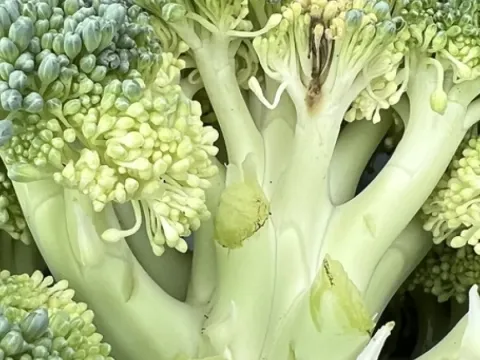
Broccoli necrosis
Broccoli necrotic
Broccoli necrosis refers to the localized death of floral tissues in broccoli heads, caused either by bacterial pathogens or physiological disorders.
What the section contains
Broccoli necrosis
The bacterial form is frequently attributed to Pseudomonas syringae pathovars, which exploit plant tissues through stomata or wounds.
Physiological necrosis is often linked to nutrient imbalances, specifically calcium deficiency or toxic nitrogen levels during rapid head development.
Proper identification requires assessing the environmental conditions and examining symptoms under a microscope to distinguish between pathogens.
Correct diagnosis is essential because treating a physiological disorder with bactericides will yield no positive results for the farmer.
The primary impact of broccoli necrosis is the degradation of the crop's marketability, making the harvested heads unfit for commercial sale.
Broccoli crops are highly susceptible due to the dense structure of their inflorescences, which can trap moisture and harbor bacterial growth.
Secondary infections often follow the initial necrosis, leading to rapid decay and a total loss of the harvest in affected segments.
Large-scale outbreaks can result in significant economic losses, forcing farmers to cull entire sections of their production fields.
Contaminated crop debris can serve as a reservoir for pathogens, potentially threatening future planting cycles if field sanitation is ignored.
High humidity and mild temperatures (15°C to 22°C) create the most favorable conditions for the rapid spread of necrosis-causing agents.
Wet weather during the crucial head-forming stage is the most dangerous period, as water droplets facilitate the movement of bacteria.
In greenhouses, poor ventilation and high atmospheric humidity significantly increase the risk of rapid disease onset.
Foggy or overcast days that prevent dew from evaporating from the broccoli heads allow the pathogen to penetrate deep into the floral tissues.
Late-season crops are often more susceptible due to shifting temperature gradients and increased nocturnal condensation.
The onset of the disease is marked by the appearance of tiny dark spots on individual buds, which can rapidly expand into larger necrotic lesions.
In cases of bacterial infection, affected areas may emit a foul odor and appear water-soaked compared to healthy tissue.
- Darkening and browning of individual broccoli florets.
- Development of sunken, dry lesions on the surface of the head.
- Yellowing of tissue surrounding the infection sites.
- Soft rot development under high humidity conditions.
- Deformation of the entire broccoli head as the disease progresses.
Early symptoms are often hidden deep within the florets, necessitating careful inspection of the head interior before harvest.
Physical appearance differences help distinguish between the dry, sunken spots of physiological stress and the irregular, moist lesions of bacteria.
Integrated pest management (IPM) should prioritize the use of resistant broccoli hybrids specifically bred to tolerate local pathogens.
Proper field management, including adequate spacing and irrigation timing, is vital to ensure that foliage dries quickly after watering.
Applying calcium-rich fertilizers can help stabilize cell wall integrity, which is the most effective preventative measure against physiological necrosis.
Copper-based sprays may be used as a protective measure to reduce bacterial populations on the plant surface during high-risk periods.
Strict post-harvest sanitation, including the removal and destruction of crop residues, is mandatory to prevent the carry-over of infection to the next season.