
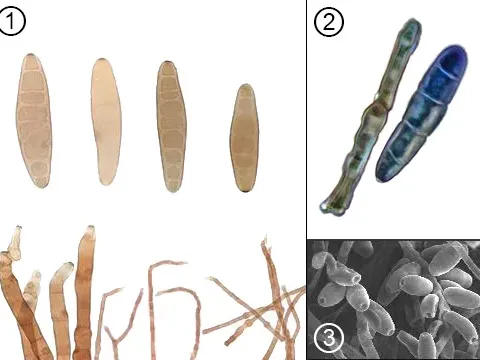
Brown spot of rice
Bipolaris oryzae
Brown spot of rice is a significant fungal disease caused by the pathogen Bipolaris oryzae (formerly known as Cochliobolus miyabeanus). It belongs to the Ascomycota division and is a major concern for rice producers globally.
What the section contains
Brown spot of rice
The pathogen produces conidia, which are multicellular asexual spores. These spores are easily dispersed by wind and splashing rain, leading to the rapid spread of the disease within the field.
Bipolaris oryzae survives in infected seeds, crop residues, and soil. It can exist as mycelium or as dormant spores, waiting for favorable environmental conditions to reactivate.
The fungus secretes toxins, such as ophiobolins, which are responsible for the severe tissue damage and necrosis observed in infected rice plants.
Genetic diversity among pathogen strains allows it to adapt to various rice cultivars, making host resistance a constantly evolving challenge for breeders.
Rice (Oryza sativa) is the primary host for the pathogen. Under certain conditions, it may also infect other grasses, such as barley and millet.
The disease affects all parts of the rice plant: leaves, sheaths, stems, and panicles. Seed infection is particularly damaging as it leads to reduced viability and grain quality.
By infecting leaves, the fungus significantly reduces the leaf surface area available for photosynthesis, which directly impacts the plant's ability to fill the grain.
Severe infestations on panicles result in empty or shriveled grains, causing substantial yield losses, sometimes reaching up to 40-50% in susceptible varieties.
Seedling blight is another critical manifestation, where the pathogen kills young plants soon after germination, resulting in poor stand establishment.
The disease thrives in warm and humid conditions, with optimal development occurring between 25°C and 30°C, combined with high humidity above 90%.
Frequent rainfall and dew periods provide the necessary moisture for spores to germinate and colonize host tissues effectively.
The peak incidence of the disease is typically observed during the reproductive stages, from panicle initiation through to the grain-filling period.
Nutritional stress, particularly nitrogen deficiency or inadequate soil silicon, makes plants significantly more susceptible to the fungal invasion.
Outbreaks are most severe in fields where there is continuous cropping and poor drainage, which helps maintain high spore concentrations in the environment.
The disease is characterized by the appearance of brown, circular-to-oval spots on the leaves, which often have a yellowish or grayish halo.
- Small dark spots on leaves, enlarging over time.
- Greyish-white centers in larger lesions.
- Blackened or dark-stained panicles.
- Velvety fungal growth on the spots under humid conditions.
- Reduced seedling vigor and potential plant death.
In advanced cases, individual spots coalesce to cover large portions of the leaf blade, causing the foliage to wither and appear scorched.
Infected grains often display dark brown to black spots, which significantly lower the milling quality and market value of the harvested rice.
The primary control measure is the use of disease-free, certified seeds and appropriate seed treatments with systemic fungicides to prevent early-stage infection.
Implementing proper agronomic practices, such as deep plowing of crop stubble and rotating crops, helps to significantly reduce the primary inoculum load.
Optimizing plant nutrition by ensuring adequate silicon and balanced NPK application enhances the plant's structural resistance to fungal penetration.
Chemical control involving fungicides like strobilurins or triazoles is effective when applied during the critical stages of infection or early disease detection.
Integrated pest management (IPM) strategies, including the selection of resistant cultivars and maintaining field hygiene, are essential for long-term control.