
Broad bean mosaic virus
Broad bean
Broad bean mosaic virus (BBmV) is a pathogenic virus belonging to the genus Comovirus, family Secoviridae. It is a major viral agent that affects various legumes, causing significant economic losses in commercial farming worldwide.
What the section contains
Broad bean mosaic virus
The virus particles are small, isometric, and contain a bipartite RNA genome. This structure allows the virus to replicate efficiently within the host plant, disrupting normal cellular processes and protein synthesis.
Transmission occurs through mechanical inoculation, infected seeds, and via specific insect vectors, primarily leaf-feeding beetles (Chrysomelidae). The ability of the virus to persist in the environment makes it a difficult pathogen to eradicate.
Once introduced into a field, the virus spreads through the movement of vectors and via contact between infected and healthy plants. Early detection is crucial to preventing an epidemic across the entire crop area.
The virus can remain stable in contaminated plant debris and soil for a certain duration, posing a risk to subsequent plantings if proper crop rotation and sanitation protocols are not followed.
The primary host is Vicia faba (broad bean), but the virus also infects other legumes such as peas, common beans, and various wild legumes. These wild hosts often serve as perennial reservoirs for the virus.
Infected plants exhibit systemic symptoms, leading to reduced photosynthetic capacity, stunted growth, and a drastic decline in seed production. The quality of harvested seeds is often compromised, making them unsuitable for replanting.
Early-season infection can lead to crop failure, as plants remain stunted and fail to produce viable pods. The weakened plants become more susceptible to other pests and opportunistic fungal or bacterial infections.
Beyond the direct loss of yield, the presence of the virus necessitates expensive protective measures and impacts the marketability of the produce due to physical deformities and poor grain filling.
The economic damage is exacerbated by the fact that infected crops require more intensive management, increasing the overall cost of production while simultaneously reducing the profitability of the legume enterprise.
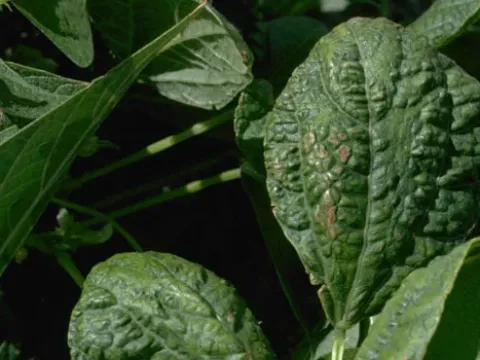
The most distinctive sign of BBmV infection is mosaic patterning on leaves, characterized by irregular patches of light green, yellow, and dark green discoloration. This mosaic effect is caused by the disruption of chlorophyll production.
Leaves often show signs of distortion, curling, and puckering. The entire plant may appear stunted with shortened internodes, giving it a rosetted or bushy appearance compared to healthy neighboring plants.
Necrotic spots and streaks can appear on pods, particularly in severe cases. These symptoms are often accompanied by poor development of the seeds inside, which may appear shriveled or discolored.
Plants affected by the virus often show signs of overall weakness, including poor root development, which makes them less resilient to environmental stressors like drought and heat.
Because symptoms can be confused with nutrient deficiencies or other viral infections, laboratory diagnostics such as ELISA or PCR testing are recommended for accurate confirmation of the presence of BBmV.
The first line of defense is the use of high-quality, virus-free certified seeds. Ensuring the seeds are tested and pathogen-free prevents the initial introduction of the virus into a new field.
Integrated Pest Management (IPM) is essential to control the insect vectors. Regular scouting and timely application of selective insecticides can significantly reduce the rate of virus spread within the crop.
Strict adherence to crop rotation practices is mandatory. Avoiding the planting of susceptible legumes in fields that previously hosted the virus, or near perennial legume sources, breaks the infection cycle.
Sanitation measures, including the destruction of weeds and volunteer plants that can act as alternative hosts, are vital for managing the virus throughout the growing season.
- Planting resistant or tolerant cultivars when available.
- Maintaining spatial isolation from old legume fields.
- Rogueing and removing symptomatic plants to reduce inoculum.
- Providing balanced fertilization to improve plant vigor.