
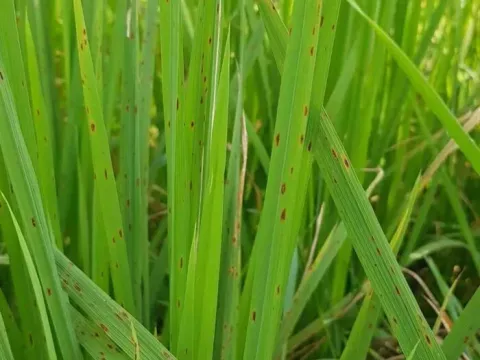
Brown spot of rice
Drechslera oryzae
The pathogen responsible for the disease is Drechslera oryzae (teleomorph: Cochliobolus miyabeanus), an ascomycete fungus that causes severe damage to rice crops worldwide.
What the section contains
Brown spot of rice
This pathogen produces dark, multicellular conidia on conidiophores, which are spread by wind, water, and infected agricultural equipment during the growing season.
The fungus is known for its ability to persist in the soil, on crop residues, and within the seed coat, making it a persistent threat in many rice-growing regions.
Taxonomically, it belongs to the family Pleosporaceae, and its biology is highly adapted to the humid, warm environments typical of rice paddies.
Understanding the life cycle of D. oryzae is crucial, as the primary inoculum often originates from contaminated seeds that initiate the disease upon germination.
Rice (Oryza sativa) is the primary host for this fungus, although the pathogen has a wide host range among grasses, which can act as secondary reservoirs.
The disease affects various plant organs, causing leaf spots, stem rot, and panicle blight, which severely compromise the plant's photosynthetic capacity.
Infected seeds often show poor germination rates and stunted seedling growth, leading to reduced plant density in the field right from the start.
The damage to the grain quality is particularly significant, as the fungus causes spots on the kernels, leading to chalky grains and lower milling quality.
Economic losses can be substantial, as widespread infection reduces both the quantity and the nutritional value of the harvested rice crop.
The disease development is heavily influenced by environmental factors, with warm temperatures (+25°C to +30°C) and high humidity being the most favorable conditions.
Outbreaks often occur during the reproductive stages of rice, particularly around the heading and flowering periods, when the panicles are highly susceptible to infection.
Frequent rainfall or persistent morning dew provides the necessary moisture for the conidia to germinate and penetrate the plant tissue within a few hours.
Stress conditions, such as nutrient deficiencies (especially potassium) or poor soil conditions, significantly increase the plant's susceptibility to D. oryzae.
Dense canopies that lack proper air circulation retain moisture longer, creating a microclimate that accelerates the spread and development of the disease.
The most recognizable symptoms are small, circular to oval, dark brown spots on the leaves, which often feature a yellowish halo as the infection progresses.
As the spots enlarge and coalesce, the entire leaf surface may become necrotic, giving the plant a scorched or withered appearance in advanced stages.
Symptoms on the panicles appear as dark brown or black lesions on the glumes, which may result in poor grain filling or total grain abortion.
Under high humidity, the lesions may be covered with a dark, velvety mycelial growth, which consists of masses of conidia ready for further dissemination.
Seedling blight symptoms include dark brown spots on the coleoptile and primary leaves, often resulting in the death of the seedling before it reaches full establishment.
Integrated disease management begins with the use of clean, certified seeds that have been treated with effective systemic fungicides.
Crop rotation and proper sanitation, such as the removal or destruction of infected rice straw, help to reduce the primary inoculum levels in the soil.
Providing balanced fertilization, particularly ensuring adequate potassium levels, helps to strengthen the plant’s structural resistance to fungal penetration.
- Apply foliar fungicides during the tillering and heading stages.
- Maintain optimal plant spacing to promote better airflow.
- Utilize rice varieties with documented genetic resistance to brown spot.
- Control grassy weeds that may serve as alternative hosts.
Proactive monitoring and timely chemical interventions are essential for keeping D. oryzae populations below the economic threshold in commercial rice fields.