
Brown rot
Monilinia fructigena
Description
How to identify
The causative agent of brown rot is the fungus Monilinia fructigena, a member of the kingdom Fungi, phylum Ascomycota. It is a highly destructive pathogen that specifically targets pome and stone fruits.
The fungus develops by producing mycelium within fruit tissues, secreting enzymes that cause rapid tissue decay. It reproduces via conidia, which are released from small cushions on the surface of infected fruits.
Its life cycle is heavily dependent on moisture. The fungus overwinters as mycelium in mummified fruits that remain on the branches or fall to the orchard floor during winter.
In spring, when temperatures rise and humidity increases, the fungus resumes sporulation. Conidia are spread by wind, rain, and insects to infect the new season's crop.
Monilinia fructigena thrives in humid environments with moderate temperatures, typically between 15°C and 25°C, making warm, rainy summers ideal for outbreaks.
What it damages
This pathogen infects a wide range of fruit trees, including apples, pears, quinces, cherries, plums, and apricots. Both commercial and backyard orchards are highly susceptible.
The economic damage is severe, as the fungus can destroy a significant portion of the harvest within a few days under favorable weather conditions.
Infected fruits lose their marketability and taste. Furthermore, if left untreated, the fungus can spread from the fruit to twigs and branches, causing cankers and dieback.
The presence of rot acts as a reservoir for infection for the following season, significantly increasing the pressure of the disease in the orchard every year.
Post-harvest, infected fruit can contaminate entire storage facilities, as the fungus easily spreads from decaying fruit to healthy ones through physical contact.
Signs of infestation
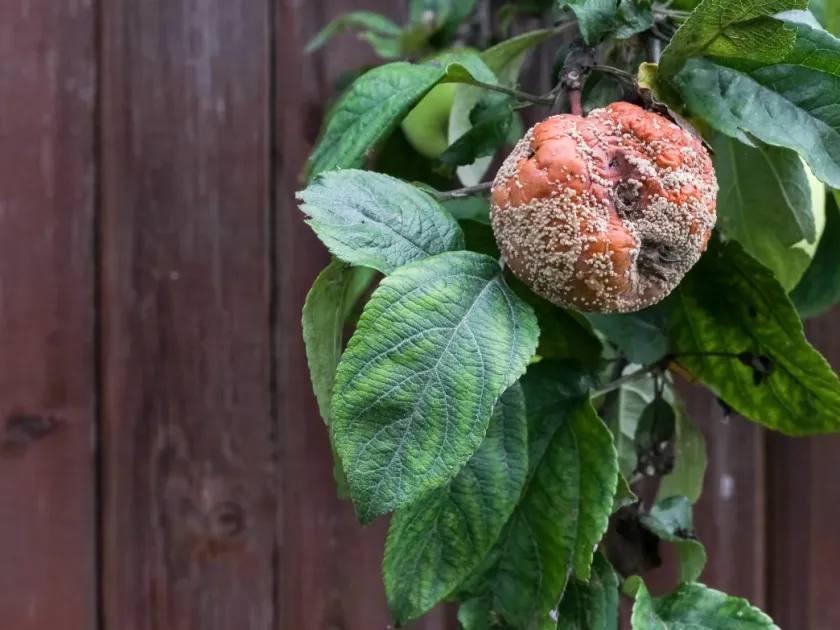
The infection starts with a small, circular brown spot on the fruit's surface. This lesion expands rapidly, eventually covering the entire fruit within a few days.
The most distinctive sign is the appearance of concentric rings of gray-yellow sporulating cushions on the fruit surface, representing the fungus's reproductive phase.
The flesh of the fruit turns soft and brown, eventually losing its structure as it dries out and hardens into a black, wrinkled "mummy" that remains attached to the branch.
In some cases, the fungus can also cause blighting of blossoms and young twigs, especially during wet springs, which can lead to reduced fruit set.
Visible mummified fruits hanging on trees during the dormant season are the most reliable indicator of the disease's presence in an orchard environment.
Control measures
Strict orchard hygiene is the first line of defense: manually remove and destroy all mummified fruits from both the trees and the ground after harvest.
Pruning is essential to improve airflow throughout the tree canopy, which reduces the humidity levels that the fungus requires for rapid growth and spore germination.
Integrated pest management is crucial, as insects like codling moths create wounds that allow the fungus easy access to the interior of the fruit.
Chemical control programs involving copper-based fungicides or synthetic systemic fungicides should be applied during critical stages of blossom and fruit development.
- Regular pruning to enhance light penetration and air circulation.
- Sanitation to remove all inoculum sources before the new season begins.
- Careful harvesting to prevent skin damage or bruising of the fruits.
- Application of fungicides during wet periods of the growing season.
Causes diseases · 1
Discussion
No discussions yet — be the first.