
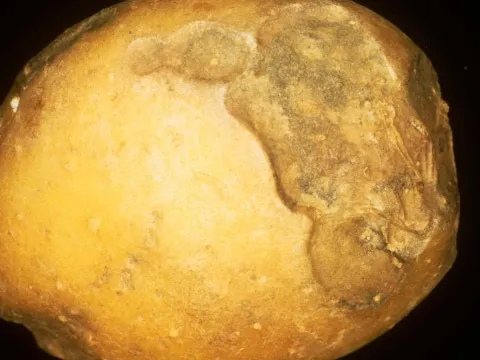
Phoma leaf spot and stem rot
Boeremia exigua
The causative agent of phoma diseases, known as Boeremia exigua (formerly classified as Phoma exigua), is an imperfect fungus belonging to the Coelomycetes class. It is a polyphagous pathogen capable of infecting a wide range of agricultural and wild plant species.
What the section contains
Phoma leaf spot and stem rot
The fungus belongs to the kingdom Fungi and is characterized by the formation of pycnidia — spherical fruiting bodies embedded in the host plant's tissues. Inside these structures, colorless single-celled conidia are produced, which facilitate the spread of the pathogen during the growing season.
The life cycle of the pathogen is closely tied to crop residues, where the fungus overwinters as mycelium and pycnidia. Infection can persist in the soil, on seeds, or be disseminated by wind and rain splashes onto healthy plant tissues.
Boeremia exigua thrives in moderate temperatures ranging from +15°C to +25°C combined with high humidity. When free moisture is present on the surface of leaves or stems, the spores germinate rapidly, penetrating the plant's epidermis.
Disease development is often exacerbated by mechanical injuries caused by pests, hail, or improper tillage practices. As a facultative parasite, the fungus easily enters the plant through these weakened or damaged tissues.
Phoma infection affects many economically important crops, including potatoes, tomatoes, soybeans, beans, sugar beets, flax, and various vegetables. The pathogen can attack almost all parts of the plant: roots, stems, leaves, and fruits.
In potatoes and other solanaceous crops, the infection often manifests as gangrenous lesions, causing tuber rot during storage. Under field conditions, stem infection frequently leads to premature wilting, lodging, and structural failure.
Leguminous crops suffer from leaf spots that cover the leaf blade, significantly reducing photosynthetic activity. Stem lesions in soybeans can cause severe crop lodging and lead to substantial yield losses.
In root crops, Boeremia exigua induces the formation of deep, dry ulcers, rendering the produce unsuitable for market or long-term storage. These lesions often serve as entry points for secondary bacterial infections.
The overall impact of phoma includes reduced product quality, decreased germination rates of infected seeds, and stunted growth, which can lead to significant harvest losses during epidemic years.
The primary symptom of phoma is the appearance of small light-brown or gray spots, often surrounded by a dark border. As the fungal mycelium grows, these spots expand and may exhibit concentric zonation.
In the center of the necrotic spots, tiny black dots — the pycnidia — become visible on the surface of the infected tissue. These are key diagnostic features used to distinguish phoma from other leaf spot diseases.
On stems, the pathogen causes elongated, sunken ulcers. At the base of the stem, the tissue turns dark brown or black, resulting in stem girdling and the subsequent death of the upper plant parts.
When tubers or root crops are affected, depressed spots appear, beneath which the flesh becomes loose, dry, and brown. Often, a cavity forms inside the ulcer, which may be covered with a grayish fungal growth.
- Yellowing and premature abscission of leaves.
- Presence of black fruiting bodies (pycnidia) on necrotic areas.
- Softening or hardening of tissues depending on the host crop.
- Stunted growth and deformation of plant organs.
The cornerstone of management is the use of healthy, certified seeds. Seed treatment with systemic fungicides helps prevent early-stage seedling infection and protects the crop during critical growth phases.
Crop rotation is vital, with a gap of at least 3–4 years before returning susceptible crops to the same field. Removing crop debris and practicing deep autumn plowing significantly reduce the initial soil-borne inoculum.
During the growing season, if conditions favor disease, prophylactic fungicide applications (such as triazoles, strobilurins, or copper-based contacts) are recommended to maintain field health.
Effective insect pest management is essential, as mechanical damage from pests facilitates pathogen entry. Timely weed control also reduces the risk of secondary inoculum spreading from wild reservoirs.
Storage facilities for potatoes and vegetables must be thoroughly disinfected and equipped with adequate ventilation and precise temperature control. Maintaining optimal moisture levels in storage prevents the further spread of the pathogen.