
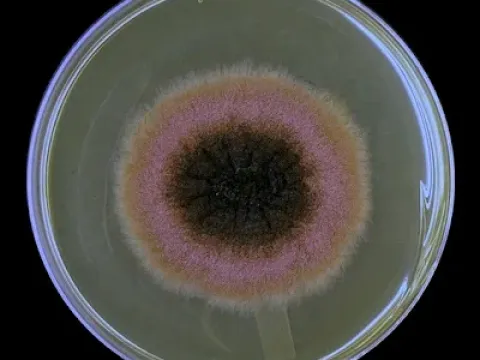
Phoma glomerata
Phoma glomerata
Phoma glomerata is an anamorphic fungus classified within the order Pleosporales of the division Ascomycota. It is a widely distributed saprotroph that can transition into a parasitic lifestyle when plant hosts exhibit weakened immune systems.
What the section contains
Phoma glomerata
The fungus produces numerous pycnidia, which are spherical fruiting bodies containing conidia (spores). Laboratory cultures typically display olive-green or dark brown colonies, providing a basis for initial identification during microscopic analysis.
Unlike highly specialized pathogens, this fungus demonstrates significant plasticity. It adapts easily to various environmental conditions and substrates, making it a dangerous opportunistic pathogen in various agroecosystems.
Systematically, it belongs to the genus Phoma, recognized for its destructive impact on a wide range of dicotyledonous and monocotyledonous crops. Its life cycle is closely linked to plant debris, where it can survive for extended periods.
Visually, the pathogen often appears on affected tissues as a dark, almost black fungal mat composed of intertwined hyphae and numerous small pycnidia. Accurate diagnosis frequently requires cultivation on nutrient media, such as potato dextrose agar.
This pathogen affects a broad spectrum of agricultural crops. It is most commonly identified on sunflowers, cereal grains, potatoes, various vegetables, and even fruit trees, where it causes necrotic lesions on bark and leaves.
In cereal crops, the fungus triggers leaf and spike spotting, leading to reduced photosynthetic activity. In severe cases, it can cause root and stem rot, which leads to lodging of the crop in the field.
In vegetables such as tomatoes, peppers, and cucumbers, the pathogen frequently attacks ripening fruit. This results in the development of dry or wet rots, rendering the produce unmarketable and unsuitable for storage.
On sunflowers, Phoma glomerata participates in the complex of fungi causing phoma stalk blight. It infects stems at the leaf petiole attachment points, causing characteristic dark lesions that eventually girdle the stem.
The fungus is also recognized as a secondary parasite, colonizing tissues already damaged by insect pests or other diseases. This complicates crop protection efforts, as the pathogen exacerbates existing damage on weakened plants.
The primary period for active spore dispersal is during wet intervals of the growing season. The fungus is particularly hazardous during periods of heavy rainfall coinciding with flowering or grain-filling stages.
Infection survives in the soil on plant residues and can also be transmitted via infected seeds. During winter, the pathogen remains dormant in the form of pycnidia, which are highly resistant to cold temperatures.
Primary infection in the spring occurs through spores dispersed by rain splashes or wind to the lower parts of plants. Under conditions of high humidity, the incubation period shortens, allowing the disease to spread across the field rapidly.
Optimal conditions for fungal development include temperatures ranging from 20°C to 25°C combined with high ambient humidity. Rapid temperature fluctuations and heavy dew facilitate more intense sporulation.
At the end of the season, the fungus actively colonizes senescing tissues, preparing the soil for the infection of subsequent crop generations. Consequently, thorough incorporation of post-harvest residues is critically important.
The first signs of infection usually appear as small chlorotic spots that darken over time, turning brown or black. Gradually, the center of the lesion may lighten, while a dark border forms around the edge.
Stem infections manifest as large, dark lesions with distinct boundaries. Over time, tissues in these areas crack, providing entry points for secondary infections and various insect pests.
On fruits, the disease appears as depressed lesions. As the fungus develops, these lesions enlarge, becoming soft or covered with an olive-colored velvety layer, which is a characteristic diagnostic feature of the species.
In cases of severe infestation, premature wilting and defoliation occur. If the pathogen penetrates the vascular system, the plant quickly loses turgor and dies due to the disruption of water and nutrient transport.
- Darkening of stem tissues near the base.
- Appearance of necrotic spots containing black pycnidia.
- Deformation and decay of affected fruit.
- Premature necrosis of leaf blades.
The primary defense strategy involves maintaining crop rotation, ensuring that susceptible hosts are not returned to the same field for at least 3 to 4 years. It is essential to avoid planting on related host predecessors.
Agrotechnical practices include deep plowing of plant residues, as these serve as the primary reservoir for the infection. Controlling weeds that may act as secondary hosts for the fungus is also highly effective.
The application of fungicides during the growing season is a necessary measure in regions with a high infection background. Products from the triazole and strobilurin classes are used to effectively suppress mycelial growth.
Seed treatment before planting is a crucial step in disease management. A high-quality fungicide seed dresser eliminates both superficial and internal infections, protecting seedlings during their most vulnerable stage.
When selecting varieties and hybrids, growers should prioritize those with genetic resistance to phoma diseases. Regular field monitoring during critical growth stages allows for timely preventive spray applications.