
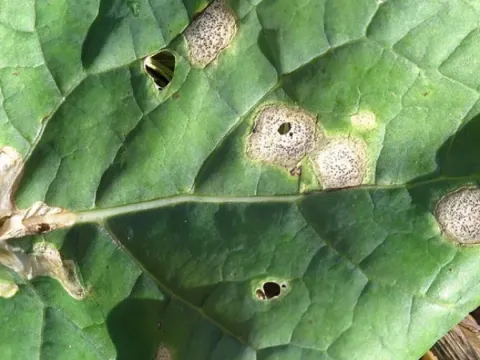
Phoma leaf spot
Phoma epicoccina
The causative agent of the disease is the imperfect fungus Phoma epicoccina, which belongs to the kingdom Fungi, class Coelomycetes, and genus Phoma. The pathogen is characterized by microscopic structures known as pycnidia, which serve as fruiting bodies for spore production.
What the section contains
Phoma leaf spot
The fungus produces mycelium capable of surviving for extended periods in soil and on infected crop residues. Throughout its lifecycle, Phoma epicoccina undergoes asexual reproduction, facilitating rapid spread of the infection within agricultural fields.
Identification is typically achieved by analyzing the morphology of spores formed within the dark, flask-shaped or globose pycnidia. Accurate diagnosis often requires laboratory examination of infected tissues under a microscope.
The pathogen demonstrates significant ecological plasticity, allowing it to adapt to diverse agro-climatic conditions. In field settings, diagnosis can be challenging due to the morphological similarity with other Phoma species.
The growth of the fungus is dependent on the availability of a suitable host, as it colonizes plant tissues using intercellular growth. Infection typically occurs through stomata or physical damage to the plant epidermis.
Phoma epicoccina affects a wide range of agricultural crops, including oilseeds, legumes, and several vegetable species. Crops are particularly vulnerable during their active growth phases and reproductive stages.
The disease manifests as necrotic lesions appearing on stems, leaves, and root systems. Depending on the severity of the infection, it can lead to premature senescence of plant organs or the death of the entire plant.
Stem lesions are often characterized by gray or brown spots with a distinct dark margin. Intense infection can damage the vascular system, effectively hindering the transport of water and essential nutrients to the upper plant parts.
Root infection leads to decay, weakening the plant and increasing its susceptibility to secondary pathogens. Frequently, phoma infection is a significant cause of crop lodging, which complicates mechanical harvesting operations.
The economic impact involves both a reduction in total yield and a degradation of product quality. Factors such as seed oil content and germination rates can decline sharply following severe infection.
The disease cycle begins following the overwintering of the pathogen in soil or plant debris. The peak of activity typically coincides with periods of high humidity, when pycnidiospores are dispersed by rain splash or wind.
Optimal conditions for infection include temperatures between 18 and 25 degrees Celsius and high relative humidity. Prolonged rainfall during the growing season is a primary factor for the development of epiphytotics.
Secondary infections occur throughout the growing season whenever favorable weather conditions persist. The pathogen can complete multiple cycles of sporulation, leading to a rapid increase in disease pressure.
By the end of the season, the fungus forms resting structures that allow it to survive during the winter. These structures retain virulence in the soil for several years, which is a critical factor for long-term crop rotation planning.
Infection rates decrease during dry and hot weather but may resume when humidity increases. Disease dynamics are strongly correlated with precipitation patterns during the critical phases of crop development.
Initial signs of infection are small, irregular spots that gradually increase in size. Over time, small black dots—pycnidia—appear on the surface of the lesions, serving as a reliable indicator of the disease.
Stem infections spread into deeper tissues, causing cracking and discoloration of the epidermis. Infected plants often show signs of stunted growth, accompanied by premature yellowing and dropping of the leaves.
Under high-humidity conditions, a fungal growth or exudate containing masses of spores may be visible on the surface of the lesions. This indicates an active phase of pathogen reproduction.
The root system may become brown or black, with tissues losing structural integrity and softening. In severe cases, total decay of the root neck occurs, eventually killing the plant.
Early symptoms may be subtle, but they become highly apparent as the infection progresses across the field. Regular inspection of the lower stem area is the most effective method for identifying early outbreaks.
The cornerstone of management is a robust crop rotation strategy, excluding susceptible crops from the rotation for at least 3-4 years. Proper incorporation of crop residues into the soil is essential to reduce the primary inoculum source.
Selecting resistant cultivars and hybrids is highly effective for risk mitigation. Breeding programs focus on developing genotypes with field resistance to a wide range of Phoma strains.
Seed treatment with fungicides is a standard agronomic practice to protect seedlings from early-stage infection. This method is effective against both soil-borne and seed-borne inoculum.
During the growing season, systemic fungicides should be applied when the first signs of disease are observed. Applications must follow regulatory guidelines, considering economic thresholds and specific plant growth stages.
- Utilization of healthy, certified seeds
- Removal of weed hosts that harbor the pathogen
- Optimization of crop density to ensure proper aeration
- Balanced nutrient management, particularly phosphorus and potassium