
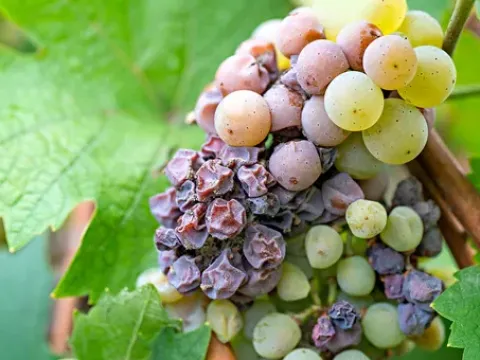
Berry shrivel
Berry shrivel
Berry shrivel is a physiological disorder affecting grapevine clusters, leading to the dehydration and cessation of sugar accumulation in berries. It is not caused by any fungal, bacterial, or viral pathogen; rather, it is a metabolic disturbance within the plant's vascular system.
What the section contains
Berry shrivel
The disorder lacks a biological agent, meaning it does not belong to any taxonomic category of plant pathogens. It is strictly an issue of plant physiology, often related to the failure of the rachis to transport adequate water and assimilates to the ripening berries.
Agronomists must differentiate this condition from fungal diseases such as botrytis or downy mildew. Unlike fungal infections, berry shrivel presents without sporulation or tissue rotting, focusing instead on the loss of turgor and shrinkage of the berry skin.
There are different types of shrivel, often categorized by the timing of onset. Early-season shrivel occurs shortly after berry set, while late-season shrivel appears closer to harvest, complicating the management of sugar levels in the vineyard.
Research suggests that a combination of environmental stress and hormonal imbalances within the grapevine leads to the blockage of the phloem and xylem, preventing necessary nutrients from reaching the fruit, resulting in the observed dehydration.
The primary economic impact of berry shrivel is a significant reduction in marketable yield. Shriveled berries lack the visual appeal required for fresh fruit sales, rendering large portions of the harvest commercially unviable.
In winemaking, the damage is equally severe. Because the affected berries stop accumulating sugar and may exhibit altered acidity, they negatively impact the chemical composition of the must, leading to lower-quality wine production.
Affected clusters are often more susceptible to opportunistic pathogens. Once the berries begin to lose their physical integrity, they become prime targets for Botrytis cinerea and other rot-inducing fungi, which can spread to healthy parts of the vineyard.
The disorder leads to inconsistent harvest quality, forcing growers to spend extra time and labor on sorting berries. This increases production costs and reduces the overall efficiency of the vineyard operation.
Even if the vine itself remains alive and largely healthy, the loss of fruit value directly translates into lower profits. Managing the incidence of shrivel is therefore critical for maintaining the sustainability of wine-growing operations.
Symptoms of berry shrivel generally manifest during the ripening phase, known as veraison, when berries typically begin to soften and change color. This is a highly sensitive period for the vine’s metabolic processes.
Environmental conditions during the weeks leading up to veraison are critical. High temperature fluctuations and erratic water availability can disrupt the hydraulic balance in the vine, making clusters more prone to shriveling.
Late-season manifestations can occur just prior to harvest. In these cases, the berries may appear normal for most of the season, only to collapse and dehydrate rapidly when the plant is under high transpirational demand.
Agronomic scouting should intensify before the onset of color change. Detecting early signs on the rachis or the berry skin can help growers make informed decisions about cluster thinning or irrigation adjustments.
Climatic factors such as drought or excessive rain at improper times play a significant role. The ability of the vine to maintain a steady flow of nutrients is compromised when environmental conditions oscillate wildly.
The first sign of berry shrivel is a halt in berry expansion followed by a loss of firmness. While the berries might retain their color, they become soft, rubbery, and eventually wrinkled as they lose their internal water content.
A key diagnostic indicator is the condition of the rachis. Often, the rachis shows signs of necrosis or discoloration at the point where the berry pedicel is attached, signifying a breakdown in the vascular pathway.
- Berry size remains stunted compared to healthy fruit.
- Skin becomes wrinkled and loses its natural turgor.
- Rachis shows browning or necrotic areas at the base of the berries.
- Significant decrease in sugar accumulation in the affected berries.
- Localized damage affecting only parts of a single cluster.
Unlike natural dehydration caused by excessive sun exposure (sunburn), berry shrivel can occur on shaded clusters and throughout the vine canopy. This distinguishes it from heat-related damage and indicates an internal physiological failure.
Since berry shrivel is a physiological disorder, there is no chemical control or fungicide treatment available. Management is strictly focused on optimizing the vineyard's agronomic conditions and minimizing plant stress.
Maintaining a balanced nutrient program is essential, with a particular focus on the potassium-to-magnesium ratio. Imbalances in these elements can negatively affect the vine's internal transport mechanisms.
Careful irrigation management is vital. Consistent water supply helps maintain stable pressure in the vascular system, preventing the blockages that lead to shrivel. Avoid rapid fluctuations in soil moisture levels.
Yield management through cluster thinning is an effective control measure. By reducing the overall crop load, the vine can better allocate resources to the remaining clusters, reducing the risk of nutrient shortages during ripening.
Foliar sprays containing micronutrients during the flowering and fruit-set stages can strengthen plant tissues. Providing a stable and optimal environment ensures that the vine can successfully complete the fruit development cycle.