This autumn variety was obtained at the Scientific Research Institute of Horticulture of Siberia named after M. A. Lisavenko through pollination in 1963 using a mixture of pollen (Pepin saffron + Welles + Pepin Chernenko + Lithuanian Pepinka). Breeders: M. A. Lisavenko, I. P. Kalinina, T. F. Kornienko, Z. A. Granikina. Widely cultivated in gardens across Siberia. Approved since 1988 for the West Siberian and East Siberian regions.
Trees are medium-sized with a broadly oval crown of moderate density. Branches usually grow from the trunk at a right angle and point upward. Fruit set is mainly concentrated on spurs and tips of one-year growths.
Shoots are greenish-brown and hairy. Leaves are medium-sized, elongated-oval with a long sharp tip curled sideways, dark green and matte, with weak hairs on the underside. Leaf margins are slightly uplifted and wavy, with toothed edges. Petioles are long, with a maroon base.
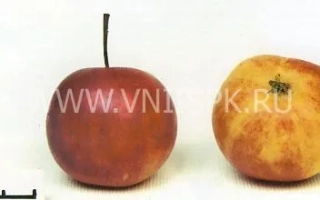
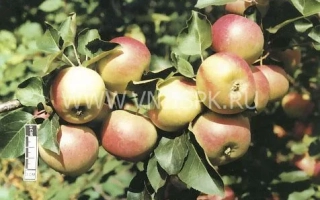
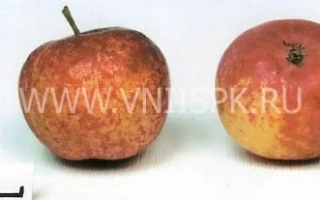
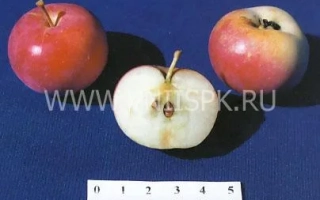
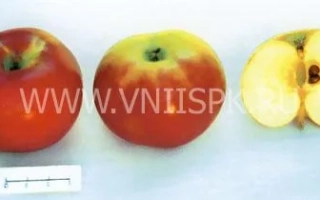
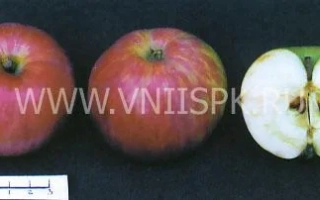
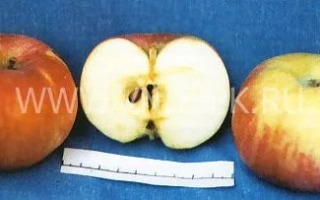
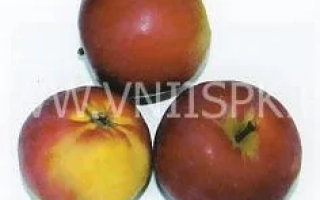
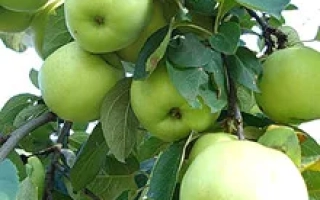
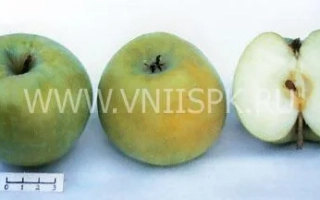
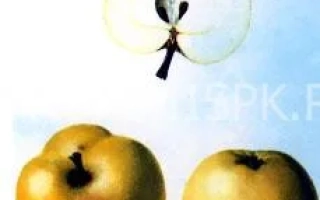
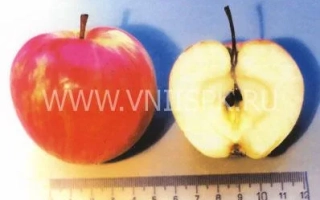
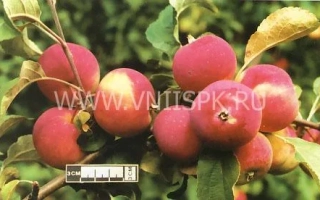
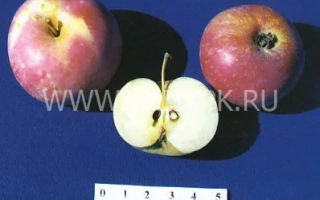
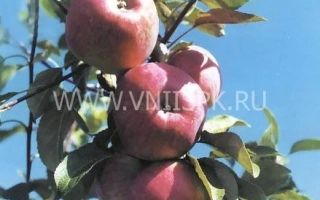
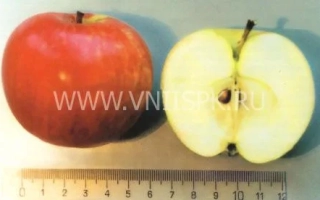
Fruits (see photo) are very small (25-30 g), single-ribbed, highly attractive, rounded-conical with a smooth surface. Main color is yellow, visible through the skin on the shaded side. Skin color is dark red, blurred, almost covering the entire fruit, with an intense bluish bloom. Peduncle is medium-length, thin, reddish. Calyx is medium-sized, free of rust. Receptacle is large, ribbed. Calyx is large, closed, with long reflexed sepals. Subcalyx tube is medium, conical, axial cavity narrow. Seed chambers are closed.
Flesh is creamy with red veins along the seed cavity edge, firm, juicy, tart-sweet, with good flavor. Chemical composition of fruit: total sugar content — 13.9% (12.9-14.9), titratable acids — 1.50% (1.21-1.94), tannins — 168 mg/100g (154-182), pectin substances — 6.89% on dry weight, ascorbic acid — 16.5 mg/100g (9.4-22.8), P-active compounds — 237 mg/100g (158-437).
Fruits ripen at the end of August and can be stored for up to 60 days. This is a universal variety.
Fruit production begins in the fourth year. Yield is average, fruiting is regular. Winter hardiness is high. Highly resistant to scab. Valued for all forms of property ownership.
Advantages of the variety: early fruiting, high winter hardiness, high resistance to scab, very attractive fruits of universal use.
Disadvantages of the variety: small fruits.