


SKU #3269
·
374 views
Altynay
Apple
User rating
0 votes0% positive reviews
No ratings yet — be the first.
Type of Sort
Autumn Apple Variety
Tree; Growth Power
Medium-height
Tree; Canopy Shape
Round Canopy
Fruit; Fruit Shape
Round
Store offers · 3 from 3 stores
Prices are updated on loadLoading offers…
Available at: Флора Сибири · Гарденмарт · Лучший Сад · Много Растений
Aggregator catalog: prices are collected automatically from store websites, normalized by AI and converted at the current exchange rate. Before ordering, confirm the price and availability on the store's website. This block is not indexed by search engines — the data is loaded after the page opens.
About product

This variety was obtained at the Scientific Research Institute of Horticulture of Siberia named after M. A. Lisavenko from crossing the Altai Silk variety with Altai Phoenix in 1965. Breeders: N. V. Yermakova, I. P. Kalinina, Z. S. Yashemskaya. Suitable for lowland and mountain areas of the Altai Krai. Accepted into State Variety Testing in 1998.
Trees are medium-sized with medium-dense, roun…
Type of Sort
Autumn Apple Variety
Tree; Growth Power
Medium-height
Tree; Canopy Shape
Round Canopy
Fruit; Fruit Shape
Round
Description
This variety was obtained at the Scientific Research Institute of Horticulture of Siberia named after M. A. Lisavenko from crossing the Altai Silk variety with Altai Phoenix in 1965. Breeders: N. V. Yermakova, I. P. Kalinina, Z. S. Yashemskaya. Suitable for lowland and mountain areas of the Altai Krai. Accepted into State Variety Testing in 1998.
Trees are medium-sized with medium-dense, rounded crowns. Branches emerge from the trunk almost at right angles with numerous buds and twigs.
Shoots are thick, straight, dark brown, hairy. Leaves are medium-sized, egg-shaped, short-pointed, green, wrinkled, matte, hairy, with serrated-crenate, wavy margins. Petioles are short, thick, with small lanceolate bracts.
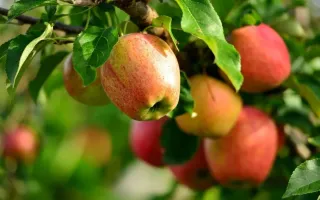
Fruits (see photo) are small (65-142 g), round. Surface is smooth. Main color is light-yellow, covering color is pink, speckled and striped over most of the fruit. Peduncle is medium-length and thickness, shallow cup, narrow, slightly rusted. Calyx is half-open, plate is smooth, medium-sized. Subcalyx tube is medium, sac-like. Seed chambers are closed.
Flesh is white with greenish veins, juicy, firm, slightly sour-sweet, aromatic, good taste. Chemical composition of fruits: total sugars — 11.0%, titratable acids — 0.54%, ascorbic acid — 12.8 mg/100g, pectin substances — 2.44% on dry weight.
Fruits ripen in the second decade of September, can be stored for up to 120 days. Variety is of universal use, especially valuable for home gardens.
Fruit production begins on the fourth to fifth year. Yield is average and regular. Winter hardiness of trees is average, trees suffer frost damage in particularly severe winters to 2-3 degrees. Highly resistant to scab, fruits are not affected. Moderately resistant to moniliosis.
Advantages of the variety: very attractive, relatively large fruits for Siberian conditions, good taste.
Disadvantages of the variety: suffers frost damage to a moderate extent in particularly severe winters, fruits are affected by moniliosis.
Video · 1 video
Suggest a video →Crop & resistance
Crop
Disease resistance
Specifications hover over for a hint about the specification
| Type of Sort | |
|---|---|
| Tree; Growth Power | |
| Tree; Canopy Shape | |
| Fruit; Fruit Shape | |
|
Fruit; flesh color
Fruit; flesh color
Color of the fruit flesh. There are red, pink, yellow, and brown colors. |
|
| Fruit; Fruit mass | 65-142 |
| Fruit; Lying | 4 |
| Cold Resistance | |
| Catalog | Catalog → Apple |
Not yet комментариев. Be the first!
Alternatives
Apple saplings · similar varieties




See also
Often considered together with this variety


Recently viewed
Products you’ve viewed on this site
Reviews · 0